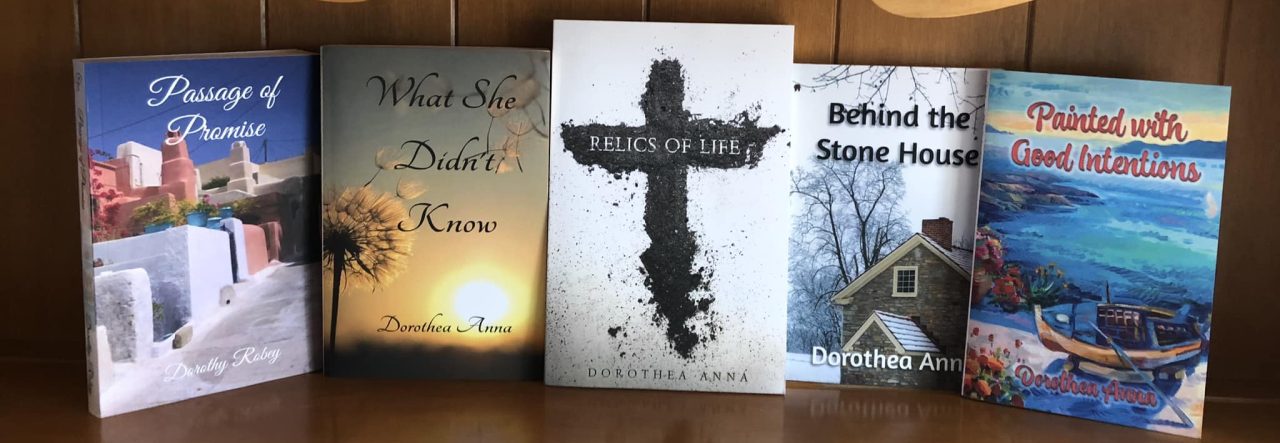

It has been my practice from the time I first started writing stories in my early teens to coming back to writing in 2014 to write with a pencil in a spiral notebook. Hold on… there was one novel I wrote in my early twenties that was directly typed into the computer, but that was the only one. Otherwise it’s been pencil to notebook paper, and it always seems to work well and better for me.
But I’ve been asked why do I write out my stories twice–once on paper and then on the computer? Why not just skip the first step and type straight on the glowing Word page?
So, I tried that with my last novella and my work in progress. It took me this long to realize why I hadn’t done it in this manner for the most part. I had many questions that weren’t what my friends were asking. These questions were, “Why am I having such a hard time formulating what I want to write in these sentences? Why do I sit there pausing, searching for words to come to my head to create a simple sentence?”
At first, I thought it was the changing from writing in first person to third person. But my novella was written in first person, so that, obviously, isn’t it. Is my inner editor/critic interfering with my flow, expecting me to put down sentences perfectly correct the first time around? No, I don’t think so. It’s the problem of just typing them via the keyboard and watching them pop up on the white page on the computer screen. It’s very sterile and uncreative to me.

I decided to look up information on the differences between writing out your story with a pen or pencil and typing it on the keyboard of your computer. There were several articles on this. One was from The Guardian. There were a few explanations from authors that really cinched writing longhand for me (which I went back to a couple nights ago, and didn’t have any problems with what to say or with the point of view I was using).
Lee Rourke, the author of the article, is a writer with the pen first. He explains, “Not only is longhand a much more portable way to write, it’s also much more individual.” His writing process is like mine, in that he composes all his thoughts onto physical paper first and then transfers it to the computer. In addition, he says, “There are far too many distractions when writing directly onto the screen. The internet being the main culprit.”
Rourke’s description of what it feels like to write longhand is what I experience. He says, “In longhand, the hand moves freely across the page in a way no amount of computer jiggery-pokery can muster.”
Writing longhand mutes distractions and puts me in the creative realm where flow of language, imagery, and sentence structure comes much more naturally.
There is the subject of pace when writing, and from my own experience, my writing flows on paper and has little road blocks, but when I type, it’s as if I’m turning the key in my car’s ignition, and it coughs several times before rumbling to life, and the process continues with speed bumps interrupting and jostling my thought process and ability to write. Writing is slower but more constant for me.
Author, Alex Preston mentioned in the article, discovered this pacing issue between writing longhand and typing on the computer, saying, “It’s important to find a tool that matches the pace of the writing. I composed my first book in a computerised blur; for the second, I wanted to be more scrupulous, more thoughtful. This is the pace of longhand. Writing with the fetish objects – the Uni-ball pen, the Rhodia notebooks –and watching the imprint of pen on page reminds us that writing is a craft. If everything is done on keyboards and fibre-optic wires, we may as well be writing shopping lists or investment reports.”
It’s true that composing my stories longhand feels more artistic, a real craft, as Preston said. Perhaps, because the ideas flow on the page better and more beautifully has something to do with having a pencil in your hand rather than your fingers on a keyboard.
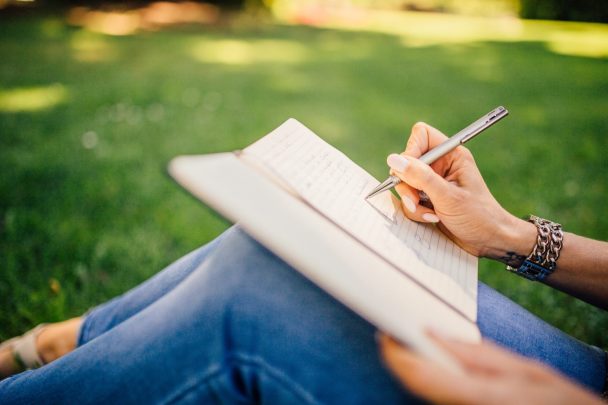
It’s a known fact that students produce more ideas and retain better what they are learning through writing notes rather than typing them. I believe this can apply to writing stories as well.
In a 2017 Huffington Post article, learning specialist, Patricia Ann Wade, says, “Writing entails using the hand and fingers to form letters … the sequential finger movements activate multiple regions of the brain associated with processing and remembering information.”
This article also brings up taking more time to write something via longhand is actually a good thing overall. Wade adds the reason why slowing the pace matters is because, writing longhand, “requires more mental energy and engages more areas of the brain than pressing keys on a computer keyboard.”
Yes, and here is where my writing longhand is an affirmation for my ability to write more creatively. The article goes on to say that writing with pen and paper “sparks creativity” (Pearson).
Finally, The Guardian author, Lee Rourke, finishes this subject of creativity by saying, “For me, writing longhand is an utterly personal task where the outer world is closed off, just my thoughts and the movement of my hand across the page to keep me company. The whole process keeps me in touch with the craft of writing. It’s a deep-felt, uninterrupted connection between thought and language which technology seems to short circuit once I begin to use it.”
All of this information hits home for me and confirms the benefits of writing with my pencil on paper. I will continue this process from now on (shouldn’t have ever left it!), and will be happier for it.
Share below your thoughts on what works best for you in your writing.
Works Cited
Rourke, Lee. “Why creative writing is better with a pen.” The Guardian, 3 November 2011. https://www.theguardian.com/books/2011/nov/03/creative-writing-better-pen-longhand
Pearson, Catherine. “The Benefits Of Writing With Gold Old Fashioned Pen and Paper.” Huffington Post, 6 December 2017. https://www.huffingtonpost.com/2014/09/12/writing-on-paper_n_5797506.html


 Modest Musings