
On Monday, January 8, my fiction writing workshop class at my online university starts up, and I’m reading two books: The Lie that Tells the Truth by John Dufresne, and 100 Years of the Best American Short Stories by Lorrie Moore and Heidi Pitlor. I’ve already read one short story assigned for this week in the latter book, and I’m half way through the second chapter of Dufresne’s book assigned to us. As I suspected, Dufresne’s book is excellent. He writes with such clarity, wit, and animation, which is really fabulous for a book that’s published for teaching writing techniques to fiction writing students and beginner writers (but I think it’s valuable information for even experienced writers).

In the first chapter assigned for us to read, he talks about getting in a routine of writing at least fifteen minutes each day in whatever place is your writing space. If you get stuck, scan the things around your room, like a photograph of somebody or something, a colorful bird perched outside your window, or Mardi Gras beads, for example, and write about it. You have still gotten in your writing for the day, and it wasn’t wasted because one of those items you wrote about may be useful in a future book.
In the second assigned chapter we are reading for the first week of this course that is eight weeks long (called a term, as are all undergraduate online classes at SNHU), he talks about writer’s block that clears up any ambiguity or belief in it. Here’s an excerpt from the book on this (that I partially used in my blog title for this piece):
“Understand that if you didn’t write today, it’s because you didn’t want to. You didn’t have the perseverance or the courage to sit there. You lacked the will and the passion. Maybe you don’t enjoy it enough–we always find time to do the things we love. Your choice not to write–and it is a choice–had nothing to do with what has been called writer’s block. Writer’s block is a fabrication, an excuse that allows you to ignore the problem you’re having with your story, which means, of course, that you cannot solve the problem. But it does let you off the hook, doesn’t it? You can tell your friends, I have this strange and debilitating neurological paralysis that affects only writers and it’s untreatable. I just need to let it run its course. Saying you’ve come down with block gives something else the control over your behavior and conveniently absolves you from responsibility.
You must not accept or embrace this expedient but ludicrous notion that you can be blocked from writing. Writing is a job, like being a secretary is a job. And if you have a job, you go to work every day, or you lose the job.”
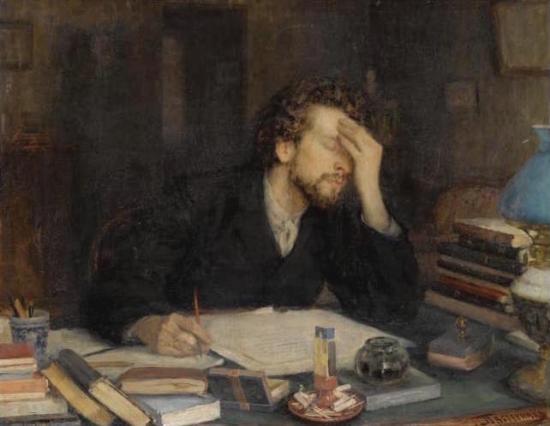
I don’t know about you, but this really opened my eyes. After all, I thought I had “writer’s block” for nearly 18 years, as I’ve mentioned in a few of my blog posts. But pondering those years, I was just busy and allowed all the things around me to take me away from my writing, and in most of those circumstances, they were legitimate reasons why. Considering I was taking care of my youngest son’s special needs when he was a baby, toddler, and early grade school age, he needed to be my first priority. It was only right he came before any thoughts of taking up writing again that I’d not touched in eight years by that time.
But what I took away from Dufresne’s words, other than the fact that writer’s block isn’t real, is that writing is a choice and a job. This is so important, and I am asking myself why hadn’t I considered this before? It hadn’t even crossed my mind. Why did I think of writing as more of a pastime or hobby? Do published authors think what they’re doing is just a pastime or hobby? I highly doubt it. It’s what they do, their job. They put their hearts and souls, sweat and tears into their novels and short stories. Therefore, what Dufresne says makes perfect sense, and these words need to be heeded and remembered always for us writers. In fact, it would be good to jot this down in our notebooks and perhaps type them up in bolded, large print and hang it up near our writing space as a constant reminder whenever we are feeling stuck or distracted or lazy.
In the weeks to come, I may write more blog posts on what John Dufresne has to teach us (he does teach at a college in Florida) on the techniques and art of writing. Until then, keep on keeping on with the pen to the paper or hands on the keyboard and eyes on the MS Word document filling up with your thoughts in black and white.
~*~*~*~



 Modest Musings