The Most Excellent and Insightful Advice for Writers in Creating a Story

A few weeks back, I happened upon this wonderful TEDx talk that blew me away.  The author gave step by step descriptions and instructions on how to write a story.  He brought us viewers into the imagined world of his characters.  We writers believe we know how to do this already, but we never stop learning, and I learned a great deal from this presentation.  In fact, it was the most superb, insightful, and profoundly helpful talk I’ve ever heard or seen on creating a story.  I am sharing it in the hopes that all my fellow writers will find much use in it and gain further knowledge in the art of writing.

(courtesy of and credited to TEDx Talks shared on youtube)

His tips on setting helped me tremendously in writing my latest story I began December 7.  I was thrilled to be able to apply it gently into the beginning scene of this newest work of mine, for which I am not sure whether it will be a short story, novella, or novel.  It will be fun to see where my characters and storyline lead me.

Incidentally, a book I’ll be reading for my fiction writing workshop class that starts early next month is written by Mr. Dufresne.  It’s called Lie That Tells a Truth:  A Guide to Writing Fiction.  How awesome is that?

Please share your comments below on what you thought and took away from this presentation!

~*~*~*~

(Since I was only able to find this on youtube, I was not able to embed it directly from TED.com.)


Finding The Inspiration To Write

finding peace

After a hiatus of nearly eighteen years (marriage and children—life), I began writing stories again in the fall of 2014 just before I started my first class at Southern New Hampshire University online. After reading the book, Of Human Bondage, by Somerset Maugham, the ideas of a story filled my mind, and this time, these ideas made it into words written in longhand on paper in a spiral notebook. And I succeeded in finishing this piece in a month or two. The story is in the genre of Young Adult/Children’s, and is about bullying and reconciliation. I then went on to write my first novel, followed by a few more short stories.

In 2015, I had another year of sporadic writing blocks via an online critique site I became part of while working on my novel. By the first couple of months of 2016, I wasn’t able to write as I had been. This happened because I had lost my voice, style of writing, and became overly concerned with the rules of writing and taking every feedback to heart. My writing had become flat, mechanical, and lifeless. It took me nearly another year to come back from that and discern the difference between a critique that pertained to what I needed to improve my story and one that was not relevant or useful to the storyline and my style of writing.

Since then, I’ve been continuing to edit my novel and short stories, but have picked up reading more fiction. This has helped me tremendously. Last week, I finished reading a Jodi Picoult novel that was superbly written with a profound and complex storyline. The ending didn’t tie up neatly in a pretty pink bow, but rather had me thinking about the decision the main character had made and left me wondering how that was going to work out for said character. Intriguing to say the least.

jodi picoult novel the storyteller

It was through reading this 400+-page novel in four days that spurred me to writing a new story, though lacking a clear plot or known ending (which was how I usually started writing–stream of consciousness). But in the past couple of days, the plot and direction of this new story has become clearer, and the writing I did on it last night and this morning gave me such joy and satisfaction. It was the kind of writing I’ve wanted to write but haven’t been able to since I wrote my novel in 2015, but this current story’s writing is superior to it, which makes sense if you are growing in your writing. And how exciting is that to know you can continue to hone your writing skills and become better and better the more you read and write?

I was created to create

I had heard from other writers more than once, the importance of reading a lot… “Read, read, and then read some more,” was basically the advice thrown out there in a Facebook writers’ group in which I’m a member, in the answer to questions on prompting yourself to write. Now that I have done this and seen the effects of this experience, I know the key to burgeoning ideas and perpetual writing of stories. Thank God! And believe me, I haven’t forgotten His loving guidance throughout this process.

As I plow through submitting the last twenty or so chapters of my first novel through my online critique group and prepare it for publishing this coming spring, I am feeling very good about my fate as a blossoming writer and soon-to-be official author. Life is good, and writing about it makes it even better.

~*~*~*~


When An Author Is A Christian Who Writes Books That Don’t Line Up With The Mainstream Christian Publishers

books

In my writing as an Orthodox Christian, I try to show the human condition or human struggle of my characters and in some circumstances, use mild profanity that fit the particular characters’ personalities, mild violence, and mild expositions of past erroneous sexual relationships.  These are included in some of my books to show the life of the main character at the beginning of her/his journey in the book, and then the transformation of the character at the end of the story.  Character growth and journey is a tenet of fiction writing.

It is my belief that adult Christian novels/short stories should not be completely sanitized as many Christian publishing companies expect.  There are examples of stories written by Christians that aren’t reduced to a simplistic, Pollyanna-ish storyline (which causes the reader to beg for something deeper and more substantial).  Having said that, I am not advocating for the other extreme–raunchy, gory, in-the-gutter writing in Christian fiction.

A couple of novels come to mind when thinking of stories of the human condition, struggles, and redemptive qualities.  One is Dostoevsky’s works, especially The Brothers Karamazov.  The two brothers that stood out were a Christ-like individual named Alyosha and an angry agnostic individual called Ivan (Christianity Today).  The author did not hide unpleasant circumstances in his characters’ lives, which is also apparent in his novel, Crime and Punishment, but there are Christian themes laced in the stories that are profound and have so much substance you could bite into them.
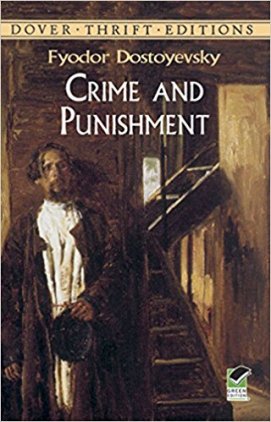
crime and punishment

The second example is not written by a Christian, but the author, Somerset Maugham, wrote stories of the human condition, struggle, and redemptive qualities in a few of his books, most notably, his best-known novel, Of Human Bondage.  A short, one-sentence synopsis of this story: Orphaned as a child and taken in by his uncle and aunt, Philip Carey journeys through life encountering a painful obsession with a troubled woman, hapless artistic endeavors, and poverty, to ultimately discover who he truly is.  The character experienced childhood affliction, pain, bondage, failure, and eventually hope in career and love.  This is my interpretation of the story.  Others may see it somewhat differently.
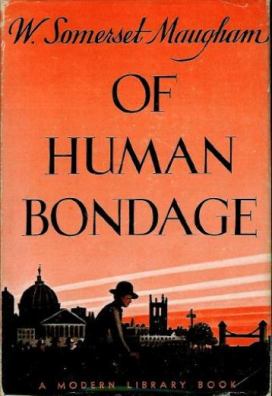
of human bondage

Thus, my examples show a Christian writer and a nonChristian writer, that both show the universal importance of the human condition, suffering, and transformation in some aspect of their characters’ lives.  There is violence in Crime and Punishment, and there are sexual situations in Of Human Bondage (but not explicit), and these books were considered and are still considered great works, especially Dostoevsky.

Pain, suffering, and passing through it is a part of human existence on this planet.  And if you’re a Christian and have taken up your cross to follow Christ, you know this.  We Christians have gone and will go through this because we have to pass through the Cross before we can get to our eventual resurrection, God willing.  Therefore, I believe it’s imperative to show these aspects of human life in Christian-themed novels and short stories, and should then be permitted to contain mild profanity, sexual circumstances, and violence as it pertains to the characters and the storyline respectively to show transformation, growth, and redemptive outcomes.  Creating stories with these components makes the characters and their experiences more authentic and realistic in fiction books.

My Christian readers of my blog, how do you see this issue?  Please share your thoughts below.


Works Cited

“Fyodor Dostoevsky:  Russian novelist of spiritual depth.”  Christianity Today.  http://www.christianitytoday.com/history/people/musiciansartistsandwriters/fyodor-dostoyevsky.html.  Accessed 27 November 2017.