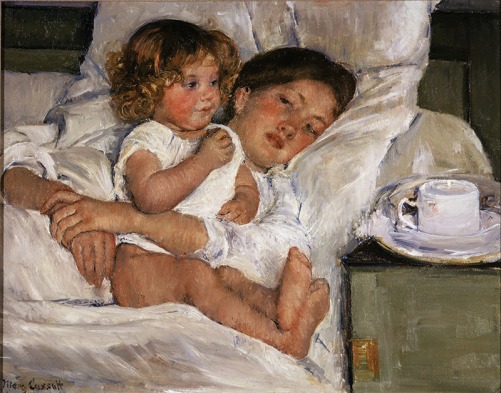
“I feel like I am often in and out of the process of grief. As we reach new stages in life, there are new things to mourn – things that Sophia’s peers are doing that she is not,” says mother, Julie, of her daughter, Sophia, who has special needs.
What happens to a mother’s physical, mental, and spiritual wellbeing when she is perpetually striving to cope with her child’s serious chronic illness?
We mothers have the natural tendency to conjure up ideas or thoughts in our minds of what terrible sicknesses our children could be stricken with before we know what it is. But when we are given the actual name and details of the affliction, it usually isn’t quite what we’d thought. And sometimes it is.
On the afternoon of October 29, 2003, the words “brain tumor” floated in my mind minutes before the nurse practitioner at Madigan Army Hospital in Tacoma, Washington, told my husband and I that our 12-month-old son, Christopher, had a brain tumor. Yet, hearing the haunting words come out of her mouth crushed me. My mind went blank and I couldn’t speak. My throat closed as tears gathered in my eyes. I became confused and encapsulated in a fog the next few days as we headed to Seattle’s Children’s Hospital and got our son checked in for upcoming brain surgery.
At age 16, Anna’s child, Oran, was diagnosed with schizoaffective disorder and mixed bipolar subtype. Linda’s child, Baylee, had her first seizure at age 11, and the diagnosis of childhood absence epilepsy (CAE) followed. Julie’s child, Sophia, was diagnosed with Angelman Syndrome at the age of two. Angelman syndrome, Julie explains, “is a chromosomal abnormality that results in global developmental delays, including limited ability to communicate, problems walking, sleep disorders, and behavioral challenges, among other things.”
I, like my friends, Anna, Julie, and Linda, saw the behavioral and physical symptoms in our children months and/or several years before our children’s doctors were able to diagnose their illnesses. We did not know what was wrong with our children, but we did know something wasn’t right. Learning of these serious illnesses came with differing reactions from all of us.
Anna’s son, Oran, was a highly intelligent child throughout his grade school years, but he started to show persistent symptoms of his illness around age 14, and it later affected his reading comprehension and memory. Two difficult years and three ER visits later, Oran was diagnosed. “Frankly, I was just relieved. With the diagnosis comes understanding and treatment,” Anna says.
Julie says she experienced many feelings. “There was a mixture of relief in knowing what exactly was going on along with guidelines of what to expect, devastation that her life would be nothing like we had expected or anticipated, and fear about this new path with possibilities of significant handicap” (Boam).

For Linda, shock struck her when the doctor told her that her daughter, Baylee, had childhood absence epilepsy. “We had no idea what it was at the time,” she says.
Throughout the early stages of our children’s illnesses and treatments, we didn’t have time to worry about our own health because we focused on caring for our children and facing whatever struggles and difficulties lay ahead. There really wasn’t a manual for us on how to tackle all the difficult and strenuous tasks we would end up performing to help them maintain a sense of some type of normalcy in their lives.
These struggles surfaced several times in my caretaking of Christopher after his first and second brain surgeries in which the neurosurgeons removed three quarters of the tumor, but could not remove what was left on his brainstem without causing him to lose his life. After the second surgery, Christopher had developed a blood infection, and the nurse practitioner, Kathy, told me I could administer his medication via his PIC line. I protested immediately, because of the paralyzing fear that shook me as I thought about the deadly mistakes I’d most certainly make in doing such a dangerous duty that should be reserved to only highly competent nurses. But the nurse insisted that I could do it and backed her confidence in me in the fact that we were a couple of blocks from the hospital living in the Ronald McDonald House should we need help, and that she had faith in me that I could do it. She had told me she wouldn’t have suggested it if she hadn’t thought I could do it. This did not give me any feelings of relief or boost my self-confidence, but when she told me it would be better than bringing Christopher into the hospital every day and what that entailed, I reluctantly accepted my assignment.

After one visit from a home nurse that instructed me in administering the medications, I nervously took the reigns. I had to inject antibiotics in his PIC line in his arm twice daily for five days with the fear of blowing out his veins or contaminating the tips of the PIC line and medicine plunger. Nevertheless, after the most agonizing and stressful period among a few others during this serious and difficult time in Christopher’s and my lives, I finished giving him the medicines. When we went back to the hospital for a blood draw to see if the infection had cleared, which it had, the relief that flooded through my system was an enormous grateful wave. In the present day, we monitor Christopher through MRI scans every two years and check ups on his left eye and how steadily he is growing – the latter being watched because of his six weeks of radiation treatment in 2005.
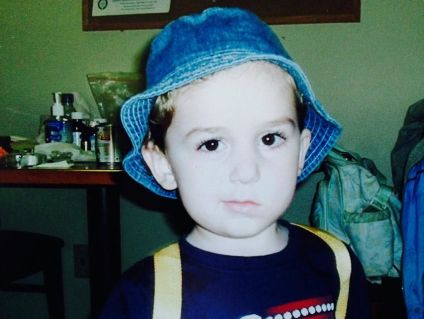
My son, Christopher, during his six weeks of radiation therapy, spring 2005
Anna spent her time navigating through the mental healthcare system, in getting Oran the specialists he needed for his illness, which included psychiatrists, therapists, and social workers. This is an ongoing endeavor, along with her careful conversations with her son regarding any type of changes in his medical treatment, medicines, and just everyday conversations which can be touch and go on how Oran may react to them. In many of these conversations, Anna elucidates feeling like she’s walking on eggshells. Everyone in her family is affected by Oran’s illness. Anna points out, “ When one person in the family becomes ill, the family is at risk of becoming ill. The mental health system treats individuals, yet these individuals are often part of a family that acts as the support system. Failing to acknowledge this as part of the treatment is one of the huge problems with the mental health system.” Her battles with the system are a regular occurrence, including the annual struggles in obtaining his prescription drugs.
Linda’s daughter, Baylee, would get seizures not only during the day but also at night while she slept. Linda had to closely monitor her daughter and make sure she was getting her medications and a healthy amount of sleep. Furthermore, she says, “Weather was a big factor in her seizures. She couldn’t get too warm or too cold because that could set off a seizure.” Although Baylee has been seizure-free for three years now, Linda continues to be watchful because “with epilepsy, anything can set it off,” she says. She continues to make sure Baylee gets the rest and nutrition she needs and says, “I still get nervous when she doesn’t answer me when I call her or talk to her or when she has a lapse in her memory or I see her twitch in her sleep, but I think that will always be a part of me.”
Julie has had many trials in caring for her daughter, Sophia. She tells me, “Physically, Sophia is a challenge as she now outweighs me, but still requires a lot of help with personal hygiene, toileting, bathing, dressing, etc.” She shares with me the most difficult task she has had to perform, saying, “The hardest and most awful thing is when she is ill with a stomach bug that causes her to vomit. She can’t quite wrap her head around the idea of throwing up. First of all, she can’t tell me she needs to. And secondly, it scares her, and she ends up choking and crying and making huge messes. Whenever she’s ill, I spend the next day or two (or three!) right by her side with a bucket trying to keep her comfortable and catch vomit.”
We recognize the effects that our children’s illnesses have on their siblings. The stress of caring for a chronically-sick child is great, but it is compounded by the concerns for your other children’s wellbeing, not wanting them to feel left out. Incidentally, Linda’s only child is Baylee.
Julie says of her two other children, “I try to tell them often how much I appreciate their patience and their love for their sister.”
Oran is the second born of Anna’s six children. She explains, “For the rest of our children, the struggle and distress can be wearing. We discuss the illness, its effect on their sibling and on them. We’ve also had to give them more latitude. For example, allowing more time for mature behavior to develop in some areas. Now that the children are older, I have repeatedly apologized to the younger three children. They really did not have a childhood.”
Yet, Anna and Julie say their children are remarkably forgiving and understanding overall. This is true of my son, Christopher’s older sibling, Nicholas. He learned to accept Christopher’s special needs and has been a caring and doting big brother ever since.
The stressors involved in caring for our special needs children can be detrimental to our health. Years of such toil with plenty of sweat, frustration, fatigue, and tears, wears away on our bodies, minds, and spirits. In a study done by neuroendocrinologist, Dr. Robert Sapolsky, and psychologist, Dr. Elissa Epel, on stress hormones and what it does to our bodies, Dr. Sapolsky explains, “The genetic structures that protect the ends of our chromosomes are called telomeres. As we age, our telomeres shorten. Stress by stress hormones can accelerate the shortening of telomeres.” In reference to mothers of special needs children, he says, “These women have shortened telomeres, a decreased activity of this enzyme, and a very, very rough number – for every year you’re taking care of a chronically-ill child, you’ve got roughly six years of aging” (National Geographic).
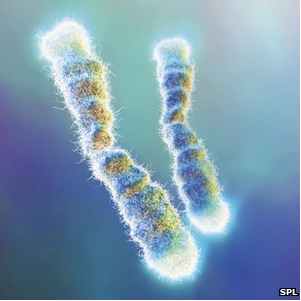
Dr. Epel reiterates Sapolsky’s statements with regards to the chronic stress of mothers of special needs children, saying, “It can tax the very reserves that sustain people, and if they’re stressed, if they’re poor stressed, they tend to die early” (National Geographic).
Before we mothers of special needs kids resign our fate to these gloomy findings, what are we doing to reduce our stress that can help heal our minds, bodies, and spirits?
Each mother has her own coping mechanism and healthy escape or distractor. Linda makes arts and crafts and relies on supportive family and her faith. Julie also has a crucial family support system and strong faith. Moreover, she teaches and practices yoga, which has provided tremendous relief from suffering from emotional strain. Anna, too, finds comfort and strength in her faith. She spends time reading news stories on the Internet and interacting on social media as a temporary distractor from her stressful environment. Lastly, she enjoys listening to music, which has always been a pathway to serenity in her life. In my case, I also talk and spend time with family and friends, do jigsaw puzzles when I can, try to exercise regularly, and rely very much on my faith.

According to a study done by biologist, Dr. Elizabeth Blackburn, helping others could help our wellbeing. Dr. Blackburn co-discovered an enzyme called telomerase that repairs the destruction of the ends of chromosomes from stress (National Geographic). The preliminary data indicates that support groups such as ones for mothers of special needs children in which they converse and reciprocate compassion and understanding spurs healing.

In reducing stress, “Compassion and caring for others may be one of the most important ingredients,” Dr. Epel says and adds,” Those may be the factors that promote longevity and increase telomeres and keep our cells rejuvenating and regenerating” (National Geographic).
This is very encouraging news for us moms of special needs kids.
Through the years, we have learned the amazing strengths our children possess and discovered some things about ourselves. I’ve realized my son, Christopher, is very strong and goes through medical check ups and MRIs with ease. He’s got an aloof exterior, but at the same time, tends to be comedic with his quirky sense of humor. I have found that I am able to endure much more than I ever thought and that I am capable of doing many things I never thought I could do in tending to his special medical needs.
Linda says, “I’ve learned Baylee is much stronger and resilient than she appears to be. She’s endured the MRIs, the endless EEGs, blood tests, medication changes, and mood swings like a champ! And me…I am a lot stronger than I thought I was. I am a more positive thinking person. The word ‘can’t’ does not work in this house!”
“I have learned Sophia is capable of much more pure forms of joy and unconditional love than I am. She accepts everyone regardless of what they look like or how they speak. Everyone is a friend to her, and the smallest things make her happy. To watch her hold a caterpillar or smell a flower is to realize that joy really is found in the simple things,” Julie says, and adds, “I have learned that I can do hard things, even when I don’t want to, even when I wonder why me, even when I feel like I’ve got nothing left, I manage. It might not be pretty, but I wake up in the morning, take a deep breath, and move through whatever level of chaos that day may bring.”
“Oran has remarkable courage! And his ability to trust, realizing his fear of me and others was part of his illness,” says Anna. She continues, “I’m not sure how anyone could be by turns so positive having experienced such despair and confusion alone—no one could reach or comfort him when he was deep in the throes of the illness before diagnosis. Regarding me, the realization that I have been able to keep going for so long.”
Anna, Linda, and Julie offer me their advice for other mothers of special needs children that they feel has helped them.
Linda says, “Keep the faith! Be strong for your child and yourself!”
Julie instructs, “Ask for help. Swallow your pride. Shush that voice that tells you that you are being a burden or inconvenience. The reality is that most people are not only willing to help, but they want to. They just may not know how. Figure out what your pressing needs are and ask for help.”
Finally, Anna succinctly says, “Forgive yourself.”
We mothers must remember this essential advice because we tend to believe that we are lacking strength, afraid we can’t do what needs to be done, or just simply think we are not good enough mothers. None of us is perfect, but we do all we can to support, sustain, and show compassion and love for our children. Years later, down each of our own paths in our lives, we will discover all our efforts and sacrifices for our children’s health and wellbeing were blessings to our children and they to us.

Works Cited
Barros, Anna. Personal interview. 10 January 2017.
Boam, Julie. Personal interview. 10 January 2017.
Nuzzo, Linda. Personal interview. 10 January 2017.
National Geographic. Stress: Portrait of a Killer. 20th Century Fox. 2008.




 Modest Musings