How Creative Writing Can Boost Your Intelligence (Guest Blog Post)

This is a reblog of my fellow blogger, Nicholas C. Rossis’ guest blog post.  I thought it was important to share.  Credit goes to Nicholas and guest blogger Sally Keys.


This is a guest post by Sally Keys. You may remember her from her guest post, Creating The Time And Space You Need To Write Your Best Work. Sally is a professional freelance writer with many years experience across many different areas. She made the move to freelancing from a stressful corporate job and loves the work-life balance it offers her. When not at work, she enjoys reading, hiking, spending time with her family, and traveling as much as possible.

How Creative Writing Can Boost Your Intelligence

Globally, the average IQ has increased by 20 points over the last 100 years. Many reasons are given for this and all, no doubt, play a part. The fact is that we live in a very different world to the one of 100 years ago. By examining these differences and comparing them to research into intelligence, we can determine ways to boost our own IQs. Creative writing can play a major part in this but only if you are pushing your writing standards to the limit.

What Is Different About Today?

Globalisation has led to multiculturalism becoming the norm. Diethas improved dramatically and, along with basic medication, we have all but eradicated many of the illnesses that struck us down in childhood. Film, television, and mass production of books have all played a part in increasing our exposure to new ideas. Computers for communication, leisure, and research all provide a range of inputs that simply did not exist in the past. New stimuli are known to stimulate the prefrontal cortex (an area of the brain linked to intelligence) and our increased globalization and technological development make novelty a regular occurrence (despite how counterintuitive that may sound). Diet and healthcare help our brains develop further (especially at an early age) and free us from having to fight infections or deal with malnourishment.

What Has This To Do With Writing?

There is some evidence that 5 simple steps can help to boost your intelligence. Each of these can be achieved through creative writing if you approach it properly.

The first, seeking novelty, has been mentioned already. By writing about unfamiliar topics, doing research into another country, trying new foods and so on you are pushing yourself to experience the new.

You are also achieving step 2, which is to challenge yourself. Increase your challenge (and introduce more novelty) by stepping out of your comfort zone. Write a chapter in iambic pentameter or in verse, try a different voice for narration, or find any of a million different ways to push yourself. You could challenge yourself further by taking IQ tests. By taking tests before actively pushing yourself when writing, you could experiment and take the tests again at the end to see if you’ve improved.

The next step is the one most obviously linked to writing – think creatively. The simple act of writing fiction is sufficient stimulus to cognitively challenge your brain, but if you want to boost it, you need to think outside of the box. Take your creativity to the next level by remembering to seek novelty and by challenging yourself. Whilst our novelty-rich modern world has boosted our intelligence as a species, there is something to be said for doing things the hard way. Old-fashioned methods often bring their own cognitive challenges, especially as modern methods become more familiar.

Which leads us to the fourth tip; to do things the hard way. Write your first drafts long-hand. Turn off the grammar and spell checkers when you write it up and edit manually. Do some of your research from books instead of the internet. Taking the longer, slower route brings with it new challenges that cause new stimulation.

The final tip takes us back to one of the ways in which the modern world is different to the old, but it also turns it on its head. We live in multicultural societies and interact with people from across the globe, but do we really know people as well as we used to? The concept of communities seems to have gotten lost along the way. As a writer, the final stage of your work is to share it. If you aren’t taking this step, then you are missing out on the 5th tip, to network. Sharing ideas with others who have faced similar challenges and getting to know them both in person and through their work, will help you increase your intelligence – and improve your writing.


My Muse, My Inspiration

muse of wonderment and writing

I’ve discovered my muse. Her writings inspire me and give me mental motivation in my ability to write these days.  Not only that, she writes about topics and relationships that I have great interest in and have wanted to write about.  The muse is author Jodi Picoult.  You may have read at least one or two of her books if you like women’s fiction.  I wonder if she realizes what an inspiration she is to fellow writers.

The last novel I read of hers was the best.  It’s called House Rules.  If you haven’t read it, I highly recommend it. Loved it!

house rules novel cover

Synopsis:

When your son can’t look you in the eye . . . does that mean he’s guilty?

Jacob Hunt is a teen with Asperger’s syndrome. He’s hopeless at reading social cues or expressing himself well to others, though he is brilliant in many ways. But he has a special focus on one subject—forensic analysis. A police scanner in his room clues him in to crime scenes, and he’s always showing up and telling the cops what to do. And he’s usually right.

But when Jacob’s small hometown is rocked by a terrible murder, law enforcement comes to him. Jacob’s behaviors are hallmark Asperger’s, but they look a lot like guilt to the local police. Suddenly the Hunt family, who only want to fit in, are directly in the spotlight. For Jacob’s mother, Emma, it’s a brutal reminder of the intolerance and misunderstanding that always threaten her family. For his brother, Theo, it’s another indication why nothing is normal because of Jacob.

Any time I read her works, ideas flow from my mind onto the paper freely without constraints, and the writing isn’t half bad.  In fact, it often comes out beautifully!  Kudos that I’ve found my muse, my inspiration for aiding me in my creative writing endeavor.

champagne glasses

But when I’m not reading her, when I’m reading other authors’ books, my creative writing isn’t as rich.

I have heard that depending on the type of writing style and its brilliance or less brilliant form, voice, structure, character development, and flow of whatever authors you read can and will affect how good and creative your own writing will be.  Should I continue reading others’ books and settle for a mediocre spark of creativity? Perhaps I’m learning something else from these authors’ writings than from my muse’s writings, that can help my writing techniques in some way.  I just haven’t discovered what that is yet.  If and when I do, I’ll write a blog post on it.

Therefore, I won’t stop reading other authors’ works that I like.  After all, I do know that my first novel was written before I’d read anything by Picoult, so I know I can accomplish this.  I just need to stay motivated and continue to practice my writing and continue reading the genre in which I am interested and in which I write.  That’s part of being a writer.

idea writing

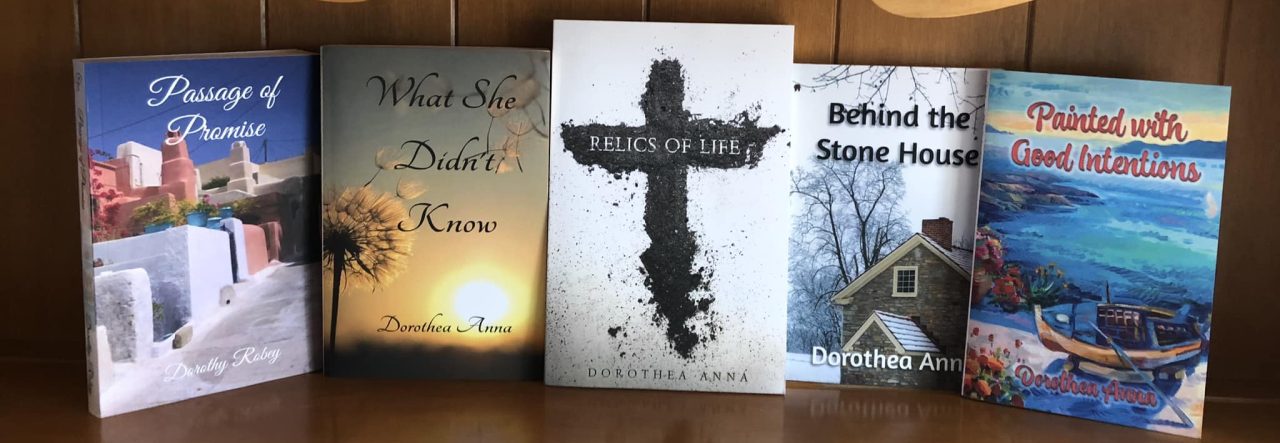
Incidentally, as I’d written this, new ideas popped into my head on additional dialogue and descriptions (in which I’d turned into written revisions) to my first novel, Passage of Promise.  I’ve been revising and deepening its protagonist, antagonist, and supporting characters’ relationships for the past week so that I can send it back to my editor in a couple weeks to re-edit and give any other suggestions.

Wow.  Who would have thought a blog post on writing abilities via one’s muse and the concerns about lesser creative abilities when not reading their works would lead to ideas sprouting like pea shoots in my head.  I think the creative writing of my muse lingers in my mind like the sweet smell of incense from Orthodox Church services I attend that cling to my clothes and hair, and keeps God in my thoughts for the week.

So, what are the solutions to this struggle of the muse and the lesser inspired readings to aid me in my writing?  Well, I will…

  1. Continue reading works from Picoult.
  2. Take daily walks. They give me peace, spur creative ideas, and nostalgic memories.
  3. Write, if not daily, every other day (I try, people).
  4. Do other creative activities. I’ve read they help spark ideas for your writing.
  5. Try not to worry about losing my writing abilities.  I’ve got to stay steadfast and believe in my writing.  And truly, writing is in me (has been since my childhood) and part of who I am.

Who’s your writing muse that helps inspire you?


~*~*~*~


What The Hell

Oil-painting-The-Hell-Fresco

If you ask people what hell means to them, you’ll get a variety of answers.

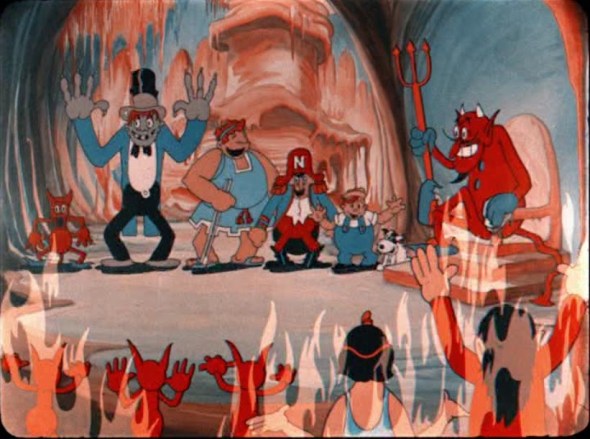
Some people might say it loosely resembles the animated depictions in classic cartoons:

cartoon of hell.jpg

Other people might say it’s a cold place far away from God:

cold dark cave

Then, there are people who think hell is a myth:

myth of hades

Lastly, a few people think Heaven and Hell are one in the same:

bright light

Personally, I see hell as the latter.  Saint Isaac the Syrian (my favorite Saint) describes it beautifully:

“I also maintain that those who are punished in Gehenna are scourged by the scourge of love. For what is so bitter and vehement as the punishment of love? I mean that those who have become conscious that they have sinned against love suffer greater torment from this than from any fear of punishment. For the sorrow caused in the heart by sin against love is sharper than any torment that can be. It would be improper for a man to think that sinners in Gehenna are deprived of the love of God. Love is the offspring of knowledge of the truth which, as is commonly confessed, is given to all. The power of love works in two ways: it torments those who have played the fool, even as happens here when a friend suffers from a friend; but it becomes a source of joy for those who have observed its duties. Thus I say that this is the torment of Gehenna: bitter regret. But love inebriates the souls of the sons of Heaven by its delectability.”

Why do I choose to see hell in this way?  Because it makes sense to me.  God is through all and in all, and He is a consuming fire.  God is warmth and light.  So, in understanding this, the next step in my thought process is that because of free will given to us by God, we make choices daily and therefore, I choose to follow God or reject Him.  In my decisions, I decide my fate, my own judgment.  I’m the judge of my own destiny.  God honors my choice because He can’t impede on my free will.  He can’t go against Himself, as Father Thomas Hopko of blessed memory would say.

All of this is contingent on whether I truly know God or have just been told or read about Him.

Back to God being a consuming fire.  When I repose this life, I enter into His Light because He’s everywhere.  Nowhere is He not.  And the Light is bright and warm, and it brings me joy and peace if I love Him as best as I was able to truly understand and give love to Him and others.  If I knew Him intimately and chose to sever my relationship with Him, I’d feel His Light and Joy as a burning, tormenting fire.  This is why God revealed He is eternal and why the Apostles speak of those rejecting God as being eternally tormented.  He’s always there.  God loves every human who’s ever lived and will live until His Second Coming.  He wants us to be with Him.  That’s why we were created.

I made a choice to follow Him twenty-three years ago, and I hope to continue to choose Him daily until I pass this earth and am standing before Him.  I hope to hear the glorious words akin to what God told the thief on the cross:  “Truly I tell you, today you shall be with Me in Paradise,” (Lk 23:43) (NIV).

sunshine


~*~*~*~