
Humanity’s Power

Success

How much power do humans have in this world? Well, it depends on your beliefs and worldview. This is my attempt at sharing my musings on this subject.

From what I’ve observed, here are two beliefs from opposite sides of the spectrum.

Group One: People have the power to change the world through fighting for social justice, cleaning up the environment, and can achieve anything by believing in themselves. It’s through this concerted effort to transform the world into a nonviolent, loving place to live that they believe can truly happen on earth. They don’t need a higher being/God to do this. They just have to desire it and take action to achieve it.

Group Two: No one has any power of his/her own. They go through life relying on God to design their lives, and as long as they follow God’s designs for them, their lives will be good and spared hardships.

Neither of these takes into account natural disasters, wars, sickness, famine, etc. You know the litany of problems people face on this earth. If I add this issue and question the two groups, here’s how they might see this:

Group One: Just about everything can be fixed if humans will just do the right thing mentioned earlier. The natural disasters can be lessened if we took care of our environment and quit using toxic chemicals, relied on clean energy, etc. Wars and famine and sickness would stop because people would unite for the common welfare of all. If enough people do this, we can finally live in peace and love.

Group Two: Things happen for a reason, and that reason is God’s punishing those people who sin and will feel the wrath of God in the destructive winds of the tornado or in the drowning waters of a powerful tsunami. God’s Hand is in all of these actions to make us repent. BUT . . . natural disasters can also just be earth doing its thing, too, because there’s no such thing as climate change.

tidal wave tsunami

Let’s factor in the whole subject of suffering and dying in whatever capacity. Group One would probably see these as cruel, senseless events caused by lack of education, equality, love, and action on our part to stop them from happening.  But sometimes, they have no real answers because death is a part of life. Group Two might respond that it was those people’s time to leave this world. If they’re asked, “What about victims of a massacre or individual murder?” Generally, they don’t have an answer, and for the most part, they’ll be honest and say they don’t.

Then there are the people who fall in the middle who believe disasters and suffering are sometimes of God and other times just nature doing its thing, like the earth’s natural cooling and warming.

earth

Do people have much power to do anything about these catastrophes in the world? I believe there is nature doing its thing and us doing ours and sometimes they are intertwined.

It all starts and stems from where life began—in the Garden when Adam and Eve were created, whether a representation of humanity, or truly a male named Adam and a female named Eve. God gave us free will. It is a loving and crucial gift for us that gives us the ability to reason and make decisions on everything in our lives, including whether to love or reject God. It is my understanding and belief this was the main purpose God gave us free will—for us to freely choose to love Him or not.

God the Father, Son, and Holy Spirit represents Love, Peace, and Relationship. God wants a relationship with us. We are not robots or marionettes to which He pulls strings or programs us to act or do something every moment of our lives. No, we have the freedom to choose just about everything in our lives except choosing to not die. We all will. We have to go through this because of the consequences of sin and death that entered the world that is known as the Fall.

adam & eve expulsion from eden

I believe whatever a person does, good or bad (in the sense we humans understand good and bad), it affects all the world and universe. I liken it to the example used in the chaos theory of the butterfly that flaps its wings, and that act of flapping its wings reverberates and echoes through the cosmos, affecting all things in it. Therefore, when a person does something bad, such as kill someone, this is felt throughout the universe.

There is no utopia on earth because earth isn’t God’s Kingdom, as Christians and most non-Christians know. Adam and Eve fell into the temptation of wanting to be just like God, and through pride (arrogance) and disobedience, that caused everything to change for humanity and all of God’s creation.  Making a decision seems to have a lot of power to change the world, doesn’t it?

When humanity sinned, it took the creatures and plants and all down with it to earth, separating all from God’s closeness and grace. This separation was reconciled through Christ’s incarnation, crucifixion, and resurrection.

Getting back to the issues of suffering, wars, and killings. It is my belief that this all springs from two things:

  • Free Will
  • The Fall

Therefore, killings/murders, wars, and whatever things happen in our daily lives are a result of the choices we make good or bad, through God’s gift of free will. We choose to steal that coat at the department store, shoot and kill people, eat more than our stomach  can hold (gluttony), be mean to the person ahead of us in line at the supermarket, etc.  We choose to start wars because of our greed and desire for power over others, anger, etc.

Having said all of that, this does not include people suffering from mental illness because the chemical balance is off in their brains, and unless they’re being treated effectively by psychiatric medications, their brains aren’t functioning correctly.
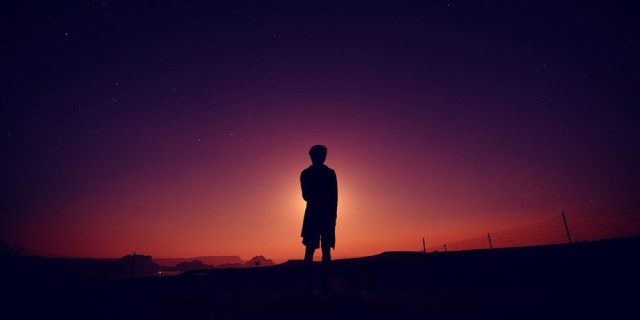
pink sunset one person free will

God cannot impede on our free will. Father Tom Hopko used to say this in many of his podcasts on Ancient Faith Radio, for which I’ve listened to several.

Then there are the dilemmas of natural disasters, sickness, and famine. Two reasons:

  1. All of humanity is spiritually ill in need of healing, which for me, is found through Jesus Christ, so that we can be made whole and healthy again as we first were made to be.
  2.  We live in a broken, fallen world.

Remember the butterfly example from the chaos theory? Think of that butterfly as a person, and that person does something that separates him/her from God–misses the mark, sins–that sin reverberates through the cosmos because humanity is the conduit between the material and spiritual worlds.   Likewise, if the person does something holy/good, such as loving his/her enemy, or giving food to a starving person, this, too, spreads throughout the universe.

stardust blue

So, if you look at the world from this perspective, you can see through free will, humans do have a great deal of power, and what we are able to do in this fallen world is a result of what we choose to do daily that sends the waves of holiness or sinfulness throughout all existence in the cosmos.


~*~*~*~


Gratitude

thank you pic 3

On Valentine’s Day, this post is dedicated to all those souls who read/view and/or follow my blog.  I am ever grateful for your interest, kindness, support, and encouragement throughout the two years I’ve been composing posts for my blog.  

rw emerson quote on thankful to friends

Through your care and endorsement, you’ve helped turn my creative and written seedlings into a healthy, beautiful, thriving bouquet of appreciated style and prose. 

purple flower bouquet

May your day be filled with love and joy.  ❤

pink and white sparkly hearts

~*~*~*~


Pen/Pencil Vs. Keyboard

notebook and computer

It has been my practice from the time I first started writing stories in my early teens to coming back to writing in 2014 to write with a pencil in a spiral notebook.  Hold on… there was one novel I wrote in my early twenties that was directly typed into the computer, but that was the only one.  Otherwise it’s been pencil to notebook paper, and it always seems to work well and better for me.

But I’ve been asked why do I write out my stories twice–once on paper and then on the computer?  Why not just skip the first step and type straight on the glowing Word page?

So, I tried that with my last novella and my work in progress.  It took me this long to realize why I hadn’t done it in this manner for the most part.  I had many questions  that weren’t what my friends were asking.  These questions were, “Why am I having such a hard time formulating what I want to write in these sentences?  Why do I sit there pausing, searching for words to come to my head to create a simple sentence?”

At first, I thought it was the changing from writing in first person to third person.  But my novella was written in first person, so that, obviously, isn’t it.  Is my inner editor/critic interfering with my flow, expecting me to put down sentences perfectly correct the first time around?  No, I don’t think so.  It’s the problem of just typing them via the keyboard and watching them pop up on the white page on the computer screen.  It’s very sterile and uncreative to me.

empty white page on computer

I decided to look up information on the differences between writing out your story with a pen or pencil and typing it on the keyboard of your computer.  There were several articles on this.  One was from The Guardian.  There were a few explanations from authors that really cinched writing longhand for me (which I went back to a couple nights ago, and didn’t have any problems with what to say or with the point of view I was using).

Lee Rourke, the author of the article, is a writer with the pen first.  He explains, “Not only is longhand a much more portable way to write, it’s also much more individual.”  His writing process is like mine, in that he composes all his thoughts onto physical paper first and then transfers it to the computer.  In addition, he says, “There are far too many distractions when writing directly onto the screen. The internet being the main culprit.”

Rourke’s description of what it feels like to write longhand is what I experience.  He says, “In longhand, the hand moves freely across the page in a way no amount of computer jiggery-pokery can muster.”

Writing longhand mutes distractions and puts me in the creative realm where flow of language, imagery, and sentence structure comes much more naturally.

There is the subject of pace when writing, and from my own experience, my writing flows on paper and has little road blocks, but when I type, it’s as if I’m turning the key in my car’s ignition, and it coughs several times before rumbling to life, and the process continues with speed bumps interrupting and jostling my thought process and ability to write.  Writing is slower but more constant for me.

Author, Alex Preston mentioned in the article, discovered this pacing issue between writing longhand and typing on the computer, saying, “It’s important to find a tool that matches the pace of the writing. I composed my first book in a computerised blur; for the second, I wanted to be more scrupulous, more thoughtful. This is the pace of longhand. Writing with the fetish objects – the Uni-ball pen, the Rhodia notebooks –and watching the imprint of pen on page reminds us that writing is a craft. If everything is done on keyboards and fibre-optic wires, we may as well be writing shopping lists or investment reports.”

It’s true that composing my stories longhand feels more artistic, a real craft, as Preston said.  Perhaps, because the ideas flow on the page better and more beautifully has something to do with having a pencil in your hand rather than your fingers on a keyboard.

woman writing in notebook

It’s a known fact that students produce more ideas and retain better what they are learning through writing notes rather than typing them.  I believe this can apply to writing stories as well.

In a 2017 Huffington Post article, learning specialist, Patricia Ann Wade, says, “Writing entails using the hand and fingers to form letters … the sequential finger movements activate multiple regions of the brain associated with processing and remembering information.”

This article also brings up taking more time to write something via longhand is actually a good thing overall.  Wade adds the reason why slowing the pace matters is because, writing longhand, “requires more mental energy and engages more areas of the brain than pressing keys on a computer keyboard.”

Yes, and here is where my writing longhand is an affirmation for my ability to write more creatively.  The article goes on to say that writing with pen and paper “sparks creativity” (Pearson).

Finally, The Guardian author, Lee Rourke, finishes this subject of creativity by saying, “For me, writing longhand is an utterly personal task where the outer world is closed off, just my thoughts and the movement of my hand across the page to keep me company. The whole process keeps me in touch with the craft of writing. It’s a deep-felt, uninterrupted connection between thought and language which technology seems to short circuit once I begin to use it.”

All of this information hits home for me and confirms the benefits of writing with my pencil on paper.  I will continue this process from now on (shouldn’t have ever left it!), and will be happier for it.

Share below your thoughts on what works best for you in your writing.


Works Cited
Rourke, Lee.  “Why creative writing is better with a pen.”  The Guardian, 3 November 2011.  https://www.theguardian.com/books/2011/nov/03/creative-writing-better-pen-longhand
Pearson, Catherine.  “The Benefits Of Writing With Gold Old Fashioned Pen and Paper.”  Huffington Post, 6 December 2017.  https://www.huffingtonpost.com/2014/09/12/writing-on-paper_n_5797506.html