The Wood’s Song (3 Minute Video)

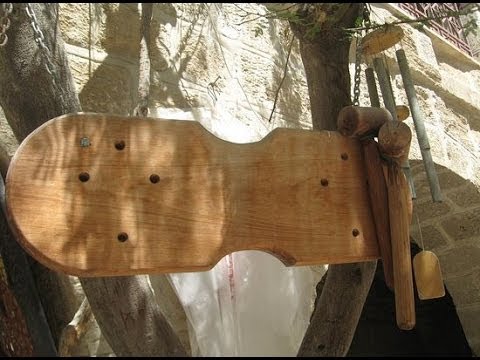
semantron pic

I never tire of watching this video and thought I’d share it with you. I love traditions from different countries and religions. I find them fascinating. Perhaps you do, too? I hope so!

Pictured above is a wooden board called a semantron used in Eastern Orthodox Christian monasteries where monks use mallets to bang against the wood, making a cool sound that is used as a call to prayer (like bells are used at churches). Here’s a history of the use of the semantron via Wikipedia:

The portable semantron is made of a long, well-planed piece of timber, usually heart of maple (but also beech), from 12 feet (3.7 m) and upwards in length, by 1 12 feet (46 cm) broad, and 9 inches (23 cm) in thickness.[2] Of Levantine and Egyptian origin, its use flourished in Greece and on Mount Athos before spreading among Eastern Orthodox in what are now Bulgaria, Romania, Moldova, Serbia, Montenegro, Bosnia and Herzegovina and the Republic of Macedonia. It both predates and substitutes for bells (first introduced to the East in 865 by the Venetians, who gave a dozen to Michael III),[3] being used to call worshipers to prayer. 

In the portable wooden form, at the centre of the instrument’s length, each edge is slightly scooped out to allow the player to grasp it by the left hand, while he or she holds a small wooden (or sometimes iron) mallet in the right, with which to strike it in various parts and at various angles, eliciting loud, somewhat musical sounds (κροῦσμα, krousma).[2]

Although simple, the instrument nonetheless produces a strong resonance and a variety of different intonations, depending on the thickness of the place struck and the intensity of the force used, so that quite subtle results can be obtained.[5] A metal semantron, smaller than those of wood, is usually hung near the entrance of the catholicon (the monastery’s main church).[6] In the traditional monastic ritual, before each service the assigned player takes a wooden semantron and, standing before the west end of the catholicon, strikes on it three hard and distinct blows with the mallet. He then proceeds round the outside of the church, turning to the four quarters and playing on the instrument by striking blows of varying force on different parts of the wood at uneven intervals, always winding up the “tune” with three blows similar to those at the beginning.[3]

The video is three minutes in length.  I hope you enjoy it!

(Romanian monk hitting the semantron with wooden mallets for a call to prayer courtesy youtube)


~*~*~*~
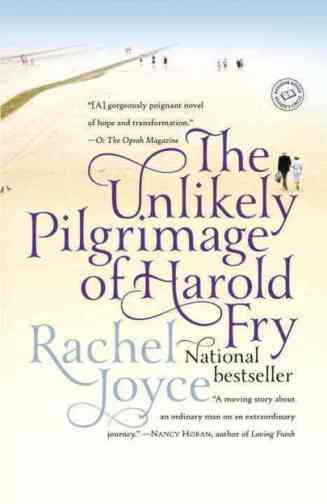
 

My Review Of A Fantastic Book

lovely book unlikely pilgrimage of harold fry

I’ll start out by saying, no, this book is not a newly published one, but came out in 2012.  I’ve just been behind on reading contemporary works until a few months ago because I’ve been reading so much for my university classes and nonfiction and spiritual books.  Now, on with my very informal and basic review.

The Unlikely Pilgrimage of Harold Fry by Rachel Joyce is one of the best books I’ve read in decades.  It harkens back to the classic literary fiction of the ages, meshed with contemporary life.  I hope that makes sense!

Short synopsis of the story via amazon:

Meet Harold Fry, recently retired. He lives in a small English village with his wife, Maureen, who seems irritated by almost everything he does. Little differentiates one day from the next. Then one morning a letter arrives, addressed to Harold in a shaky scrawl, from a woman he hasn’t heard from in twenty years. Queenie Hennessy is in hospice and is writing to say goodbye. But before Harold mails off a quick reply, a chance encounter convinces him that he absolutely must deliver his message to Queenie in person. In his yachting shoes and light coat, Harold Fry embarks on an urgent quest. Determined to walk six hundred miles to the hospice, Harold believes that as long as he walks, Queenie will live.

I love stories of the human condition, the human spirit, and ones that have flickers of hope in them.  They are beautiful, and this book is loaded with these elements.  Also, I am one drawn in by writing style, beautiful prose in descriptions, etc.  Some folks aren’t interested in that, but I am.  The characters are quirky, endearing, and so very human.

The main character, Harold, is such a broken, beautiful soul with a gentle spirit.  He decides to walk those six hundred miles to see Queenie, a former co-worker, with the belief that Queenie will live the months it takes for him to walk there and arrive.

Harold and his wife’s relationship is strained at the beginning of the book and little love is shown, and his wife experiences many different feelings dealing with his absence and her own thoughts of the past several decades.

Through the walk, Harold reminisces about his childhood and the past many decades, and encounters interesting people along the way.

Here’s a little review I wrote on it when I finished reading it a few weeks ago and posted in Goodreads:

The story is precious, touching, unique, and wonderful. It starts out at a good tempo and slows a little after a couple chapters in, but once you keep reading through those slower chapters, it continues to unfold like the blooming of a rose, with such sweetness and touching moments of the human struggle and spirit, that you become more and more drawn in. Lovely, beautiful, brilliant, and well worth the read and to own.

I highly recommend this book.  

*You probably have already read this one, right?  If you have, share your thoughts.  If you haven’t, maybe you’d like to share your thoughts anyway. 🙂


~*~*~*~


Finish What You’ve Started

spiral notebook and pen

For the past three days, I’ve inched away from my notebook and pencil after writing up my latest chapter a few days ago.  It seems I’ve fallen into that familiar rut where you sit there thinking about your story for which you’re a quarter or half way through it, wondering if it’s really any good.  You look over the chapters and the storyline and wonder if it really is interesting enough to readers.  Would they even read up to chapter eight or nine or ten?  Where has this story gone?  And you find your fingers and ideas bound up in an invisible chain of nothingness filled with your inner critic telling you it’s going nowhere and what’s the point?  You can’t get your fingers to write what you’ve thought about writing the past week, the last month, as you’d been creating this story that started off so easily and with such grandeur and pizazz in hopes of something fabulous taking root and blossoming into an incredible, earth-shattering novel.

In my case, I’ve jotted down plenty of notes on where I want my work in progress (WIP) to go, but I’m feeling a bit like an old game system on its last flicker of electrical usefulness, or a pinball machine that’s tilted into a quiet repose.

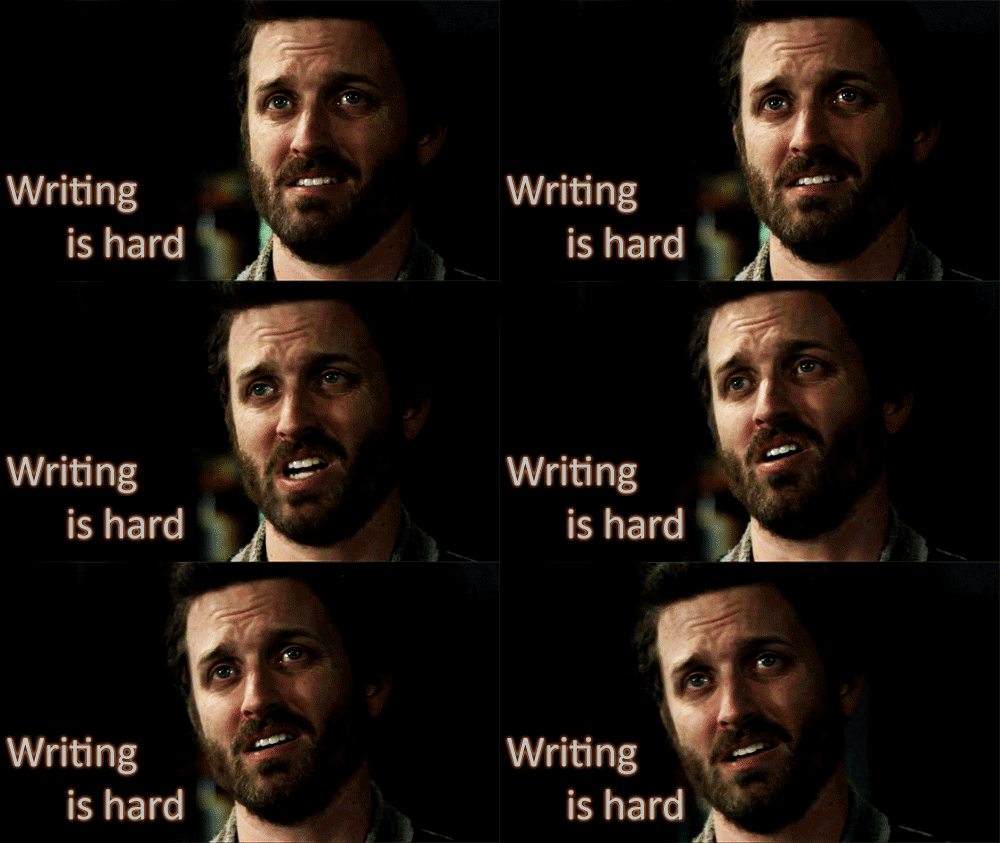
writing's hard gif

In author, John Dufresne’s book, Lies That Tell a Truth, for which I’ve mentioned has been one of our reading materials for my current course in fiction writing, he talks about this sputtering along midway through your story, just before you end up running on vapors and quit.  He describes what we writers, I’m sure, have all done once or twice in our histories of writing novels/novellas, etc.  He says, “Perhaps you discover that you’re afraid to fail.  After all, you’ve failed at this before.  Your desk drawer is crammed with half-written stories, isn’t it?”  We writers can probably relate well to his comment.  I’ve had a few upstarts that crashed and burned and were forgotten in old, dusty notebooks sitting in stacks somewhere in the little bookcase in my bedroom.

stack of old notebooks

Dufresne says our real problem is wanting to write our first draft very well, or even, dare we admit, perfectly.  He says, “Every work of art is a failure.  No story is ever what it could or should have been.  You aren’t perfect, never will be.  Neither is your writing.  Get over it.” OUCH.  Ah, but you can read the truth in his words, can’t you?  And then the key to this mess comes out in his next words.  “Perfectionism is the voice of the oppressor.  It’s Mom or Dad or your professor or your critical self telling you you’re not good enough.  And the only way to silence this discouraging voice is to write.”  And that doesn’t mean writing it very well the first time.  Just writing it!  Dufresne says, “A good first draft is a poor first draft.”  Allow me to quote that again:  “A good first draft is a poor first draft.”  Oh, I think it may some time soon sink all the way into my gray matter.  Yes, let’s hope before my next feeble attempt at writing another chapter.

John Dufresne says another encouraging line:  “You’ve simply transcribed thoughts on paper.  This is taking dictation, not creation.  Expecting too much from an early draft is the most common mistake beginning writers make, and it leads to frustration and disappointment.”  But I thought I wasn’t a beginning writer, didn’t you?  I mean, I’ve been back at this since the fall of 2014.

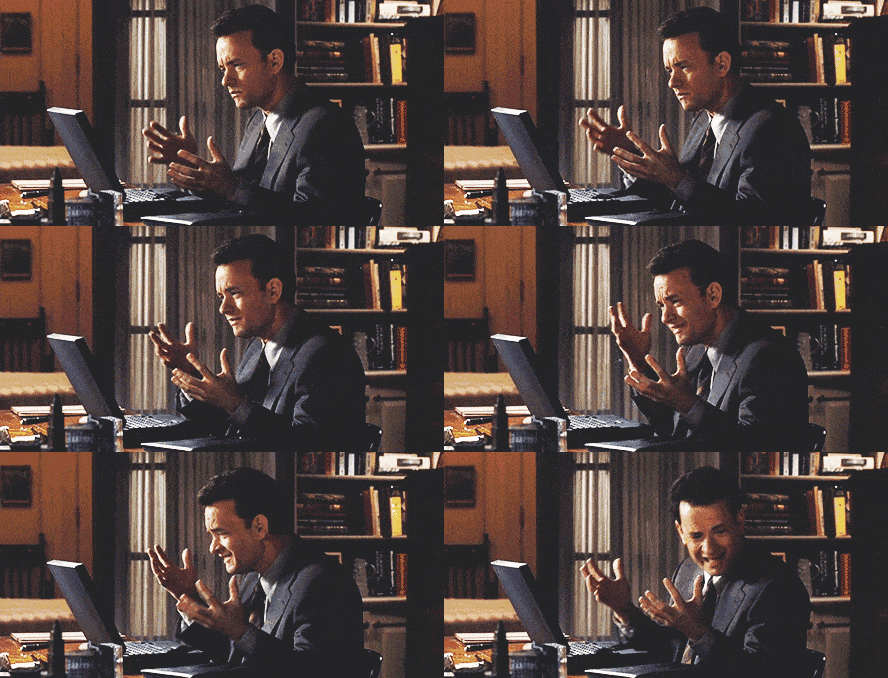
tom hanks trying to write

And here’s the sharp sting of truth to the heart for me (maybe for you, too?):  “Or maybe you’ve lost faith in your material or confidence in yourself” (Dufresne).  Well, yeah.  I can relate to that….I mean, that’s me sporadically in creating my stories.

But Dufresne tells us, “You will experience that same uncertainty and uneasiness in the writing of every story.  This is how writing happens.  You bring that anxiety to the blank page.”  So, we are to relax and let whatever sprouts from ours head reach our fingers and move pen on the paper, or fingers on the keyboard.

writing

So, this blog post is about encouraging us writers to realize the first draft is crap and it doesn’t matter how it’s organized or written.  JUST WRITE.  And with this, I will sit down with pencil and notebook and scribble across the pages mediocre words that may give birth to a few stellar ones, creating a scene in which the characters are doing something that may or may not be more exciting than counting the brown blades of winter grass in my backyard.


~*~*~*~


Works cited
Dufresne, John.  Lies That Tell a Truth:  A Guide to Writing Fiction.  New York:  W. W. Norton & Company, Inc., 2003.