
Breaking from Writing and the Consequences

writing exhaustion pic

What if I stop writing for a while?  What if taking this hiatus is not because I have no choice but precisely because I do?

About a month ago, I’d reached writing and creativity exhaustion, so much so that even when I’d forced myself to write at least a few sentences or a paragraph, nothing but stale, dry, lifeless words settled on the page.

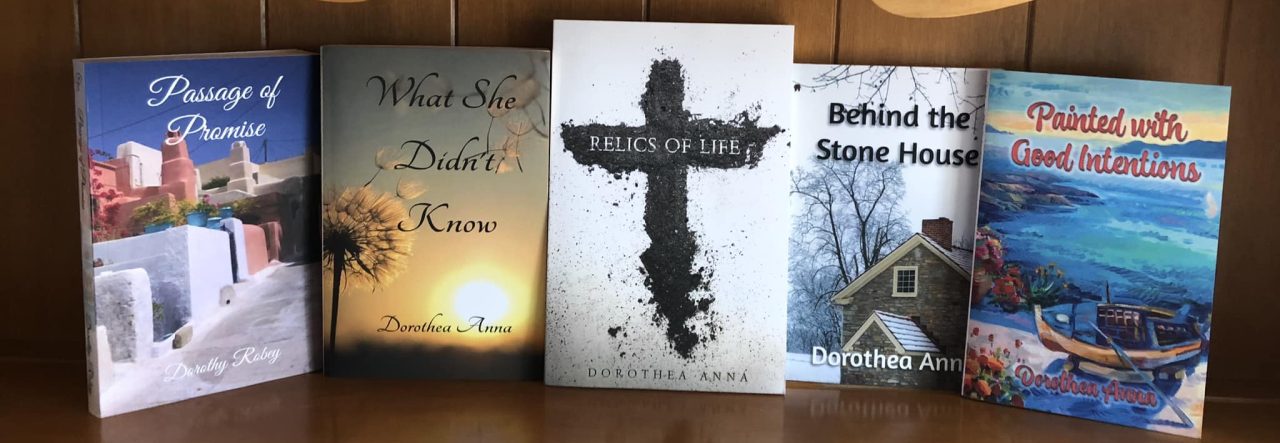
You see, at this time, I’d finished my current revisions and my editor had done her thing in supplying me with superb proofreading, editing, and suggestions for my characters and plot for my novel, Passage of Promise.

But at the same time, I’d entered my subsequent university course in fascinating American Art.  It was one of the required general education exploration courses available for me to choose. My courses are eight weeks long.  By mid term, the college load was like swimming in an ever deepening pool, and the massive reading assignments and associated linked reading material were pulling me under.

drowning underwater pool

Overwhelmed by keeping up with my novel’s plot additions, blog posts, essays, and colossal pages to peruse and jot down notes, it was time for me to slide one of these on the shelf.

Permanently? you ask.  I sure hope not.

When you struggle with general anxiety and menopausal symptoms that trigger it (along with blood sugar issues), your brain can only take in so many mental activities at a time.  I’d reached my limit.

When this happened, I closed up my manuscript on Word, and dread hit me as I remembered the eighteen-year hiatus from writing that was broken in September 2014…not so long ago.  Was I going to end up disconnected from my writing another eighteen years?

This concern prompted me to look up information on authors/writers taking breaks.  I found a couple of articles that gave me a great sense of relief.

What I learned is breaks are not only acceptable, but necessary to regenerate your creative juices and thought processes.  And we writers make the choice on how long that break will be.  It could be a day, a week, a month, or months.

I know this is alarming and sounds close to anathema considering how often we hear and read in the writing world the mantra stressing writing at least something daily.

But please keep reading.

Via a Writer’s Edit article, it says, “If you are at the point where you are forcing a story, take this as a sign to take a break from it.”  This gave me a chance to exhale.
cartoon girl sitting in hammock

(credit:  GetDrawings.com)

The author of that article also stressed not losing the joy of writing.  Well, I’d forgotten the joy of writing.  It had become the equivalent of cramming for final exams since it was juxtaposed with my college course load.

However, another reassuring perspective came from The Writing Cooperative’s author, Ryan J. Pelton’s article on this subject, stating, “You are not weak, uncommitted, and not a true writer if you take breaks.  You will not forget how to write.”  I could sit back calmly with this tidbit.

These breaks can be used for relaxing and cleaning out your brain, for continued reading for pleasure, and an upcoming chance for new, fresh characters and storylines to surface that can be noted for later.

My plan at this time is to pick up on my novel and other writing projects after I graduate from my university at the end of October.  Then I will be free to pursue my writing without college assignment pressures.  This is my tentative schedule, and each of us makes our own.

So, if you’re feeling burnt out, or you have nothing left, take a much needed break that is as long as you choose, and look forward to sparkling, vivid tales in the very near future.


~*~*~*~


Works Cited
Writer’s Edit.  “Why Taking Writing Breaks Is Important.” writersedit.com.  https://writersedit.com/fiction-writing/taking-writing-breaks-important/
Pelton, Ryan J.  “Put Down the Pen and Step Away (rest for writers).”  The Writing Cooperative.  https://writingcooperative.com/put-down-the-pen-and-step-away-rest-for-writers-44a98971db4b

 

Centering on Character

woman writing in notebook

On Tuesday, March 13, I submitted the synopsis and first three chapters of my novel, Passage of Promise, to a publisher for which I felt my genre and style of writing would be a good fit.  According to their website’s submission guidelines, I should hear something within one to two weeks.  So I am in the nervous and excited waiting mode.  I also realize rejection is a normal and somewhat expected outcome in the process of submitting your manuscript to publishers/editors/agents, but I will deal with that at that time.

Meanwhile, I’ve delved back into my work in progress the past three days, and it feels good to be back in the lives of my characters, watching what they do, how they handle situations, and learning how to make them more developed.

Speaking of characters, what makes them interesting?  Are there several components that connect you to the characters?  Perhaps you relate to one of them, and the challenges they have mirror your own.  Is it that they are well-crafted, three-dimensional, and real to you?  Maybe you like one of the characters because they’re broken, clumsy, and endearing that way?

Well, for me, those elements are part of what I like about characters in the books I read.  I especially like characters with quirky personalities and unusual habits.  This particular trait is what I’d like to incorporate into my characters in my stories.

Do you need a lot of physical details describing how the characters look, or are a few basic features with maybe one unusual one sufficient?  It’s the latter for me.  I suppose the detailed descriptions depend upon the genre in which you read.

Characters drive the plot/storyline, and because of this, they are very important.  Through the fiction and creative writing workshops of my university courses, I’ve learned this vital fact, and carving out a well-defined and well-developed character takes practice.  For some authors, it’s not too difficult, but for others, it is quite a challenge.  I’m somewhere between not too difficult and a little bit of a challenge.  When I first started writing in my teen years, my characters were pretty much one or two-dimensional and lacked depth.  I’d like to think I’ve gotten a bit better since picking up writing again in 2014.

Therefore, in creating characters, you might want to:

  1. Have them possess quirky personalities with perhaps some type of pesky habit.
  2. Give ’em flaws.  Nobody can relate to someone who’s perfect inside and out.
  3. Produce words that come from their mouths that are natural, realistic, and perhaps echo a dialect in the area in which they live.
  4. Make sure each character is distinct to a certain degree.  If you can get to the epic point of writing dialogue with no tags and the reader knows the people speaking because of the way they talk, their language, and voice, you’re a star!
  5. Describe their looks with enough detail to give the reader at least a general idea of the appearance of the character, unless you’re writing in a genre like Romance where it seems that the more detail there is, the better.

These recommendations came from my memory through studying material and books I’ve read for my classes.  I hope they are helpful to my fellow writers as they have been for me.  It takes some practice, some work to create believable and relatable characters, but we can do it! Happy writing!


~*~*~*~


Reading Your Manuscript Out Loud

sparkly book

Eureka!  What a difference reading your manuscript out loud is compared to reading it to yourself!  I bet you already do this, but for me, I’d read a few paragraphs here and there, but never the whole novel.  Well, that’s what I’m doing as of yesterday and today and tomorrow, and it is amazing!

Reading my sentences and dialogue aloud has helped me to hear how natural the dialogue is and how the words flow in my text.  I was pleasantly surprised how 98% of it already sounded great before I inserted my final revisions.  After I’m done, I’ll be sending it back to my editor for a final scan.  Then, it’ll be all polished up and set for submission, and if it’s not accepted, it will be self-published.

Share with me if you practice reading your stories out loud.  If this is a regular practice, what have you learned from it?