My Muse, My Inspiration

muse of wonderment and writing

I’ve discovered my muse. Her writings inspire me and give me mental motivation in my ability to write these days.  Not only that, she writes about topics and relationships that I have great interest in and have wanted to write about.  The muse is author Jodi Picoult.  You may have read at least one or two of her books if you like women’s fiction.  I wonder if she realizes what an inspiration she is to fellow writers.

The last novel I read of hers was the best.  It’s called House Rules.  If you haven’t read it, I highly recommend it. Loved it!

house rules novel cover

Synopsis:

When your son can’t look you in the eye . . . does that mean he’s guilty?

Jacob Hunt is a teen with Asperger’s syndrome. He’s hopeless at reading social cues or expressing himself well to others, though he is brilliant in many ways. But he has a special focus on one subject—forensic analysis. A police scanner in his room clues him in to crime scenes, and he’s always showing up and telling the cops what to do. And he’s usually right.

But when Jacob’s small hometown is rocked by a terrible murder, law enforcement comes to him. Jacob’s behaviors are hallmark Asperger’s, but they look a lot like guilt to the local police. Suddenly the Hunt family, who only want to fit in, are directly in the spotlight. For Jacob’s mother, Emma, it’s a brutal reminder of the intolerance and misunderstanding that always threaten her family. For his brother, Theo, it’s another indication why nothing is normal because of Jacob.

Any time I read her works, ideas flow from my mind onto the paper freely without constraints, and the writing isn’t half bad.  In fact, it often comes out beautifully!  Kudos that I’ve found my muse, my inspiration for aiding me in my creative writing endeavor.

champagne glasses

But when I’m not reading her, when I’m reading other authors’ books, my creative writing isn’t as rich.

I have heard that depending on the type of writing style and its brilliance or less brilliant form, voice, structure, character development, and flow of whatever authors you read can and will affect how good and creative your own writing will be.  Should I continue reading others’ books and settle for a mediocre spark of creativity? Perhaps I’m learning something else from these authors’ writings than from my muse’s writings, that can help my writing techniques in some way.  I just haven’t discovered what that is yet.  If and when I do, I’ll write a blog post on it.

Therefore, I won’t stop reading other authors’ works that I like.  After all, I do know that my first novel was written before I’d read anything by Picoult, so I know I can accomplish this.  I just need to stay motivated and continue to practice my writing and continue reading the genre in which I am interested and in which I write.  That’s part of being a writer.

idea writing

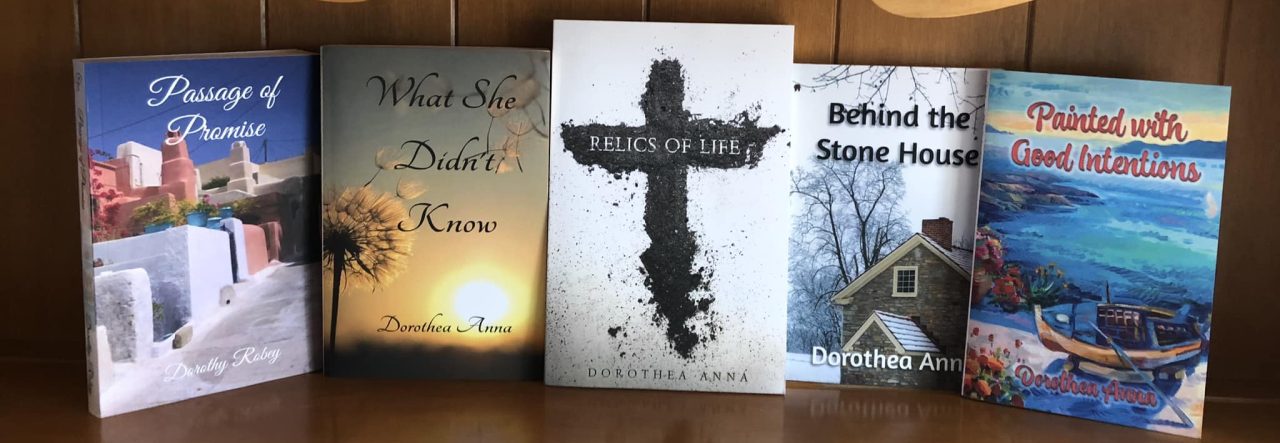
Incidentally, as I’d written this, new ideas popped into my head on additional dialogue and descriptions (in which I’d turned into written revisions) to my first novel, Passage of Promise.  I’ve been revising and deepening its protagonist, antagonist, and supporting characters’ relationships for the past week so that I can send it back to my editor in a couple weeks to re-edit and give any other suggestions.

Wow.  Who would have thought a blog post on writing abilities via one’s muse and the concerns about lesser creative abilities when not reading their works would lead to ideas sprouting like pea shoots in my head.  I think the creative writing of my muse lingers in my mind like the sweet smell of incense from Orthodox Church services I attend that cling to my clothes and hair, and keeps God in my thoughts for the week.

So, what are the solutions to this struggle of the muse and the lesser inspired readings to aid me in my writing?  Well, I will…

  1. Continue reading works from Picoult.
  2. Take daily walks. They give me peace, spur creative ideas, and nostalgic memories.
  3. Write, if not daily, every other day (I try, people).
  4. Do other creative activities. I’ve read they help spark ideas for your writing.
  5. Try not to worry about losing my writing abilities.  I’ve got to stay steadfast and believe in my writing.  And truly, writing is in me (has been since my childhood) and part of who I am.

Who’s your writing muse that helps inspire you?


~*~*~*~


How to Keep Writing When You’ve Run Out of Steam in Your Work in Progress

painting of author stuck

There’s the topic of daily writing that is discussed and wrote about often to give us writers encouragement.  This is important because the more you write and read, the better your writing becomes.  But there is another aspect of writing that I’ve run into many times in the past but hadn’t thought about it until yesterday.  It was brought up in a Facebook writing group in which I’m a member.  This pertains to how to continue writing your work in progress without losing steam.

What happens when you write a few chapters and all of a sudden your mind goes blank, even though you know where you want your story to go.  Thinking about it and executing it are two different animals.  My present work in progress is a complex story in my view, as I am writing it from three different characters’ perspectives and they all tie into the main plot that strings their lives together.  Also, I’m writing in third person point of view.  I thought I wrote only in third person point of view in my teens and early twenties, but I didn’t have the knowledge of what that actually meant until my fiction writing course at SNHU and my online critique group over the past couple of years, so my stories were probably more omniscient points of view.  The fiction writing course, which I’m in right now, has helped me to understand it, but I am still in the process of practicing and trying to produce it.

writing scrabble blocks

On to the subject at hand–losing steam while in the midst of writing your novel, novella, or even your short story.  First, I want to add one more piece of information, which won’t really be novel (pun intended) to us writers, but I’m going there anyway!  Creating a story and writing it is a lot more difficult than I thought years ago.  Once you learn the elements of character, plot, setting/place, and structure, you realize it takes a lot more effort and technique and skill to write than you ever thought.  So, as you trudge forward in your chapters, you unexpectedly hit road bumps.  Those road bumps are your creative juices and ideas sputtering to a stop.  What do you do?

What I used to do and still do that sometimes works just on its own is reread the chapter I just wrote to stimulate the thoughts and continuation of the story and where I want it to go.  But I’ve incorporated something else that I believe really helps keep me on the greased tracks of continued creative writing.  I write pages of notes.  I’ve gotten into the habit of doing that.  It was discussed often in John Dufresne’s book I’m reading for my fiction writing workshop class that I mentioned I’m presently in.  So, just yesterday after writing a lot the day before, I hit that road block.  My mind was jumbled with the characters, the plot, like cut-out words from newspaper articles all haphazardly shuffled together in a disorganized heap.  How do I write the next chapter? Who is the next chapter about?  Am I continuing with the same character, or do I move on to the other one?  It needs to move the plot along.  What am I doing?

spiral notebook and pen

I begin writing more notes that turn out to be around four pages in my trusty spiral notebook.  Notes on what the next chapter will be about and who’s in it.  This expands to connected characters and what they are doing and why.  Questions appear in my scribblings, and I need to have answers for the story to make sense and to move forward, so I offer different responses and see which one sticks…which ones are most plausible and most believable.  Sometimes research is needed in this depending on the subject matter.  In any case, the jotting of notes continues until all those words about the characters, their actions, how they move the plot along, and the questions are answered satisfactorily, gives me enough ammunition to create my next chapter.  I will use this strategy/technique for each chapter if the flow of the next sequence of events isn’t happening or the gas tank of creativity is empty.

If you run into these road blocks in your writing, what do you do?  Was my process helpful to you?  Have you tried that already?  Please share your thoughts, fellow writers. 🙂


~*~*~*~


Writer’s Block “is a fabrication”

writer's block wads of paper and pen


On Monday, January 8, my fiction writing workshop class at my online university starts up, and I’m reading two books:  The Lie that Tells the Truth by John Dufresne, and 100 Years of the Best American Short Stories by Lorrie Moore and Heidi Pitlor.  I’ve already read one short story assigned for this week in the latter book, and I’m half way through the second chapter of Dufresne’s book assigned to us.  As I suspected, Dufresne’s book is excellent.  He writes with such clarity, wit, and animation, which is really fabulous for a book that’s published for teaching writing techniques to fiction writing students and beginner writers (but I think it’s valuable information for even experienced writers).  

john dufresne book the lie that tells the truth

In the first chapter assigned for us to read, he talks about getting in a routine of writing at least fifteen minutes each day in whatever place is your writing space.  If you get stuck, scan the things around your room, like a photograph of somebody or something, a colorful bird perched outside your window, or Mardi Gras beads, for example, and write about it.  You have still gotten in your writing for the day, and it wasn’t wasted because one of those items you wrote about may be useful in a future book.

In the second assigned chapter we are reading for the first week of this course that is eight weeks long (called a term, as are all undergraduate online classes at SNHU), he talks about writer’s block that clears up any ambiguity or belief in it.  Here’s an excerpt from the book on this (that I partially used in my blog title for this piece):

“Understand that if you didn’t write today, it’s because you didn’t want to. You didn’t have the perseverance or the courage to sit there. You lacked the will and the passion. Maybe you don’t enjoy it enough–we always find time to do the things we love. Your choice not to write–and it is a choice–had nothing to do with what has been called writer’s block. Writer’s block is a fabrication, an excuse that allows you to ignore the problem you’re having with your story, which means, of course, that you cannot solve the problem. But it does let you off the hook, doesn’t it? You can tell your friends, I have this strange and debilitating neurological paralysis that affects only writers and it’s untreatable. I just need to let it run its course. Saying you’ve come down with block gives something else the control over your behavior and conveniently absolves you from responsibility.

You must not accept or embrace this expedient but ludicrous notion that you can be blocked from writing. Writing is a job, like being a secretary is a job. And if you have a job, you go to work every day, or you lose the job.”

painting of author stuck

I don’t know about you, but this really opened my eyes.  After all, I thought I had “writer’s block” for nearly 18 years, as I’ve mentioned in a few of my blog posts.  But pondering those years, I was just busy and allowed all the things around me to take me away from my writing, and in most of those circumstances, they were legitimate reasons why.   Considering I was taking care of my youngest son’s special needs when he was a baby, toddler, and early grade school age, he needed to be my first priority.  It was only right he came before any thoughts of taking up writing again that I’d not touched in eight years by that time.  

But what I took away from Dufresne’s words, other than the fact that writer’s block isn’t real, is that writing is a choice and a job.  This is so important, and I am asking myself why hadn’t I considered this before?  It hadn’t even crossed my mind.  Why did I think of writing as more of a pastime or hobby?  Do published authors think what they’re doing is just a pastime or hobby?  I highly doubt it.  It’s what they do, their job. They put their hearts and souls, sweat and tears into their novels and short stories.  Therefore, what Dufresne says makes perfect sense, and these words need to be heeded and remembered always for us writers.  In fact, it would be good to jot this down in our notebooks and perhaps type them up in bolded, large print and hang it up near our writing space as a constant reminder whenever we are feeling stuck or distracted or lazy.  

In the weeks to come, I may write more blog posts on what John Dufresne has to teach us (he does teach at a college in Florida) on the techniques and art of writing.  Until then, keep on keeping on with the pen to the paper or hands on the keyboard and eyes on the  MS Word document filling up with your thoughts in black and white.

~*~*~*~