Attending a Writers Conference

workshop pic

On Saturday, May 19, I attended a writers conference in my town.  I am a member of a writers’ organization called Pennwriters because it is an organization for writers in the state of Pennsylvania.  This was my first ever time attending a writers conference, and it was well worth the money and time!  The program was a three-day event, but I only attended Saturday’s sessions from 8 a.m. to 4 p.m., which included a delicious breakfast buffet and just as delicious lunch.  There were many workshops to go to and choose from.  In the time period I was there, I went to four of them:

  1. Story Shrink: Writing the Synopsis
  2. First Pages
  3. Agent/Editor Panel
  4. You, Too, Can Write Killer Plots

I’m going to share with you a few of the tips I got from the speakers, agents, and editors that I think will be helpful to my fellow writers.

Writing the Synopsis:

  • Write in present tense.
  • The main character(s) should be introduced in the synopsis in all caps.
  • Embed transformation into the synopsis.
  • Use emotion words.
  • Center synopsis around the main character, not on supporting characters.

First Pages — A few Do & Don’ts in the first page of your novel:

Do:

  • Have a strong, consistent voice.
  • Be true to your story.
  • Start in the middle of a scene.
  • Build your world by showing what life is like from the point of view of your main character.
  • Hit the emotion right away.
  • Know your reader/audience/editor/publisher wants to be entertained.
  • Trust yourself and your voice.
  • Use teasers and hints of what’s to come in your story.

Don’t:

  • Mislead your reader on what your story is going to be about through the pieces you reveal in that first page.
  • Be provocative just to be provocative.
  • Forget the context of your story.
  • Overwhelm your reader.  Don’t give away the whole plot and story, just leave bread crumbs of the things to come.
  • Tell, but Show.

Agent/Editor Panel

Five reasons you need an agent:

  1. Contacts.
  2. Contracts.
  3. Money–directed on how to get money from editor.
  4. Guidance.
  5. Subrights.

A few warnings:

  • Don’t write about fads or trends.  By the time your book is published, it will likely be out of fashion/passé.

Tired, overused themes and character traits:

  • Middle school petty relationships between girls. Let’s have some real, strong bonds between middle school girls.
  • Women characters who are prostitutes or very close to that.
  • Dystopian themes.

Writing Killer Plots:

  • Superb plots reveal characters and who they are to the readers.
  • When plot and character are interwoven, this is the best type of story/book.
  • Plot is cause and effect.
  • A series of choices make up the plots.
  • The antagonist actually is the one that drives the plot.

So, in plotting your story, you’ve got to have a story and the right characters for the story in mind.  The plots are the incidents and twists that happen to the protagonist throughout the story.  The plots have to fit the characters you’ve created for the story.

All of the workshops were helpful to me, especially the first, second, and fourth ones.  I needed help on writing an synopsis, how to spice up and get my reader’s attention on the first page, and even the first few sentences on that first page.  I also needed help in plotting.  This one always seems to be a struggle for me.

I look forward to attending more writers conferences in the subsequent years.  If there are ones around you, I’d highly recommend you go. 🙂

I hope these little tips aid you in your writing journey as I know they will for me.


~*~*~*~


My Muse, My Inspiration

muse of wonderment and writing

I’ve discovered my muse. Her writings inspire me and give me mental motivation in my ability to write these days.  Not only that, she writes about topics and relationships that I have great interest in and have wanted to write about.  The muse is author Jodi Picoult.  You may have read at least one or two of her books if you like women’s fiction.  I wonder if she realizes what an inspiration she is to fellow writers.

The last novel I read of hers was the best.  It’s called House Rules.  If you haven’t read it, I highly recommend it. Loved it!

house rules novel cover

Synopsis:

When your son can’t look you in the eye . . . does that mean he’s guilty?

Jacob Hunt is a teen with Asperger’s syndrome. He’s hopeless at reading social cues or expressing himself well to others, though he is brilliant in many ways. But he has a special focus on one subject—forensic analysis. A police scanner in his room clues him in to crime scenes, and he’s always showing up and telling the cops what to do. And he’s usually right.

But when Jacob’s small hometown is rocked by a terrible murder, law enforcement comes to him. Jacob’s behaviors are hallmark Asperger’s, but they look a lot like guilt to the local police. Suddenly the Hunt family, who only want to fit in, are directly in the spotlight. For Jacob’s mother, Emma, it’s a brutal reminder of the intolerance and misunderstanding that always threaten her family. For his brother, Theo, it’s another indication why nothing is normal because of Jacob.

Any time I read her works, ideas flow from my mind onto the paper freely without constraints, and the writing isn’t half bad.  In fact, it often comes out beautifully!  Kudos that I’ve found my muse, my inspiration for aiding me in my creative writing endeavor.

champagne glasses

But when I’m not reading her, when I’m reading other authors’ books, my creative writing isn’t as rich.

I have heard that depending on the type of writing style and its brilliance or less brilliant form, voice, structure, character development, and flow of whatever authors you read can and will affect how good and creative your own writing will be.  Should I continue reading others’ books and settle for a mediocre spark of creativity? Perhaps I’m learning something else from these authors’ writings than from my muse’s writings, that can help my writing techniques in some way.  I just haven’t discovered what that is yet.  If and when I do, I’ll write a blog post on it.

Therefore, I won’t stop reading other authors’ works that I like.  After all, I do know that my first novel was written before I’d read anything by Picoult, so I know I can accomplish this.  I just need to stay motivated and continue to practice my writing and continue reading the genre in which I am interested and in which I write.  That’s part of being a writer.

idea writing

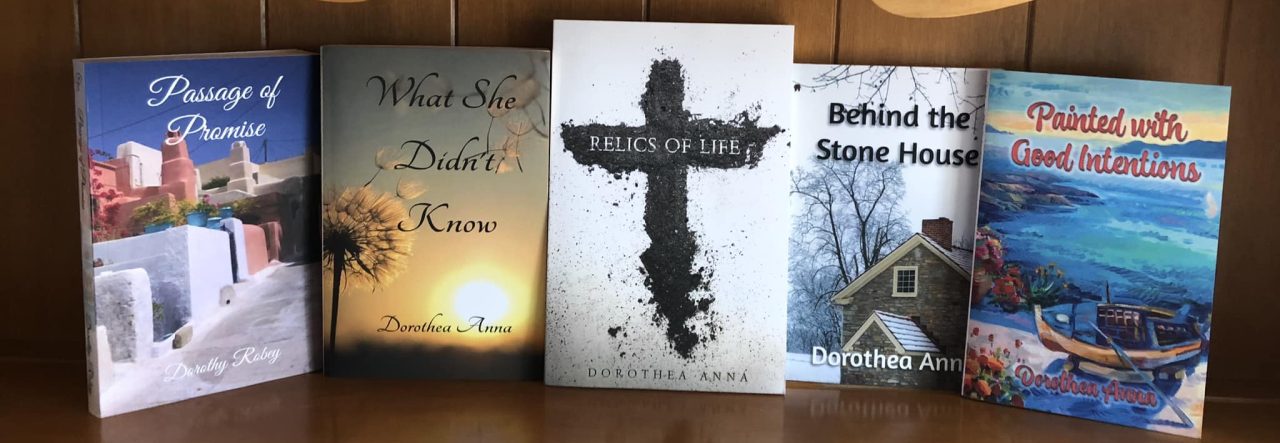
Incidentally, as I’d written this, new ideas popped into my head on additional dialogue and descriptions (in which I’d turned into written revisions) to my first novel, Passage of Promise.  I’ve been revising and deepening its protagonist, antagonist, and supporting characters’ relationships for the past week so that I can send it back to my editor in a couple weeks to re-edit and give any other suggestions.

Wow.  Who would have thought a blog post on writing abilities via one’s muse and the concerns about lesser creative abilities when not reading their works would lead to ideas sprouting like pea shoots in my head.  I think the creative writing of my muse lingers in my mind like the sweet smell of incense from Orthodox Church services I attend that cling to my clothes and hair, and keeps God in my thoughts for the week.

So, what are the solutions to this struggle of the muse and the lesser inspired readings to aid me in my writing?  Well, I will…

  1. Continue reading works from Picoult.
  2. Take daily walks. They give me peace, spur creative ideas, and nostalgic memories.
  3. Write, if not daily, every other day (I try, people).
  4. Do other creative activities. I’ve read they help spark ideas for your writing.
  5. Try not to worry about losing my writing abilities.  I’ve got to stay steadfast and believe in my writing.  And truly, writing is in me (has been since my childhood) and part of who I am.

Who’s your writing muse that helps inspire you?


~*~*~*~


Writer Vs. Inner Critic

silencing inner critic

Sweating with anxiety, I stepped into the familiar and dangerous ring of my mind, ready with padded gloves on.  My inner critic had a fast voice that knew how to bob and weave through my brain, punching out negative remarks in all the recesses of my gray matter.  It managed to paralyze the use of my left hand (yes, I’m a leftie), and rendered my pencil useless, until it had me flat out on the cushiony floor of the right side of my brain, gasping for creativity, ideas, any words at all.  But none would formulate in my brain before I was hit by another, “That’s not good enough.”  And this melee continued for several days.

This massive struggle was all over a first draft’s middle chapters.  Oh, those dreaded scenes.  What could be worse than trying to carry on your story twenty chapters in when everything you write looks like and feels like total crap?  The beginning started with such gusto and imagination and flair.  But now, like the plummeting of a meteor to earth, the haunting middle chapters had crushed my creative endeavor.  The last fizzle of ingenuity faded into the realm of unconsciousness.

open written notebook on desk

I came to just before the count of ten and rolled onto my side, huffing as I tried to lift myself.  My body slowly obeyed, as I worked hard to produce words.  The inner critic had the energy of ten people. As soon as I had gotten to my hands and knees, it rammed into me with a triple dose of “Your writing sucks.”  I lurched and collapsed onto my side.

But I wasn’t giving up.

With new clear determination, I decided to read over the pages I’d managed to write before this battle.  The words connected, weaved together in a coherent manner.  I grabbed the pencil next to my body, scrambled to my feet, and with a sharp inhale and swing of my hand wielding the pencil, I erased the words of the inner critic.  The inner critic’s voice attempted again to try and embed more of its toxic language into my brain.  But this time, with gained strength and confidence, I shouted, “Hey!  This is a first draft!” and kicked its foul castigations out of my head.

kicking something away

It scurried away, whimpering and mumbling, but I knew it would be back soon, too soon.  I would have to keep vigilant.  I hung my gloves on the wall of my brain, and with my right hand, grabbed a towel and wiped the sweat from my brow, and with my left hand that still had the pencil in its grasp, I started writing the next chapter, one that would not haunt me but would submit to my writing freely.  At least I hoped so.


~*~*~*~