
I Spy The “No-No” Words in Fiction Books, and They’re Fine!

steaming mug and book

Lately, I’ve not had much to blog about. That is, until this post. Something popped into my brain, and I started writing, and, violà.

Actually, I’ve been busy reading fiction and writing fiction.

I’m still revising my novel, Passage of Promise. I just finished going through the whole story, adding scenes and revising and editing others. And it’s been great. Every time I do, my story strengthens and my main character ARC is more coherent.

Last week, I finished one of the best books I’ve ever read. It’s called The Great Alone by Kristin Hannah. I’ve read another book of hers called The Nightingale, but The Great Alone is superior to The Nightingale, in my opinion. The characters were chiseled out with such superb precision, and the plot was excellent. The evoking of emotions was fantastic, so much so, I cried in four different sections of the story. I was so moved by what was going on with the characters! Bravo, Kristin Hannah!

If you haven’t read The Great Alone, GET IT AND READ IT!!

Here’s the synopsis via Amazon:

Alaska, 1974.
Unpredictable. Unforgiving. Untamed.
For a family in crisis, the ultimate test of survival.

Ernt Allbright, a former POW, comes home from the Vietnam war a changed and volatile man. When he loses yet another job, he makes an impulsive decision: he will move his family north, to Alaska, where they will live off the grid in America’s last true frontier.

Thirteen-year-old Leni, a girl coming of age in a tumultuous time, caught in the riptide of her parents’ passionate, stormy relationship, dares to hope that a new land will lead to a better future for her family. She is desperate for a place to belong. Her mother, Cora, will do anything and go anywhere for the man she loves, even if means following him into the unknown.

At first, Alaska seems to be the answer to their prayers. In a wild, remote corner of the state, they find a fiercely independent community of strong men and even stronger women. The long, sunlit days and the generosity of the locals make up for the Allbrights’ lack of preparation and dwindling resources.

But as winter approaches and darkness descends on Alaska, Ernt’s fragile mental state deteriorates and the family begins to fracture. Soon the perils outside pale in comparison to threats from within. In their small cabin, covered in snow, blanketed in eighteen hours of night, Leni and her mother learn the terrible truth: they are on their own. In the wild, there is no one to save them but themselves.

Now, to discuss the subject matter mentioned in the title of this blog post.

As you know from my previous blog posts where I discussed reading a book on showing instead of telling, I shared some examples of what words to avoid and how to use certain words. Well, let me tell you. How many of us writers have been told don’t use the words “began,” “started,” “because,” “realized,” “wondered,” “knew,” and the like because they aren’t really active verbs.

Guess what?

I’ve read two different novels in the past few weeks, and both of them contained a few of these words. Did it ruin the flow of the sentences, the storyline, the action of the scenes? Nope. There’s a point when those words can be gingerly sprinkled throughout the many pages of novels, and it won’t drag down or mar the stories.

This is what happened for me.

I mean, I couldn’t help but notice all those taboo words and acknowledged where excellent descriptions and images were written. I think we writers tend to do that. But when you can get past that and be drawn in, or in my case, literally sucked into the lives of the characters in Hannah’s, The Great Alone, the few mentions of those less active words read just fine, fit in just fine because the rest of the words surrounding them make up for it.

Therefore, what I’ve learned is we don’t have to be totally anal about show, don’t tell, or banning these simple words from our sentences. In reality, it’s natural to have a conservative smattering of these words in our works. There, now. We can draw in a nice, cleansing breath and exhale with relief.

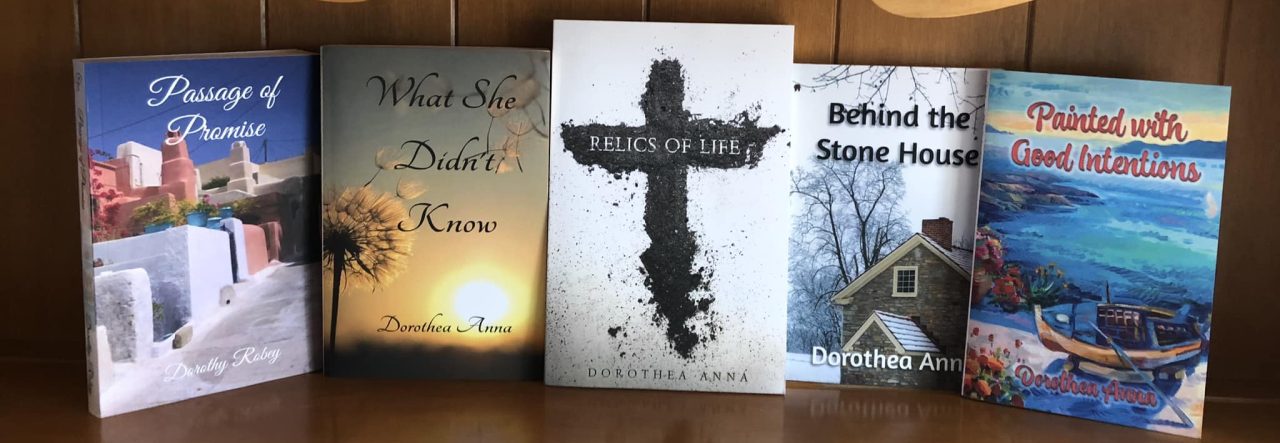
My novel, Passage of Promise, goes back through my critiquing group in a couple of weeks into the new year, and we’ll see how it goes from there. My next step is to re-read over my whole story and see if there are any parts that aren’t relevant or interesting enough to the storyline…read the flow and see if it all fits together the way it should. Upwards and onwards!

~*~*~*~


Enveloped in the Story

Ever since I finished up college, I’ve been engrossed in writing, revising, editing, critiquing, and reading. Like nearly all day.

I’ve barely had time to stop in here and write anything.

I’m enjoying the world of my characters. 

I’ve got three stories which I’m working on. I alternate from one to the other. It’s very satisfying. 

For a couple of months, I’d been working on my novel, Passage of Promise. The last half of the story is still waiting to run through the critique online group. It’ll be the end of January before submitting it is done.

But several days ago, I flipped over to my WIP, What She Didn’t Know, and reread, revised, and added a few scenes. 

Then I returned to my novella, Mourning Dove. I’ve been working on this for the past few days and am loving it. Using the feedback from the critters when I ran the story through around last spring, I’ve been strengthening those chapters.

I asked my husband questions on police procedures and medical issues a couple of days back, which opened up new ideas, new scenes to implement into this amazing story. I’ve only received positive feedback on this piece because of its wonderful message, decent plot, and likable characters. 

Here are the two blurbs I’ve been working on with my novel and novella.

Passage of Promise:

Marina waited all her life for someone like him. But failure is Marina’s middle name. Sent by her family to the Greek island of Santorini to fetch her great grandmother’s wonder-working icon for her sick nephew, Marina finds it has been stolen. She meets and falls in love with attractive Joel, a history teacher and art collector. He helps her to search for the icon. As time sprints by in the week-long search, perpetual pressure and ridicule from her mother leaves Marina on the brink of defeat. When she finds out who took the icon, the realization nearly sends her spiraling out of control. Personal, devastating failure hits her hard, and she’s left hollow. With icon in hand and lost love stinging her heart, Marina returns home to face battles with her mother and her nephew’s waning health. Clinging to a last shred of hope, will it be enough for Marina to overcome her failures and find love and healing?

Mourning Dove:

Gabby lost her husband, Andrew, in a car accident six months ago.  In the midst of struggling to emerge from her grief, she discovers Andrew’s cousin, Jordan, is homeless. With strong determination, Gabby strives to help Jordan in any way she can.  While sifting through clothes in her closet, Gabby discovers notes by Andrew and Jordan discussing a special gift for her a month before Andrew’s death. Can Jordan be the key to unlocking Andrew’s gift to her?  But amid this good will stands a belligerent homeless man hunting down Jordan for a past wrong. Although frightened by this vagabond seen creeping around her property, Gabby swallows her fear and focuses on aiding Jordan, giving her a new purpose in her life. But will Gabby take that new purpose too far?

I’ll probably publish Mourning Dove first, as I am still not totally satisfied with Passage of Promise

I’ll send it to a couple publishers and see if either accepts it. If not, I’ll go another route.

Tell me what you think. Your thoughts and opinions are important to me. You’re potentially my future readers. God willing! 

~*~*~*~

Words – “Appeared,” “Seemed,” and “Looked” – How to Apply/Not Apply Them in Fiction Writing

words have power

I’m still plowing through the book by Janice Hardy called Understanding Show, Don’t Tell (And Really Getting It), and this is my second blog post on the subject of show, don’t tell. My previous post on this consisted of information on a few red flag tell words.

This post is centered on three words: Appeared, Seemed, and Looked. And knowing how to use them properly.

We writers use appeared in a few ways.  If you’re using it to describe something or someone showing up or materializing in front of the character, this is fine and is not one of the descriptions being analyzed by Hardy.  It’s when you are using it in the same manner as you would for Seemed that is under the microscope.  Appeared “is a judgment word that suggests the assumption could be incorrect” (Hardy).

Here’s an example Hardy uses:

  • Bob appeared strong, with broad shoulders and biceps the size of canned hams (Hardy).

So, what is point-of-view character saying here? Using the word appeared implies the point-of-view character is making an assumption. But a man with “broad shoulders and biceps the size of canned hams” does describe one who is strong. This means it’s unlikely to be an assumption. Therefore, we writers wouldn’t want to use appeared in that instance (Hardy).

Here’s another example of appeared. See what you think of this one:

  • He appeared to be the charter pilot, with a jaunty cap and leather bomber jacket (Hardy).

This tells the reader the point-of-view character isn’t sure if the person is truly a charter pilot but is assuming so because of his clothing. But a person who is not a pilot could dress in a bomber jacket and jaunty cap. The point-of-view character thinks the person might be a pilot (Hardy). Therefore, in this case, because of the uncertainty, the use of appeared works.

This works nearly the same with the word Seemed. Here’s an example from the book:

  • Bob seemed happy, laughing and joking with all the kids (Hardy).

What makes the point-of-view character say “seemed”? If Bob is “laughing and joking,” then why would the point-of-view character question if Bob is happy? It’s not accurate and misleads the reader. It also makes you question the point-of-view character’s reasoning for saying this (Hardy).

Here’s another sentence Hardy uses as a comparison:

  • Bob seemed happy, but his smile never waved.

Here the point-of-view character questions Bob’s happiness because he/she notices his smile “never waved,” which implies it’s not a real smile, but a feigned one. Therefore, using “seemed” in that sentence works (Hardy).

Lastly, let’s study the word Looked. There are two ways in which to use this word. One is to describe how a character appears. The second way is what the character does (Hardy).

Here’s the first example:

  • Jane looked scared hiding behind the car, hands gripping the shotgun (Hardy).

So, in this sentence, the description by the point-of-view character could be either making an assumption, or how he/she sees Jane. Hardy asks, “Does this sentence mean the woman hiding behind the car looks scared when she’s really not, or is there a scared woman?” (Hardy) It’s not clear.

Here’s another sentence Hardy uses as a comparison:

  • Jane cowered behind the car, hands gripping the shotgun (Hardy).

This sentence clarifies the confusion. Using the word “cowered,” it shows Jane is scared. No need to assume Jane may be scared by using “looked” (Hardy).

Here’s the last example:

  • He looked like the kind of guy who would sell out his own mother for a cold beer (Hardy).

It is clear the point-of-view character is stating his/her opinion. This is evident in the point-of-view character’s voice. It shows opinion rather than detached description (Hardy).

What Hardy has helped me to understand as a revert writer in the past four years is that word usage is crucial in producing our works of fiction. And these clearly-understood examples have helped me so much.

Some of my readers who are experienced writers probably recognized and were able to find the problems easily, but for newer writers, I’m hoping this is helpful to you.


~*~*~*~


Works cited
Hardy, Janice. Understanding Show, Don’t Tell (And Really Getting It). Fiction University Press, 2016.