Writer’s Block “is a fabrication”

writer's block wads of paper and pen


On Monday, January 8, my fiction writing workshop class at my online university starts up, and I’m reading two books:  The Lie that Tells the Truth by John Dufresne, and 100 Years of the Best American Short Stories by Lorrie Moore and Heidi Pitlor.  I’ve already read one short story assigned for this week in the latter book, and I’m half way through the second chapter of Dufresne’s book assigned to us.  As I suspected, Dufresne’s book is excellent.  He writes with such clarity, wit, and animation, which is really fabulous for a book that’s published for teaching writing techniques to fiction writing students and beginner writers (but I think it’s valuable information for even experienced writers).  

john dufresne book the lie that tells the truth

In the first chapter assigned for us to read, he talks about getting in a routine of writing at least fifteen minutes each day in whatever place is your writing space.  If you get stuck, scan the things around your room, like a photograph of somebody or something, a colorful bird perched outside your window, or Mardi Gras beads, for example, and write about it.  You have still gotten in your writing for the day, and it wasn’t wasted because one of those items you wrote about may be useful in a future book.

In the second assigned chapter we are reading for the first week of this course that is eight weeks long (called a term, as are all undergraduate online classes at SNHU), he talks about writer’s block that clears up any ambiguity or belief in it.  Here’s an excerpt from the book on this (that I partially used in my blog title for this piece):

“Understand that if you didn’t write today, it’s because you didn’t want to. You didn’t have the perseverance or the courage to sit there. You lacked the will and the passion. Maybe you don’t enjoy it enough–we always find time to do the things we love. Your choice not to write–and it is a choice–had nothing to do with what has been called writer’s block. Writer’s block is a fabrication, an excuse that allows you to ignore the problem you’re having with your story, which means, of course, that you cannot solve the problem. But it does let you off the hook, doesn’t it? You can tell your friends, I have this strange and debilitating neurological paralysis that affects only writers and it’s untreatable. I just need to let it run its course. Saying you’ve come down with block gives something else the control over your behavior and conveniently absolves you from responsibility.

You must not accept or embrace this expedient but ludicrous notion that you can be blocked from writing. Writing is a job, like being a secretary is a job. And if you have a job, you go to work every day, or you lose the job.”
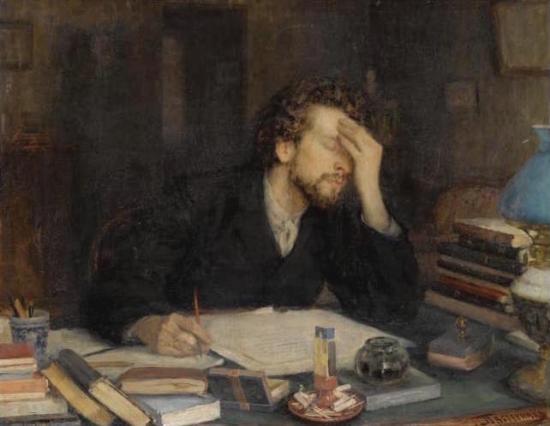
painting of author stuck

I don’t know about you, but this really opened my eyes.  After all, I thought I had “writer’s block” for nearly 18 years, as I’ve mentioned in a few of my blog posts.  But pondering those years, I was just busy and allowed all the things around me to take me away from my writing, and in most of those circumstances, they were legitimate reasons why.   Considering I was taking care of my youngest son’s special needs when he was a baby, toddler, and early grade school age, he needed to be my first priority.  It was only right he came before any thoughts of taking up writing again that I’d not touched in eight years by that time.  

But what I took away from Dufresne’s words, other than the fact that writer’s block isn’t real, is that writing is a choice and a job.  This is so important, and I am asking myself why hadn’t I considered this before?  It hadn’t even crossed my mind.  Why did I think of writing as more of a pastime or hobby?  Do published authors think what they’re doing is just a pastime or hobby?  I highly doubt it.  It’s what they do, their job. They put their hearts and souls, sweat and tears into their novels and short stories.  Therefore, what Dufresne says makes perfect sense, and these words need to be heeded and remembered always for us writers.  In fact, it would be good to jot this down in our notebooks and perhaps type them up in bolded, large print and hang it up near our writing space as a constant reminder whenever we are feeling stuck or distracted or lazy.  

In the weeks to come, I may write more blog posts on what John Dufresne has to teach us (he does teach at a college in Florida) on the techniques and art of writing.  Until then, keep on keeping on with the pen to the paper or hands on the keyboard and eyes on the  MS Word document filling up with your thoughts in black and white.

~*~*~*~


The Unique Ancient Christian Perspective in Fiction Writing

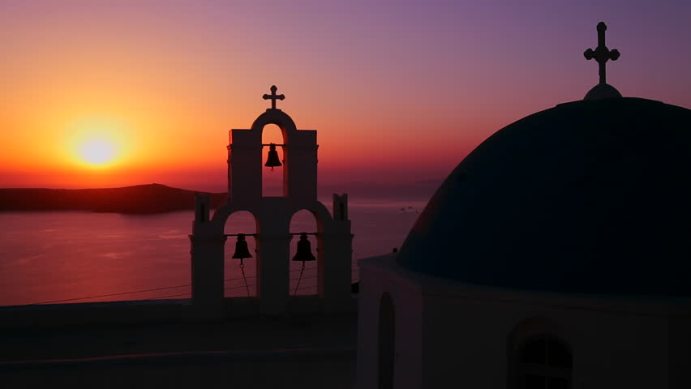
santorini sunset with church

In our Western world, we are accustomed to works by Christian authors of the Protestant and Catholic faith communities, but we’re lacking a voice for the rich and beautiful traditions of Eastern Orthodox (Greek, Russian, Romanian, Serbian, etc.) Christian faith in the fiction publishing realm and bookstores.

This reality struck me in the past two months, but only compelled me to the point of writing about it today.  Readers could learn so many fascinating aspects of the Orthodox Christian culture, traditions, and way of life with access to these writers’ works present in the fiction writing arena in the United States, especially.

I guess it was only natural that I, being an Orthodox Christian, would come to this realization eventually.  I only wonder if any of my Orthodox Christian brethren have thought about this and wished there were fiction books out there that delved into the traditions and beliefs of their own.

theophany cross dive

As a rather new writer in the past three years (coming back to writing after a nearly eighteen-year hiatus…you can read my writing history in a few of my previous blog posts, like my blog post “A Lifelong Dream Unfolding”), I’m still trying to get down the skills of writing, grasping good plot, and character development, but I felt compelled to share my thoughts.

You see, we Orthodox Christians don’t really fit into the tight guidelines of the evangelical Christian publishing, or completely in Catholic publishing.  Our beliefs are a bit different from the Western mindset, and our traditions are unique.  Wouldn’t it nice to have a venue to share these types of stories with you readers out there?  Maybe readers would find the cross dives done in a body of water nearest to a community’s church, why we make St. Basil’s bread, wear prayer rope bracelets, fast, wear crowns/stefana at our weddings, or wear wedding bands on our right ring fingers intriguing.  These traditions and beliefs may be refreshing interwoven in a fiction novel of a character of Eastern Orthodox faith.

stefana marriage crowns

While googling Orthodox Christian fiction writers, I found one from 2011 under a Facebook friend’s website.  With regards to fantasy (which is the genre of the story in the link), in my own personal opinion, I’ve not really been into fantasy about people with supernatural powers because they already truly exist in those who become holy in Christ–Saints.  There are plenty of stories of them in the Orthodox Christian world, but hardly known in the United States, my home country.  Incidentally, Ancient Faith Publishing has started accepting women’s fiction and other fiction by Eastern Orthodox Christians, and I hope other publishing companies follow…at least a few…because it gives us EOCs an outlet for our work.  🙂

I believe opening up this Eastern Orthodox Christian mindset in the Western World’s fiction publishing world would add a unique, fresh, profound, and brilliant expression of Christianity that’s so needed.

~*~*~*~


Pondering 2017 & Anticipating 2018

happy new year clock


This year started out rough.  My husband, Troy, had been searching for a job since November 2015, and by the time 2017 ushered in, our hopes were dwindling but not completely gone.  We still held on to our faith that God would lead us toward the right job for Troy and having survived the past year on his small military retirement and disability, God provided for us in our financial and familial circumstances.

In February, I worked for a temp agency to help our financial dilemma.  An architectural firm employed me for a month, and that was fine.  It had been about seventeen years since I’d worked outside the home, and that was a huge step for me and a good experience.  It helped a little when we needed some supplemental income.

But in those many months, I wondered what God ultimately wanted us to do.  What was His Will for us?  Well, it seems, in echoing our priest here at our church in Lancaster, God was teaching us perseverance, patience, and testing our faith in Him.

john 14 18 beautiful verse

And then God provided us a door that opened to the richest of blessings.  A couple weeks into May, the local school district hired Troy as Maintenance Director.  This truly was, as I said, a huge blessing because we had thought Troy would end up having to find work and commute from one of the big cities one to three hours away from our home.   Instead, his office is no more than ten minutes from our house!  God is good.

So, 2017 started rocky, but blossomed into a pretty awesome year.  We got to finally go back to our beloved Colorado for two weeks to spend it in the Rocky Mountains at Estes Park and visit our church family/friends in Colorado Springs.  After being away because of Troy’s schooling in Boston since 2013 and moving to Lancaster, PA in 2015, we didn’t know if our friends had just moved on.  We know how relationships and life can change with time.

Troy & I in Estes Park:Drake, CO June 2017

(Troy and I at our cabin in Estes Park, CO)

But we were pleasantly surprised, overjoyed, actually EUPHORIC, when we visited with our cherished spiritual father, his precious wife, our church family, and friend I have known for thirty-eight years.  My friend, KiMar, and I have managed to keep in touch for that amount of time, in separate states, moving about all those years since both our dads had careers and retired from the Air Force.  It’s the longest friendship I’ve had in my life, and it’s beautiful.

My university online courses have kept me busy throughout the year, and I’ve learned a great deal in those classes, such as nonfiction writing, context of writing, playwriting, literary theory, English language, and modern European history.  It’s been great.  It’s only strengthened my writing skills.

snhu logo 2

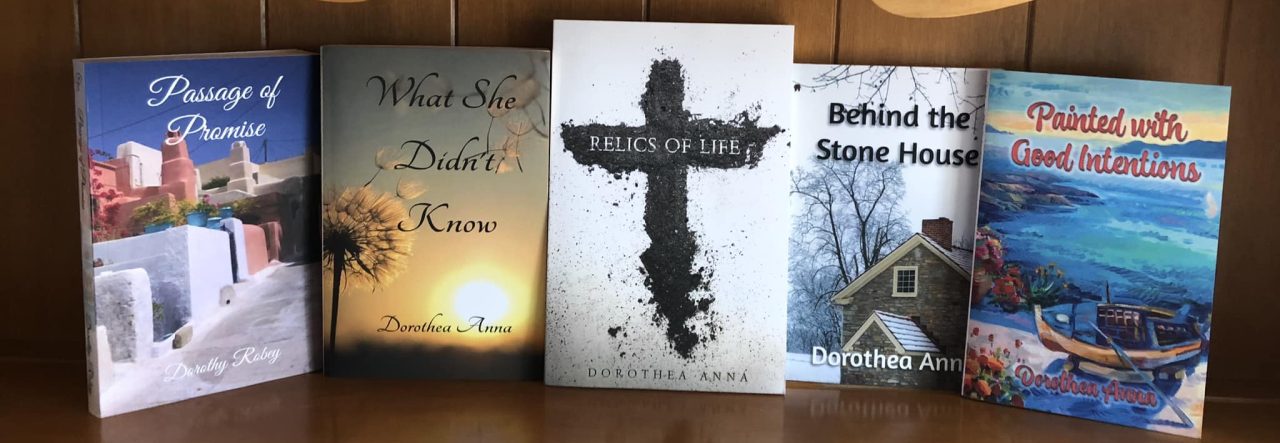
Then things started opening up for my writing. In the summer, I got back into revising my novel, Passage of Promise, that I’d written in 2015 and finished in early 2016.  I wrote a couple of short stories, and then I wrote a short play.  By December, as I’ve said in another blog post, that play and one I wrote in my creative writing class back in 2015 were read informally at the local theater.  It was the most wonderful experience, something I hope to never forget.  Thankfully, my dear son videotaped the readings so I can go back and watch them at any point to help raise my spirits if ever I’m feeling down or doubtful about my writing abilities, which happens sporadically.  The three actors who read my short play, “Falling Up Stairs,” will be performing it on the theater’s small theater-in-the round stage January 20, 2018, and I’m really excited about this…to be watching in the audience and getting to hear and see their reactions to this quirky piece.  I hope they like it!  I hope it makes them laugh!  I also began a new story December 7, and am still working on that.  What a way to wrap up the year!

DreamWrights Community Theater

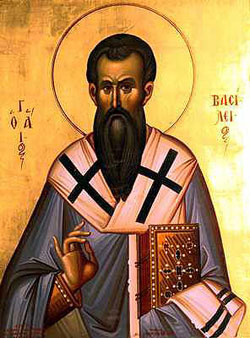
Every New Year’s Eve/New Year’s Day, it is in our Orthodox Christian tradition to make a vasilopita (St. Basil’s bread).  St. Basil lived in the fourth century.  He believed strongly in helping the poor.  Via Saint Basil’s Greek Orthodox Church’s website, here’s a little excerpt on the life of St. Basil:

During the fourth century, one of the  greatest Fathers of the Christian Church appeared on the spiritual horizon of the  Orthodox Faith. His name was Basil and he was Bishop of Caesarea, Cappadocia (Asia Minor). He was born four years after the First Ecumenical Council held in the year 325 A.D. Saint Basil was one of the three Cappadocian Fathers of the Church (the others were Gregory of Nazianzus, his best friend, and his brother, Gregory of Nyssa).

Saint Basil was the first person in human history to establish an orphanage for little children. He also founded the first Christian hospital in the world. His fame as a Holy Man spread like wildfire throughout the Byzantine world. He was considered one of the most wise and compassionate clergymen in the entire history of the Church. His Feast Day is observed on January 1st, the beginning of the New Year and the Epiphany season. The Church, therefore, in respect for his many contributions to the Church and to mankind in general, combined the joy and happiness of the New Year with the glory of the birth of Christ, and the Epiphany into what is known in the Orthodox Church as the Vasilopita Observance.

st. basil the great

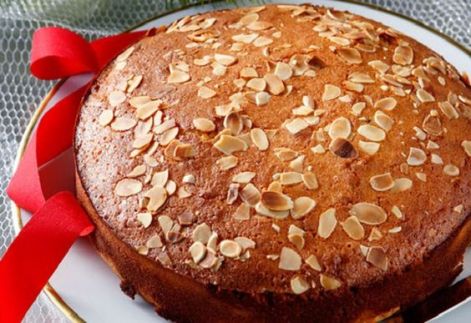
This bread we make is a sweet bread named after St. Basil.  From the same website, here’s some background on why we make the bread and how its made:

Saint Basil the Great, who was a bishop, wanted to distribute money to the poor in his Diocese. He commissioned some women to bake sweetened bread, in which he arranged to place gold coins. Thus the families in cutting the bread to nourish themselves, were pleasantly surprised to find the coins.

This original event which happened in Cappadocia of Caesarea in the last half of the fourth century, is very much alive in our Orthodox homes each year the 1st January. According to tradition, special sweet bread (in some areas of Greece, it takes the form of a cake) is prepared both in the Orthodox homes and in the Church community which is called Vasilopita. Sweets are added to the bread which symbolize the sweetness and joy of life everlasting. It also symbolizes the hope that the New Year will be filled with the sweetness of life, liberty, health, and happiness for all who participate in the Vasilopita Observance. When the Vasilopita is prepared, a coin is usually added to the ingredients. When the bread is cut and the observance begins, the individual who receives that portion of the Pita which contains the coin is considered blessed.

vasilopita

(example of a vasilopita – St. Basil’s bread)

It is rare that I get this coin, and it is pretty rare for Troy, too.  In 2016, our brother-in-law got it and had the best sales record that year where he works.  Lo and behold, Troy got the coin for 2017, and we saw so many blessings spring forth from it!  Secretly, I’m hoping and wishing very much to see the coin in my slice of vasilopita for 2018, so this upcoming year will be the year my books are published, and I am fortunate enough to hear and read the reviews of my readers feeling hope, inspiration, and satisfaction after perusing my book(s).  God willing!  In any case, I’ve got much to look forward to 2018:

  • Finishing up revisions of my first novel and preparing it for a professional editor, submitting a query to a publisher, and hopefully getting a positive response, even though I know to expect a rejection letter!  It’ll be published in 2018, for sure. 🙂
  • Watching my play on the stage!
  • Finishing up my current work in progress.
  • Reading so many great books.
  • Four-day weekend in D.C. (tentative!)
  • Vacationing in Estes Park and Colorado Springs again! (praying!)


Here’s to a successful and blessed 2018!

~*~*~*~