Writing: Harmful & Therapeutic to Your Health

writing in notebook a story

As a writer, I tend to sit a lot, which isn’t exactly healthy.  However, I do walk every now and then, and I found out that writing and walking are a natural marriage of mind and body.

But to be honest, I don’t walk enough…two or three times a week for twenty minutes per day the majority of the time.  Ideally, five days a week for twenty to thirty minutes is my unattained goal thus far.

Incidentally, along with discovering the marriage of writing and walking, I discovered some fascinating information on this topic.  Many famous writers walked a lot.  Authors such as Charles Dickens, Virginia Woolf, and William Wordsworth.  Of course, if you think about it, walking was much more commonplace for getting around back in Dickens’ et. al’s eras.  They benefited before studies were done on what walking does for writers.

walking sneakers

Other than getting some good exercise, other positive things happen when we trek around our neighborhood or local park.  In a study done by England’s Cambridge University of more than 334,000 Europeans, it discovered a brisk walk twenty minutes a day might be sufficient to decrease a person’s risk of premature death.  In addition, walking aids in stress reduction and alleviates symptoms of depression (Bianchi).

Walking also clears the mind and actually leads to creative thinking.  A Stanford University study asked participants to do mental tasks, such as producing analogies to convey complex ideas, that are common in creativity tests.  The results showed that 81% to 100% of the participants formed creative ideas walking compared to sitting (Andrews).

Now, about writing.  I found that writing is a way to help heal from traumas and also releases emotional stress and eases anxiety.

A study by Spera, Buhrfeind, and Pennebaker shows expressive writing, which means scrawling down your feelings on paper, improves mood, well-being, and decreases stress levels.

Expressive writing can be used to write in a daily gratitude journal, a journal for recording emotionally stressful events, or through the created and written situations of characters’ lives in your novel.  For example, a study was done on engineers that had been laid off recently and were separated into three groups:

1) A control group with no writing,

2) A group assigned to write about time management, and

3) A group to expressively write about the raw feelings of losing their jobs.

Both writing groups did this twenty minutes a day for five days, in which they also elucidated the emotional difficulties of job hunting, “relationship problems, financial stressors, the immediate experience of being fired, losing their coworkers, and feeling rejected” (Grant).

The results were stunning.  Three months later, the control group with the exception of five percent, were still seeking employment.  Twenty-six percent of the expressive writing groups obtained new jobs.  These groups also reported consuming less alcohol.  Eight months later, the control group still struggled to acquire a job with less than nineteen percent finding full-time work, whereas, fifty-two percent of the expressive writing groups had new jobs (Grant).

writing

In writing her novel, author Jessica Lourey states, “Little by little, I was carving out new space for thoughts that were not about death or depression.”  She adds regarding Dr. Pennebaker’s study, “Two elements above all else increase therapeutic value of writing: creating a coherent narrative and shifting perspective…Writers call them plot and point of view” (Lourey).  Therefore, expressive writing heals.

So, writing and walking are good things, right?  Well…  Walking certainly is good for a person as noted above.  Writing is good for easing and healing emotional issues.  But sitting most of the day writing, staring at a computer screen, and not taking breaks can actually cause major health problems.

Like many office workers, serious, dedicated writers likely sit six or more hours a day.  Physically, sitting for many hours a day elevates the risk of heart disease, cancer, diabetes, and premature death.  This includes people who exercise regularly.  Dr. David Alter from the Toronto Rehabilitation Institute states, “Even if you do a half an hour or an hour of exercise every day, it doesn’t give us the reassurance that sitting for the other twenty-three hours is okay.  In fact, it’s not” (CBS News).

In a study by CBS News, prolonged sitting increased the risk of cardiovascular disease by 14%.  The risk of cancer increased by 13%, and the risk of diabetes skyrocketed to 91%.  With sedentariness, the heart is not getting its exercise, and blood sugar isn’t moving well through our cells (CBS News).

Mentally, sitting in an environment with no social interaction or outside fresh air and sunlight causes depression for many writers.  A couple of famous writers who had or currently have depression are F. Scott Fitzgerald and J.K. Rowling.

A study out of Australia of close to 9,000 women in their fifties discovered those who sat seven hours a day and did not exercise were three times more likely to have depressive symptoms, than for those who sat less than four hours daily and exercised regularly.

feeling-the-effects-of-chronci-stress

Incidentally, depression drains a person’s energy, which causes less of a desire to be active (Andrews). Sitting for several hours a day also affects a person’s wellbeing because of lack of social interaction. Connecting with family and friends reduces isolation and loneliness (Mann).

Writers also face emotional challenges such as dealing with perpetual rejections from publishers, editors, and the like.  This also at times includes their peers. A clinical psychiatrist, Dr. Alan Manevitz, states, “A large part of a writer’s success depends on how other people think of him” (Mann).

The majority of writers work by themselves and are isolated from companionship and sunlight, and coupled with unhealthy sleeping patterns if they write into the night, are a concoction for depression (Mann).

That news alone can depress a person who enjoys writing.  But there are ways to counter these dire outcomes.  We can start by standing up for one to three minutes each half hour or so of sitting throughout the day (CBS News).

Apparently, many corporations have purchased standing desks.  Some employees have reported feeling more balanced energy-wise by working at standing desks than when they’d been sitting at desks.  Getting used to standing at their desks did take time and adjustment, but it seems to be proving helpful to their wellness (CBS News).

standing desk

I started taking one to three-minute standing breaks yesterday, and I already felt a difference, and it was a positive one.  My energy level was better, and my mind was more focused and clear.

New story ideas and character dialogue switch on while I’m walking, and walking out in the sunlight and listening to the birds and looking at nature around me boosts my mood and energy.  Spending quality time with family and friends is something I’m trying to do more.  A good balance of social connection and alone time is needed for my introverted self.

With periodic breaks and a regular walking routine, we writers can improve not only our health, but our creativity.

~*~*~*~

Works Cited
Andrews, Linda Wasmer. “To Become a Better Writer, Be a Frequent Walker.”  Psychology Today.  28 March 2016.  https://www.psychologytoday.com/us/blog/minding-the-body/201603/become-better-writer-be-frequent-walker.  Accessed 19 July 2018.
Andrews, Linda Wasmer.  “What Sitting Does to Your Psyche.”  Psychology Today.  20 March 2014.  https://www.psychologytoday.com/us/blog/minding-the-body/201403/what-sitting-does-your-psyche.  Accessed 19 July 2018.
Bianchi, Nicole.  “Want to Become a Better Writer?  Go For a Walk.”  Nicholebianchi.com. 15 June 2016. https://nicolebianchi.com/better-writer-daily-walk/.  Accessed 12 July 2018.
Grant, Adam.  “The Power of the Pen:  How to Boost Happiness, Health, and Productivity.” Linkedin.com.  28 May 2013. https://www.linkedin.com/pulse/20130528121344-69244073-the-power-of-the-pen-can-writing-make-us-happier-healthier-and-more-productive/. Accessed 12 July 2018.
Lourey, Jessica.  “The Therapeutic Benefits of Writing a Novel:  Research suggests that writing fiction can be a powerful healing tool.”  Psychology Today.  9 June 2017.  https://www.psychologytoday.com/us/blog/discover-your-truth/201706/the-therapeutic-benefits-writing-novel.  Accessed 12 July 2018.
Mann, Denise.  “Why Writers Are Prone To Depression.”  Everyday Health. https://www.everydayhealth.com/depression/why-writers-are-prone-to-depression-6709.aspx. Accessed 19 July 2018.
“Too much sitting raises risk of death, even if you exercise.”  CBS News.  20 January 2015. https://www.cbsnews.com/news/too-much-sitting-raises-risk-of-death-even-if-you-exercise/. Accessed 19 July 2018.



Breaking from Writing and the Consequences

writing exhaustion pic

What if I stop writing for a while?  What if taking this hiatus is not because I have no choice but precisely because I do?

About a month ago, I’d reached writing and creativity exhaustion, so much so that even when I’d forced myself to write at least a few sentences or a paragraph, nothing but stale, dry, lifeless words settled on the page.

You see, at this time, I’d finished my current revisions and my editor had done her thing in supplying me with superb proofreading, editing, and suggestions for my characters and plot for my novel, Passage of Promise.

But at the same time, I’d entered my subsequent university course in fascinating American Art.  It was one of the required general education exploration courses available for me to choose. My courses are eight weeks long.  By mid term, the college load was like swimming in an ever deepening pool, and the massive reading assignments and associated linked reading material were pulling me under.

drowning underwater pool

Overwhelmed by keeping up with my novel’s plot additions, blog posts, essays, and colossal pages to peruse and jot down notes, it was time for me to slide one of these on the shelf.

Permanently? you ask.  I sure hope not.

When you struggle with general anxiety and menopausal symptoms that trigger it (along with blood sugar issues), your brain can only take in so many mental activities at a time.  I’d reached my limit.

When this happened, I closed up my manuscript on Word, and dread hit me as I remembered the eighteen-year hiatus from writing that was broken in September 2014…not so long ago.  Was I going to end up disconnected from my writing another eighteen years?

This concern prompted me to look up information on authors/writers taking breaks.  I found a couple of articles that gave me a great sense of relief.

What I learned is breaks are not only acceptable, but necessary to regenerate your creative juices and thought processes.  And we writers make the choice on how long that break will be.  It could be a day, a week, a month, or months.

I know this is alarming and sounds close to anathema considering how often we hear and read in the writing world the mantra stressing writing at least something daily.

But please keep reading.

Via a Writer’s Edit article, it says, “If you are at the point where you are forcing a story, take this as a sign to take a break from it.”  This gave me a chance to exhale.

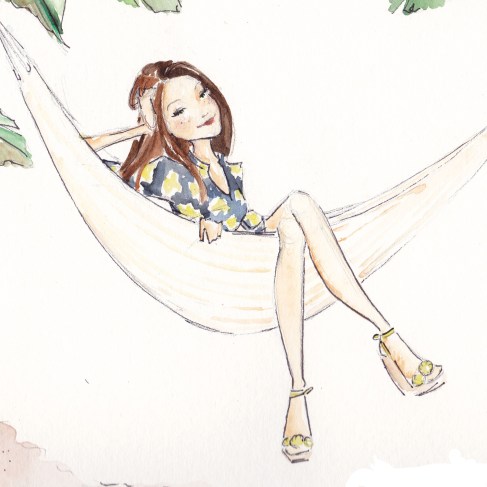
cartoon girl sitting in hammock

(credit:  GetDrawings.com)

The author of that article also stressed not losing the joy of writing.  Well, I’d forgotten the joy of writing.  It had become the equivalent of cramming for final exams since it was juxtaposed with my college course load.

However, another reassuring perspective came from The Writing Cooperative’s author, Ryan J. Pelton’s article on this subject, stating, “You are not weak, uncommitted, and not a true writer if you take breaks.  You will not forget how to write.”  I could sit back calmly with this tidbit.

These breaks can be used for relaxing and cleaning out your brain, for continued reading for pleasure, and an upcoming chance for new, fresh characters and storylines to surface that can be noted for later.

My plan at this time is to pick up on my novel and other writing projects after I graduate from my university at the end of October.  Then I will be free to pursue my writing without college assignment pressures.  This is my tentative schedule, and each of us makes our own.

So, if you’re feeling burnt out, or you have nothing left, take a much needed break that is as long as you choose, and look forward to sparkling, vivid tales in the very near future.


~*~*~*~


Works Cited
Writer’s Edit.  “Why Taking Writing Breaks Is Important.” writersedit.com.  https://writersedit.com/fiction-writing/taking-writing-breaks-important/
Pelton, Ryan J.  “Put Down the Pen and Step Away (rest for writers).”  The Writing Cooperative.  https://writingcooperative.com/put-down-the-pen-and-step-away-rest-for-writers-44a98971db4b


The Importance of Your Creative Work Space

desk and windows

I’m sharing a post by fellow blogger, Nicholas Rossis, who shared a guest post about your work space and how it can help and improve your creative writing.  Until today, I’d been sitting on my bed writing, and well, that wasn’t really the best place to be a creative writer.  So, these tips helped me to change that, and I’m now sitting in my living room/library at my desk, and I already feel better having the space to type and write and  the fortunate treat of being able to look out the picture window that I believe will help to inspire me to create many imaginative characters, settings, and stories (God willing!).

I hope this shared post is beneficial to your writing.

This is a guest post by Jade Anderson is an experienced In-house Editor at Upskilled. With a background in online marketing, Jade runs some successful websites of her own. Her passion for the education industry and content is displayed through the quality of work she offers.

6 Tips for Making a Workspace Conducive to Writing

No matter what type of content you’re writing, whether it’s fiction, investigative journalism, feature pieces or academic articles, the environment that you write in has a big impact on how well you put that piece together. Writing takes skill, for sure, but where you write can affect how you write because if there are distractions in your workplace, your writing is likely to reflect that. As a writer, your workspace should be inspiring and comfortable in equal measure. It should be somewhere you can focus and reflect. Here are five tips for creating the perfect writing workspace.

2. Make Sure You Have Privacy

One criterion for success when it comes to writing is consistency. Often, this means writing something every day. But it also means trying to work in the space every time you write. In order to find a space where you are going to be able to be productive most days, you need to consider the level of privacy you will have. Choose a space where you’re able to be alone with your projects and your thoughts without being distracted by background noise or other people. This can simply mean working in a room in your house that has a door or finding an area where there is little to no foot traffic. Having a private, dedicated area that is yours allows you to have a distraction-free workspace.

3. Consider Your Desk And Chair

How comfortable your desk and chair are, are important factors that affect how productive you are. If you feel cramped or uncomfortable, you’re far more likely to get distracted and want to stop working. Chances are, you’ll be sitting and typing for long stretches of time, so you need a space that is ergonomic. Make sure that your desk and chair are at the right height so you don’t have to strain or hunch to work on your computer. You need a chair that will support your back and encourage good posture. As for your desk, it must provide enough space for everything you need.

4. Declutter

It is hard to work amongst clutter. Physical clutter can cause mental clutter, leaving us feeling distracted and unfocused. Getting rid of unnecessary mess and creating a clutter-free space is one of the key steps in creating an environment conducive to writing. While decluttering can take some time and hard work, it pays off. Set aside a day to declutter the space you wish to work in and decide what items you will throw out, what you’ll donate, and what you’ll keep. If you have furniture, files or belongings that you want to keep but don’t necessarily need right now, consider putting these things into storage. Using community storage is an affordable and convenient option should you find yourself in this situation.

5. Make It Yours

Your workspace is a space for you. You want it to reflect your personality and to be a place where you feel comfortable and at home. While you shouldn’t fill it with personal belongings that may be distracting or cause clutter, you should put some effort into personalizing the area. This can be with artwork, photos or other decorative features that you feel express your personality. As a writer, you may wish to personalize your space by filling it with your favorite books or quotes from your favorite authors!

6. Go For Natural Light

Regardless of your industry, natural light has been proven to impact productivity. The sun boosts your mood, gives you energy, and can stimulate creativity. For these reasons, natural light is particularly important for writers. If you’re working from home, it might be difficult to find a room with natural light to work in. However, even if you can work in front of a window or in a room with a skylight, this is better than nothing. Adequate light is important no matter what time of the day. If you’re working into the evenings, ensure that you have artificial lighting so you can read and write without straining your eyes.

7. Have What You Need On Hand

In order to work productively in your workspace, you should have everything you need to work on hand and ready to go. In the digital age, this might mean having all your tech accessories, chargers, and screens neatly arranged by your desk so they are easily accessible at all times. For writers, having two screens can be particularly useful. This allows you to have multiple windows open if you are researching and writing at the same time. If you still like the traditional pen-to-paper method when you’re figuring out your ideas, ensure you have plenty of supplies at hand in your desk drawers or on your desk.


~*~*~*~