
I’ve discovered my muse. Her writings inspire me and give me mental motivation in my ability to write these days. Not only that, she writes about topics and relationships that I have great interest in and have wanted to write about. The muse is author Jodi Picoult. You may have read at least one or two of her books if you like women’s fiction. I wonder if she realizes what an inspiration she is to fellow writers.
The last novel I read of hers was the best. It’s called House Rules. If you haven’t read it, I highly recommend it. Loved it!

Synopsis:
When your son can’t look you in the eye . . . does that mean he’s guilty?
Jacob Hunt is a teen with Asperger’s syndrome. He’s hopeless at reading social cues or expressing himself well to others, though he is brilliant in many ways. But he has a special focus on one subject—forensic analysis. A police scanner in his room clues him in to crime scenes, and he’s always showing up and telling the cops what to do. And he’s usually right.
But when Jacob’s small hometown is rocked by a terrible murder, law enforcement comes to him. Jacob’s behaviors are hallmark Asperger’s, but they look a lot like guilt to the local police. Suddenly the Hunt family, who only want to fit in, are directly in the spotlight. For Jacob’s mother, Emma, it’s a brutal reminder of the intolerance and misunderstanding that always threaten her family. For his brother, Theo, it’s another indication why nothing is normal because of Jacob.
Any time I read her works, ideas flow from my mind onto the paper freely without constraints, and the writing isn’t half bad. In fact, it often comes out beautifully! Kudos that I’ve found my muse, my inspiration for aiding me in my creative writing endeavor.

But when I’m not reading her, when I’m reading other authors’ books, my creative writing isn’t as rich.
I have heard that depending on the type of writing style and its brilliance or less brilliant form, voice, structure, character development, and flow of whatever authors you read can and will affect how good and creative your own writing will be. Should I continue reading others’ books and settle for a mediocre spark of creativity? Perhaps I’m learning something else from these authors’ writings than from my muse’s writings, that can help my writing techniques in some way. I just haven’t discovered what that is yet. If and when I do, I’ll write a blog post on it.
Therefore, I won’t stop reading other authors’ works that I like. After all, I do know that my first novel was written before I’d read anything by Picoult, so I know I can accomplish this. I just need to stay motivated and continue to practice my writing and continue reading the genre in which I am interested and in which I write. That’s part of being a writer.

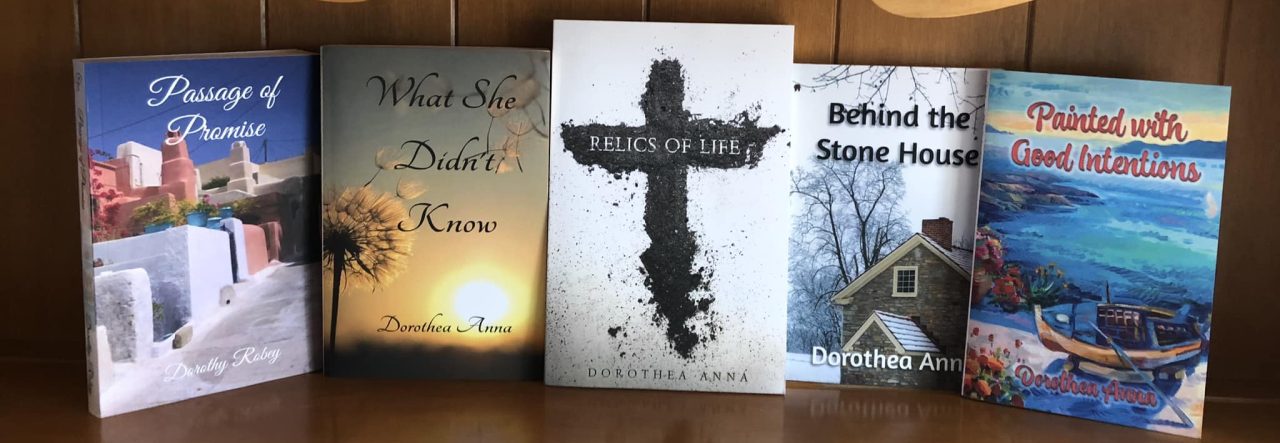
Incidentally, as I’d written this, new ideas popped into my head on additional dialogue and descriptions (in which I’d turned into written revisions) to my first novel, Passage of Promise. I’ve been revising and deepening its protagonist, antagonist, and supporting characters’ relationships for the past week so that I can send it back to my editor in a couple weeks to re-edit and give any other suggestions.
Wow. Who would have thought a blog post on writing abilities via one’s muse and the concerns about lesser creative abilities when not reading their works would lead to ideas sprouting like pea shoots in my head. I think the creative writing of my muse lingers in my mind like the sweet smell of incense from Orthodox Church services I attend that cling to my clothes and hair, and keeps God in my thoughts for the week.
So, what are the solutions to this struggle of the muse and the lesser inspired readings to aid me in my writing? Well, I will…
- Continue reading works from Picoult.
- Take daily walks. They give me peace, spur creative ideas, and nostalgic memories.
- Write, if not daily, every other day (I try, people).
- Do other creative activities. I’ve read they help spark ideas for your writing.
- Try not to worry about losing my writing abilities. I’ve got to stay steadfast and believe in my writing. And truly, writing is in me (has been since my childhood) and part of who I am.
Who’s your writing muse that helps inspire you?
~*~*~*~

 Modest Musings