Finding Meaning in Silenced Voices

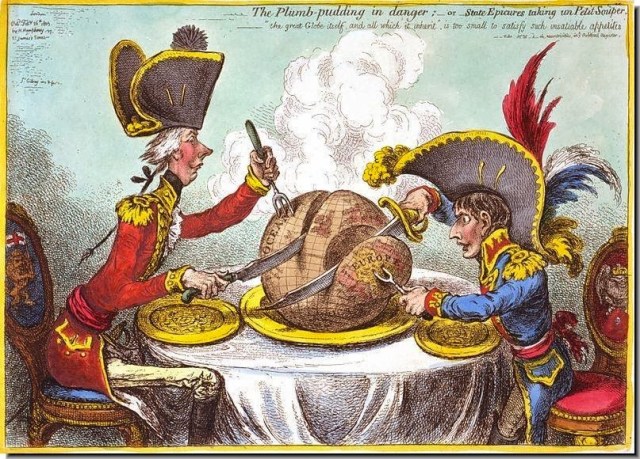
colonialism cartoon

Postcolonial theory emerged after WWII, in which it studied the colonizer and the colonized, meaning those people from imperialistic nations, such as England, France, Denmark, and America, and the people from the countries the former ones colonized.

The postcolonial theorist, Edward Said, used poststructuralist tools by deconstructing the West and East through binary opposition.  The West was given the center or privilege, while the East was given the marginalized or “other.”

The postcolonial critic, Homi Bhabha, focused on the interactions of the colonizer with the colonized and how each group was affected by the others’ cultures.

Lastly, Gayarti Chakravorty Spivak, an Indian-born Western academic studied the difference in the cultures of the colonizer and the colonized and paid close attention to both class and the effects of colonialism on the colonized women.

The critics analyzed literature for these aspects and also had to figure out how to categorize postcolonial literature from writers who were geographically not part of Europe or other colonial powers (Bertens).  This was done through using the term, “literatures in English” (Bertens).

The writers’ works under the oppression of the colonizers were still viewed and critiqued through the center, which were the English academics and critics.  Later, in the 1970s through today, this has changed and opened up to more autonomy for those postcolonial writers that were victims of colonization (Bertens).

Charlotte Perkins Gilman’s “The Yellow Wallpaper” shows the Western postcolonial view through an American wealthy, caucasian family.

yellow wallpaper book cover 2

Gilman, an American writer and feminist, wrote this in the late nineteenth century when colonialism was quite active.

In the story, we can see that John, the main character’s husband, represents the colonizer, or from Said’s point of view, the West, whereas the main character represents the East.  John is a doctor and wealthy.  His character aligns with the traits of the Western colonizer or “masculine pole” (Bertens) Said describes as “enlightened, rational, entrepreneurial, and disciplined” (Bertens).  The main character shows John to exhibit the traits of rational and enlightened when she says, “John is practical to the extreme.  He has no patience with faith, an intense horror of superstition, and he scoffs openly at any talk of things not to be felt and seen and put down in figures” (Gilman).  This also reflects the West’s or colonizer’s view of the East’s or colonized’s practices, beliefs, and cultures.

The main character reflects the postcolonial view of the colonized that helps or aids in the colonizer’s power when she says in regard to John, “He is very careful and loving, and hardly lets me stir without special direction.”  This also shows the trait of passiveness that Said mentions in his list of the “feminine pole” (Bertens).  These traits Said mentions that are displayed by the main character in this short story are “irrational, passive, undisciplined, and sensual” (Bertens).  The main character displays irrationality when she says, “I cry at nothing, and cry most of the time” (Gilman).  Her passivity is apparent when she says, “I tried to have a real earnest talk with him the other day and tell him I wish he would let me go and make a visit to Cousin Henry and Julia.  But he said I wasn’t able to go, nor to stand it after I got there; I did not make out a very good case for myself, for I was crying before I had finished” (Gilman).

Using the methods of Bhabha, the interaction between the main character and her husband reveal that the main character’s perceived madness from being cooped up in the room affect John at the end of the story.  After the main character has torn up nearly all the rest of the yellow wallpaper in the room to try and release her alter ego from the prison she imagines in the paper, John comes to the room and finds it locked, for which she tells him where the key is.  In obtaining the key, John opens the door and asks in astonishment, “For God’s sake, what are you doing?” (Gilman), and the main character says, “I’ve got out at last, in spite of you and Jane.  And I’ve pulled off most of the paper, so you can’t put me back!” (Gilman).  John proceeds to faint in reaction to this.  But this also depicts resistance by the main character/colonized against the colonizer.

The symbols of West and East and the colonizer and the colonized through the main character and her husband in the short story, “The Yellow Wallpaper” provide a good example of a postcolonial theory’s analysis through its lens.


~*~*~*~


Works Cited
Bertens, Hans.  Literary Theory:  The Basics.  3rd ed.  London and New York:  Routledge, 2014.
Gilman, Charlotte Perkins.  “The Yellow Wallpaper.”  Gutenberg.org.  5 November 2012.
https://www.gutenberg.org/files/1952/1952-h/1952-h.htm.  Accessed 10 August 2017.
 

Best Christmas Movie Ever!

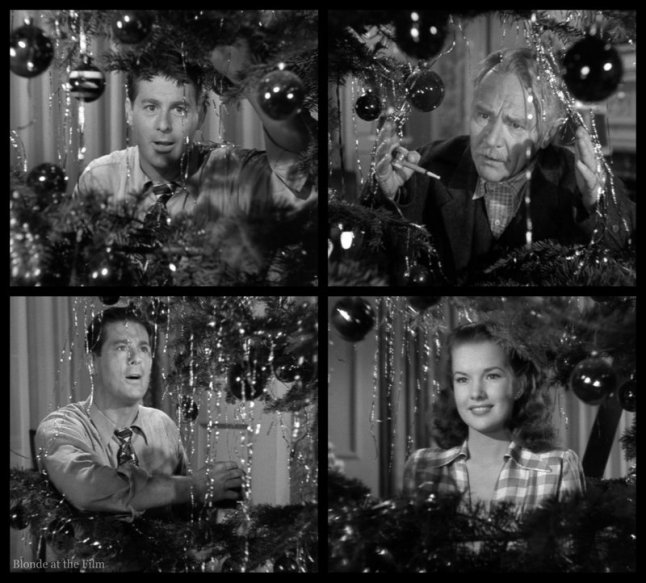
happened on fifth avenue four pic set

Okay, the title is a bit subjective, because this will be my opinion on the best Christmas movie ever, but you probably figured that out, and I’ve wasted your time typing this first line of explanation. 🙂

I’ve actually written on this movie a couple of years ago around this time. But it bears repeating.

If you haven’t seen It Happened on 5th Avenue, your Christmas movie collection is not complete. Yes, it’s an old black and white movie (I personally love b&w old classic films), but so is It’s a Wonderful Life, and it’s one of the most cherished Christmas movies. Although It’s a Wonderful Life is a wonderful movie, It Happened on 5th Avenue tops it, in my humble opinion (as well as my family’s).

So, if you haven’t seen this wonderful movie, you’re probably wondering why haven’t you. Don’t worry. We hadn’t heard about it at all until about five or so years ago when I got a DVD with a collection of four, old classic black and white movies. One of them was It Happened on 5th Avenue, and my family sat down and watched it before Christmas some years back and fell in love with it. We wondered why this wasn’t more popular. Its message is stellar; its storyline, cute and beautiful; its characters, fun, likeable, and realistic.

Picture a middle aged to elderly man with his dog, squatting in one of the top wealthiest men’s homes each winter, encountering people in need, welcoming them to dwell with him in this mansion through the cold and snowy New York City winter.

Here’s a blurb of the storyline via Amazon:

Every winter, Michael J. O’Connor, the second richest man in the world, leaves his 5th Avenue mansion for warmer climes. Every winter, Aloysius T. McKeever, homeless man, moves into the 5th Avenue mansion. This particular winter, McKeever meets Jim Bullock, an army veteran who has recently been evicted from his apartment and offers to share the mansion with him. It’s not long before the mansion has a few more guests, including: Jim’s army buddies and their wives and children; runaway heiress Trudy; and even Michael J. O’Connor, himself.

Watch a short clip from the movie via You Tube. Then find it online to watch or order it on Amazon. You won’t be sorry!

Add this to your Christmas collection, and increase the joy of Christmastime!


~*~*~*~


Most Popular Christmas Gifts Over the Past 70 Years

retro toys

Do you remember what you desperately wanted for Christmas when you were a child? Were they toys that were the “In” thing?

For fun, I put together some data on popular toys kids wanted for Christmas through the decades.

Let’s start with the 1950s.

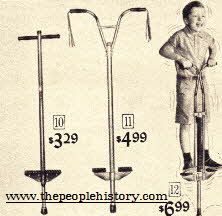
Children then seemed eager for such toys as that ol’ rubber guy, Gumby, the bouncy Pogo Stick, and the timeless Play-Doh. And what kid could go without the corn popper? I think many didn’t!

Gumby            pogo stick

corn popper toy

I actually had all of those, except Gumby, but I had them later on in my childhood era. 🙂


1960s

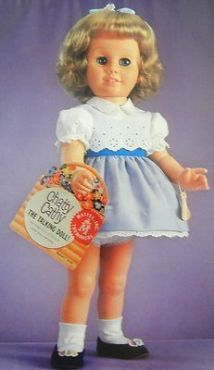
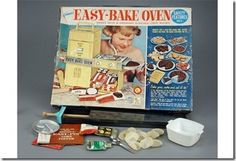
Little girls were gaga over the Chatty Cathy doll and the amazing Easy-Bake Oven.

chatty cathy doll     easy bake oven toy

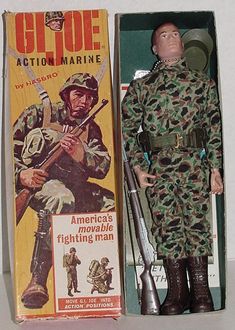
While boys found an interest in GI Joe action figures and Hot Wheels. Well…I would say both sexes were interested in these and other toys throughout these eras.

GI Joe toy        hot wheels 1968


1970s

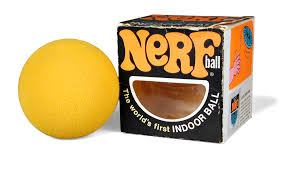
In this decade, kids were fascinated with the first foam Nerf ball, and the flexibility and durability of Stretch Armstrong. I remember the latter very well. A few of my friends had this elasticized dude, and it was wildly fun pulling him yards apart and watching him slide back into a normal-sized guy once we tired of torturing him. Haha.

nerf ball        stretch armstrong

And the cool Evil Knievel Stunt Cycle was all the roar in the early 1970s.

Evil Knievel stunt cycle

Also, a huge invention: the Atari video game system came out in this decade. The first game, I remember, was Pong. Haha. But later on, we enjoyed Pac-Man, Space Invaders, Astroids, Centipede, Pit Fall, and others!

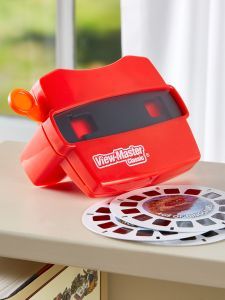
The View Master was big then too. I had several slides from the Scooby-Doo show when I was a kid. Christmas was complete when kids got these fun toys in the 1970s.

view master


1980s

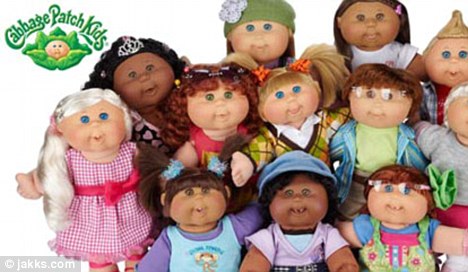
How could anyone around that time forget about the fights on Black Fridays over the Cabbage Patch Kids? Goodness. The scrambling across the slippery toy stores, and the unbelievable tug-o-war over the last couple of dolls was both astonishing and insane. Those certainly were a HUGE want for lots of children in the 1980s.

cabbage patch kids 1

Then, for the more nerdy kids, the Rubik’s Cube came out and teased and worked kids’ brains in a good way. I mean, who didn’t have a Rubik’s Cube then? We were all cool nerds! What fun that was!

KONICA MINOLTA DIGITAL CAMERA

This was also the decade when the Nintendo video game system came out! My sons are loyal Nintendo fans.


1990s

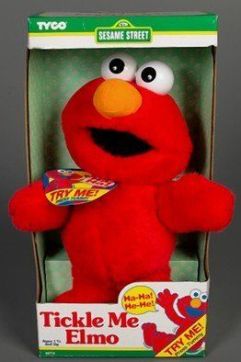
Goodness. Do you remember all the hubbub over the Tickle Me Elmo doll? I do. Although I was in my twenties then, I still remember the craze over his giggling. And then there was the bizarre-looking Furby dolls. Many parents scrambled for these dolls during Christmastime.

tickle me elmo        Furby doll

And don’t forget the Beanie Babies! Believe it or not, they started off in McDonalds’ Happy Meals but caught on like wildfire, becoming one of the most wanted and collected items in the decade.

beanie babies


2000s

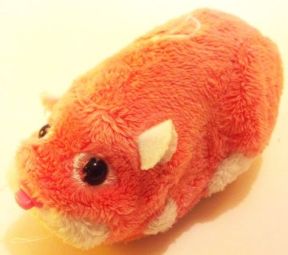
Looks like Zhu Zhu Pets came out in this time period, as well as those ugly…er, I mean, nice dolls, the Bratz. My sons actually each had a Zhu Zhu Pet. They were hamsters. The Razor Scooter was a biggie in the early 2000s.

zhu zhu pets               razor scooter


My Christmas toy memories

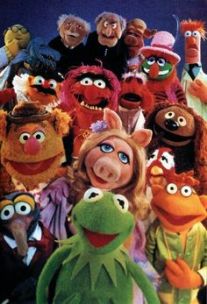
Some of the most awesome toys I got for Christmas in the late 1970s and 1980s were the Barbie Dream House and several of the Muppets characters. They were puppets where you stuck your hand in and could move their mouths, but in the case of the character, Animal, I could move his eyebrows too. What fun those were!

barbie dream house    Muppets


What were special gifts you loved when you were growing up?


~*~*~*~