A Slave & Poet

phillis wheatley pic

Have you ever heard of the remarkable woman, Phillis Wheatley?  I hadn’t until I read a little blurb in my university course’s textbook on American Art.  I finished this course last week.  There had been a lot of heavy reading and writing, but chock full of rich and beautiful artwork and information.

Phillis was born about 1753 in Senegal/Gambia, West Africa.  She was kidnapped around age eight and transported on a slave ship to the United States.  The captain of the ship discovered little Phillis was a fragile girl not suited for hard labor when they’d stopped at the first two ports of call, the West Indian and Southern colonies while crossing the Atlantic Ocean.  The captain believed her to be terminally ill.  Landing in Boston, Massachusetts, the captain wanted at least some financial compensation before Phillis’ death.  He got his wish.  A prominent Boston tailor purchased Phillis for her to be his wife’s domestic servant (Poetry Foundation).

Although frail, Phillis’ health did improve a bit, disproving the sea captain’s belief that she was terminally ill.

The Wheatleys found Phillis to be precocious, so they taught her how to read and write.  Soon, the young, intelligent girl was engrossed in various subjects, such as astronomy, history, the Bible, and classic British, Greek, and Latin literature.  But Phillis desired to learn more and stated so in her poem called “To the University of Cambridge in New England,” that was most likely her first poem written but wasn’t published until 1773 (Poetry Foundation).

Phillis wrote a poetic elegy for the Reverend George Whitefield that brought her international recognition.  It was published as a pamphlet in 1771 with Ebenezer Pemberton’s funeral sermons for Whitefield in London that was distributed in Boston, Philadelphia, and Newport (Poetry Foundation).

In February 1772 at age 18, Phillis had collected twenty-eight of her poems and with the help of Mrs. Wheatley, ran ads in Boston periodicals for sponsors.  But the colonists refused to support her because she was an African.  Frustrated by this, Phillis and the Wheatleys looked to London.  Phillis sent the Whitefield poem to Countess of Huntingdon, Selina Hastings, who was a parishioner of Reverend Whitefield.  A backer of abolitionist and evangelical causes, the countess connected bookseller Archibald Bell with Wheatley to prepare for a book of her poems (Poetry Foundation).

Suffering from asthma, Phillis traveled to London with the Wheatley’s son, Nathaniel, and was welcomed by several English dignitaries and also Benjamin Franklin.  Her collection of poems, Poems of Various Subjects, Religious and Moral, was published in 1773 (Poetry Foundation).

Phillis Wheatley’s work was the first book of poetry by an African American published in that period (Poetry Foundation)!
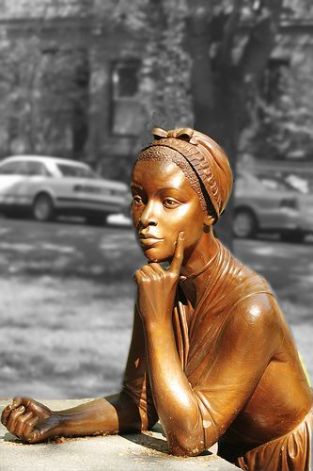
phillis wheatley sculpture

Phillis did write a few poems against slavery.  Below is an excerpt from a poetic eulogy to General David Wooster in which she spoke strongly about the wrongs of slavery (Poetry Foundation).

But how, presumptuous shall we hope to find
Divine acceptance with th’ Almighty mind—
While yet (O deed Ungenerous!) they disgrace
And hold in bondage Afric’s blameless race?
Let Virtue reign—And thou accord our prayers
Be victory our’s, and generous freedom theirs.

On Phillis’ trip back to America, Mrs. Wheatley had fallen very ill.  Phillis was made a free woman approximately three months before Mrs. Wheatley’s death on March 3, 1774.  She married and spent the rest of her life in financial hardship but still managed to continue writing her poems until she fell ill and died in 1784.

Thankfully, Phillis Wheatley’s memory and poems live on.

Here’s one of her most famous poems (a short one) titled Being Brought From Africa to America:

‘Twas mercy brought me from my Pagan land,
Taught my benighted soul to understand
That there’s a God, that there’s a Saviour too:
Once I redemption neither sought nor knew.
Some view our sable race with scornful eye,
“Their colour is a diabolic die.”
Remember, Christians, Negro’s, black as Cain,
May be refin’d, and join th’ angelic train.

I enjoyed learning about this famous, amazing African American female slave who rose in respect and accolades because of her beautiful writing and being the first African American in modern times to have her work published, that was admired by such prominent Americans as George Washington, Benjamin Franklin, and John Hancock (Poetry Foundation).


~*~*~*~


Works Cited
Poetry Foundation.  “Phillis Wheatley:  1753-1784.”  https://www.poetryfoundation.org/poets/phillis-wheatley
 

Two Special Poems From A Guest Blogger

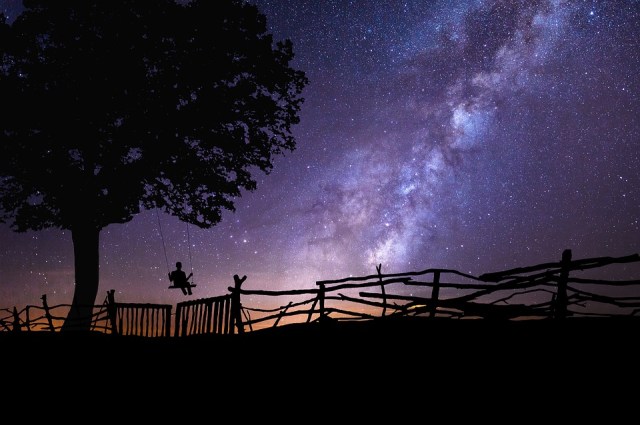
purple night sky pic

I’m sharing two poems written last week by my oldest son.  He has a real talent for writing poems, and his ability to write stories is very good as well.  The second poem was written out of stream of consciousness while in English Composition class in which he is the teacher’s assistant.  


You Are The …

You are the many,

That have come together,

You are very similar,

Yet within, are different.

Where you come from is same,

But time is not.


Short or several,

Medium many,

Where have you all come from?

What time has it been?

All clad in green,

Yet all teen.


Names are all same,

Who to blame,

For you did not call,

Yourselves anything like Paul.

Your mothers,

Whoever they are,

Have named you,

But knew not of this fateful meeting.


Who knows what the future shall hold?

Not you, nor I,

Not anybody we know,

Only those who are prophets,

But long gone are they.


Who or what has done this to you?

Your eyesight dim,

Your structure changed.

Your mouth mute,

Tongue is tied.

This was not you …


Who has changed you?

Who has mutated you?

How did this happen?

How was it done?

What more has happened to you?


Strength has grown,

Yet passive are you.

Please, whoever has harmed you,

Tell me …


Author’s note:  I did not know the meaning of this poem when I was writing it, so the meaning is up to you to interpret it.


Imagination

Hidden away within,

The grayness of the cavern,

Lies a beast dormant,

Just waiting to be woken.


When it wakes,

Many try to stop it.

No one wishes its freedom,

So back to the depths it goes.


There it festers and growls,

Nudging, gasping, clawing,

So that it may gain,

What it has lost.


The grayness of that cavern,

Becomes filled with the beasts,

From the other side,

Yet no one stops them.


Only one has the key,

Only one has the power,

Only one has the command,

And that one is … You.


By Nicholas Robey


My son, Nicholas, does reviews of Nintendo video games, but I’m encouraging him to post his many poems, so look for them in the coming weeks.  Please visit my son’s blog.   


~*~*~*~


Pieces of Paradisiacal Prose

butterfly beauty

We all know and enjoy the written beauty that is found in poetry.  I know we readers also appreciate beautiful prose in fiction (and in creative nonfiction). When I come across such glorious text, I have to read it at least three times, drinking in the imagery, language, and writing style of the author’s work.  I’ve read a few books in the past two year mostly for my World Literature and Romantic Literature classes, and some of the writing really struck me at how stunning and masterfully written it was.  So, I’m going to share with you a few excerpts from three books.

plain truth book

First is a more contemporary piece.  It’s a piece of lovely writing from author, Jodi Picoult, in her novel, Plain Truth, that I read in my free time and finished a couple of weeks ago.  One of the main characters has been longing to have a child for the past several years, and she finds out she’s pregnant, which is a total surprise to her.  Here’s what the text says:

In the past five years, I had wanted a baby so much I ached. I would wake up sometimes beside Stephen and feel my arms throb, as if I had been holding a newborn weight the whole night. I would see an infant in a stroller and feel my whole body reach; I would mark my monthly period on the calendar with the sense that my life was passing me by. I wanted to grow something under my heart. I wanted to breathe, to eat, to blossom for someone else.

As a mother of two sons, I can not only relate to these words of hope, longing, and love, but also admire how she wrote it.


dr. jekyll & mr. hyde book

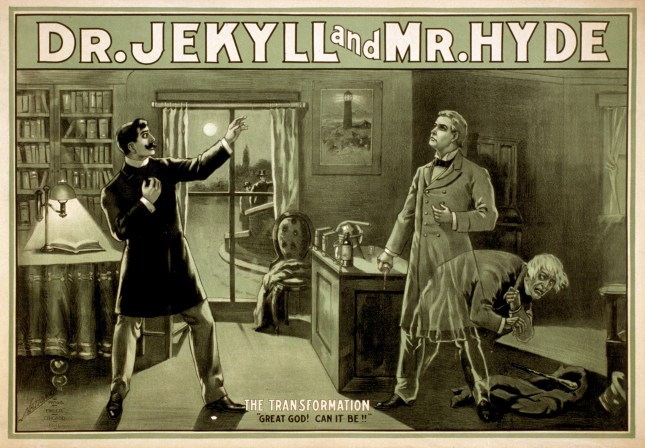
I read excerpts from The Strange Case of Dr. Jekyll and Mr. Hyde for my World Literature class several months ago, and I fell in love with Stevenson’s writing style.  It was beautiful.  Beautiful prose about the struggle of good and evil within a person.  I do plan to read the whole story one of these days!  The excerpt I’m going to share is the evil side that possessed the doctor as Hyde whenever he drank that nasty potion!

Instantly the spirit of hell awoke in me and raged. With a transport of glee, I mauled the unresisting body, tasting delight from every blow; and it was not till weariness had begun to succeed, that I was suddenly, in the top fit of my delirium, struck through the heart by a cold thrill of terror. A mist dispersed; I saw my life to be forfeit; and fled from the scene of these excesses, at once glorying and trembling, my lust of evil gratified and stimulated, my love of life screwed to the topmost peg. I ran to the house in Soho, and (to make assurance doubly sure) destroyed my papers; thence I set out through the lamplit streets, in the same divided ecstasy of mind, gloating on my crime, light-headedly devising others in the future, and yet still hastening and still hearkening in my wake for the steps of the avenger. Hyde had a song upon his lips as he compounded the draught, and as he drank it, pledged the dead man. The pangs of transformation had not done tearing him, before Henry Jekyll, with streaming tears of gratitude and remorse, had fallen upon his knees and lifted his clasped hands to God. The veil of self-indulgence was rent from head to foot, I saw my life as a whole: I followed it up from the days of childhood, when I had walked with my father’s hand, and through the self-denying toils of my professional life, to arrive again and again, with the same sense of unreality, at the damned horrors of the evening. I could have screamed aloud; I sought with tears and prayers to smother down the crowd of hideous images and sounds with which my memory swarmed against me; and still, between the petitions, the ugly face of my iniquity stared into my soul.

Nearly all of Dr. Jekyll’s confession at the end of the book is like a psalmody.  Amazing and glorious writing style.


the last man by mary shelley

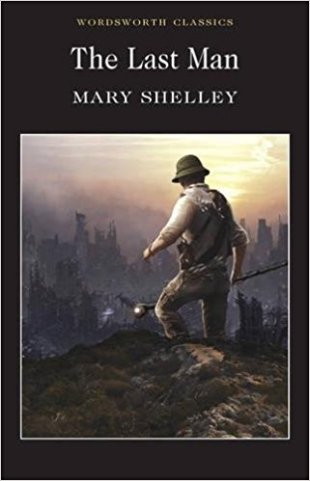
Lastly, I read The Last Man by Mary Shelley for my Romantic Literature class and absolutely fell in love with Shelley’s poetic, beautiful, flowing prose.  I was so moved by it, I read it at least five times, and to my husband, son, and friend.  It has to be some of the best writing I’ve ever laid eyes on!  Here are three excerpts of her aesthetic work:

The laughing morning air filled them while sun-light bathed earth, sky and ocean–the placid waves divided to receive our keel, and playfully kissed the dark sides of our little skiff, murmuring a welcome.

Behold us now in our frail tenement, hemmed in by hungry, roaring waves, buffeted by winds.  In the inky east two vast clouds, sailing contrary ways, met; the lightning leapt forth, and the hoarse thunder muttered.

I thought I saw Adrian at no great distance from me, clinging to an oar; I sprung from my hold, and with energy beyond my human strength, I dashed aside the waters as I strove to lay hold of him.  As that hope failed, instinctive love of life animated me, and feelings of contention, as if a hostile will combated with mine.  I breasted the surges, and flung them from me as I would the opposing front and sharpened claws of a lion about to enfang my bosom.  When I had been beaten down by one wave, I rose on another, while I felt bitter pride curl my lip.


Unbelievable talent!  I hope these pieces of paradisiacal prose made your day and life richer and more beautiful. 🙂  I’d love to see your favorite excerpts of aesthetic writings.  Please feel free to share them below. 🙂


~*~*~*~