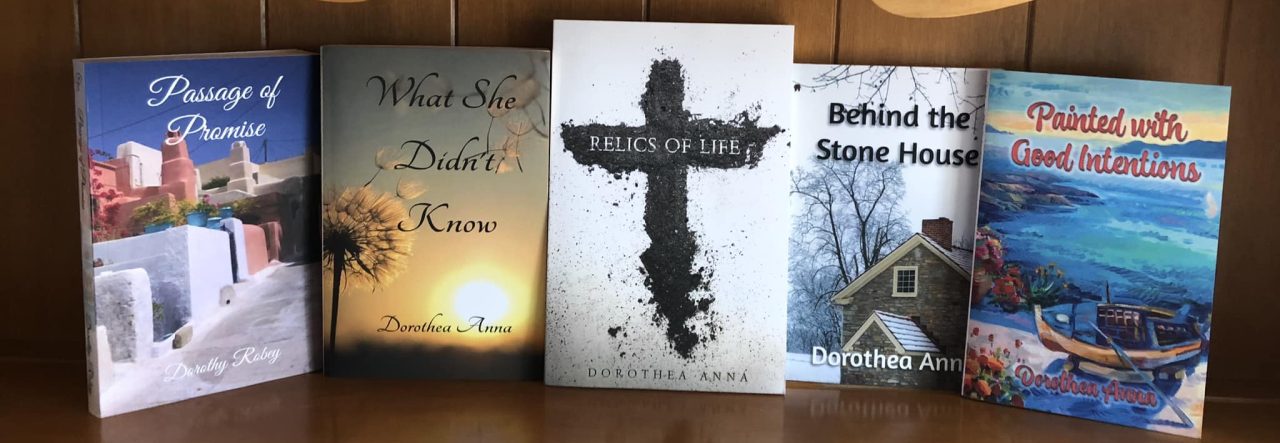
Click here for my video: https://www.youtube.com/watch?v=RxP_toxigp0
Tag: pride
That is Not the Civilized Way…

Growing up in America and in Western culture, I have swum in the ideals and worldview of many well-known American and Western historical figures. The perspective from this Western lens formed my pre-teen, teen, and adult years until over a decade ago.
Example 1: Throughout elementary, junior high, and high school history classes, I learned that Indians, as they were called at that time, were all blood-thirsty savages. They were barbarians and dangerous. They attacked new American settles moving to the west without cause. And look how they killed people? So savagely. In such an uncivilized manner. Scalping people, tearing open their chests, slicing the skin open on their arms, arrows all over their bodies. How totally barbaric! They were nothing more than animals was the message I got throughout those years.
Example 2: For the last 40 years, I was told there were terrorists in the world, and all of them were located in the Middle East. That anyone who wore turbans or head headcoverings, flowing clothing/robes, had tan skin, and believed differently than us were extremists and terrorists.
Back when I listened to mainstream media and was gullible, believing anything they said and broadcasted, when 9/11 happened and within a couple of hours, the murderers were named without any investigation, I swallowed it whole. There wasn’t any reason, in my thought process then, to think we should wait and see.
All the terrorists in Afghanistan, Iraq, and Iran. I remember being afraid sometime around 2004 or 2005 that the killers of the journalist, Daniel Pearl, were somehow going to fly over to my country and hide under my bed, waiting to lop my head off while I slept.
It’s embarrassing to admit that, but I think it’s important to admit these types of thoughts and fears because I’m sure I wasn’t alone in this and that many people feared this post 9/11. Let’s not forget the daily alert charts with colors: Blue = Guarded; Yellow = Elevated; Orange = High; Red = Severe.
Did this do anything but keep the public in constant fear? No. I think that was all it did.
So, I believed for many, many years that every Arab was a terrorist, and that included Palestinians. After all, we didn’t really get views from both sides on the Israel/Palestine conflict that has been going on for many decades.
Again, I took what was spoon-fed to me by the media and government officials.
By 2009 I became disenchanted with the Republican Party and realized after coming closer to Christ at that time that I was beginning to disagree with some of their stances, such as capital punishment, environmental issues, never-ending wars, and the importance of social programs for me and my fellow citizens. Unfortunately, the Democratic Party that I looked into following this revelation grew to be just as bad and even worse in some circumstances from my perspective.
I discovered many lies the media and our government have been telling for nearly a century. Perhaps I’d finally grown and came to understand the world, people in power, and the old sins of pride, greed, and lust for power.
For all my life and reading through history, the rulers of the West, which I concentrated on since I live within this, were often saying that the ways those with little and sometimes no power fought back was considered “uncivilized”. Their warring tactics were not civilized like us civilized, progressive people of the West.
But there was a huge irony and plain absurdity in this.
All the while the Western leaders, especially my country’s, were spouting off these arrogant words, it was my country’s government leaders who dropped two atomic bombs.
Somehow, atomic weapons, tactical nuclear weapons, huge many-ton bombs, and biochemical weapons are the “civilized” way to kill people.
I don’t see how white phosphorus is in any way a “civilized” way to kill people. Neither do I see the total annihilation of hundreds of thousands of people with one atomic bomb is “civilized”.
Listening to a you tube channel’s interviewer talking with Colonel Douglas Macgregor a couple of months ago, I found this information incredibly important and valid.
When asked about the slaughter going on in Gaza, the colonel, who has always supported Israel, used this comparison in how decades-long oppressed and horribly-treated people will sometimes react and lash back at their oppressors.
He said, “Bear with me. In 1227, an English army was sent to Scotland by Edward I. The army met a Scottish force in the vicinity of a place called Sterling Ridge. Ultimately, the English army was destroyed, defeated. It wasn’t simply defeated. The Scots proceeded to murder everybody in the organization. Very few people managed to get back to the border of England and escape with their lives.
“The hero of Scottish history, Sir William Wallace, got a hold of the two leading knights who commanded the army, skinned them alive before he killed them. And then had belts that he wore for the rest of his life made from their hides.
“Now, why? Because Scotland and the Scots had been subjected in the previous hundred years to horrific treatment by invading English forces. So they exploded with rage and anger, and the violence was outrageous, unbelievable.
“Today, we look at that and are just shocked. How could you make a man your national hero that skins people alive and makes belts out of their hides?” (courtesy you tube video here)
So I’ve learned that when one group of people has power and oppresses another group of people through torture, killing, and restricting access to water, electricity, and the like, the oppressed people will become traumatized, depressed, and outraged and eventually, if they get the chance, revolt against their oppressors.
Shouldn’t we try understanding and coming in peace when encountering other people on the planet?
There are things people do in remote parts of the world that are not the “norm” and what we Westerners would consider “uncivilized”, like tribes people eating their grandfathers. I learned about in my Cultural Anthropology class when I was in college a few years back. Reading the magnificent book, Things Fall Apart, shows how some people in areas of Africa live and how their beliefs and customs mold them. I had a hard time completely understanding. However, even if I don’t understand completely the reasons why they do certain things that upset or appall me, I must recognize that their lives are different from mine and my traditions and customs and accept that, as well as the fact that they, too, are human beings.
Therefore, the overall lesson I’ve learned the past several years is to show courtesy, care, and tact for people you learn about in person, via books, or media that live in different parts of the world.
So many “enemies” we have now were due to our actions in their part of the world. Read our and world history and you’ll see this. Rarely do some people in one group hate another group of people in another country for no reason.
Although we live in a fallen and broken world, I wish my country’s leaders would learn to do just as I said above.
Matthew 5:9 (NIV) “Blessed are the peacemakers, for they will be called children of God.”
~*~*~*~
Playing God Frankenstein Style

(revised college essay from spring 2018 for blog material)
In Mary Shelley’s novel, Frankenstein, Victor Frankenstein’s desired to be God in creating a new species of life, causing him to become enslaved to his passions of pride, vainglory, and lust for power.
The copious fervent scientific discoveries in Shelley’s era also produced prideful actions and lust for power, with disastrous results for Victor, his family, and the creature throughout and culminating at the end of the story.
According to the book, Path to Sanity, in Christianity, three core sins exist in every human being: pride, self-love, and vainglory. Humanity struggles to eradicate them from their minds, souls, and bodies. These three give birth to all other sins, including a lust for power—a power to change the world, be unstoppable through nefarious and sinful acts, such as murder, hate, and judging other beings harshly.
In his teens, Victor Frankenstein was deeply fascinated with science, especially chemistry, and became obsessed with creating a new species, a new being, similar to humans, using human body parts from corpses he obtained from graves. His obsessive actions are evident while he was producing this creature, saying, “My cheeks had grown pale with study, and my person had become emaciated with confinement” (Shelley 32). His sinful passions had begun to consume him as he toiled in a dark and cheerless lab for hours on end, creating the creature. Illness afflicted him.
Through his pride, Victor thought he could become God himself in creating a new living being (Hetherington). Through this, a lust for power, like the power (minus the lust) God has in fashioning his creation, and vainglory in wanting recognition and fame for his earth-shattering work, Victor said, “Life and death appears to me ideal bounds, which should first break through, and pour a torrent of light into our dark world. A new species would bless me as its creator and source; many happy and excellent natures would owe their being to me” (Shelley 31).
His whole person—mind, body, and soul—was consumed with this endeavor, as he explained, “My limbs now tremble, and my eyes swim with the remembrance; but then a resistless, and almost frantic impulse, urged me forward; I seemed to have lost all soul or sensation but for this one pursuit” (Shelley 32). Therefore, this passion overtook him and enslaved him (Reed), causing him to commit terrible acts, in which he elucidated, “Who shall conceive the honors of my secret toil, as I dabbled among the unhallowed damps of the grave, or tortured a living animal to animate the lifeless clay?” (Shelley 32).

At certain times, he realized his passions were ruling him and causing him ailments, and said, “Every night I was oppressed by a slow fever, and I became nervous to a most painful degree; a disease that I regretted the more because I had hitherto enjoyed most excellent health, and had always boasted of the firmness of my nerves” (Shelley 33).
These sinful passions nearly destroyed him then, but he finally completed his creation, “on a dreary night of November, that I beheld my accomplishment of my toils” (Shelley 33). Victor discovered he’d made a large, distorted, ugly creature. He lamented, “I had desired it with an ardor that far exceeded moderation; but now that I had finished, the beauty of the dream vanished, and a breathless horror and disgust filled my heart” (Shelley 34).
Through his use of his prideful will, Victor lusted for power, and the result was an imperfect creation and his own disappointment in this, which now enslaved him to these passions. This being for which Victor fled from the lab after seeing it come alive, would be a constant reminder of his egregious error, a lesson on what happens when one desires to be God and asserts one’s arrogant will over His Will (Reed).

When Victor abandoned the creature to wander about ignorant of the world and its inhabitants, like a newborn baby, the creature, desperate and lonely, killed Victor’s youngest brother, William. Victor blamed this horrible act solely on his creation, saying, “He was the murderer!” (Shelley 46).
Eventually, Victor showed some remorse when a family friend, Justine, was accused and executed for William’s death. He said, “The fangs of remorse tore my bosom” (Shelley 52). He realized he was partly to blame for the murder because of creating the creature, but he still wasn’t aware that the brunt of the blame lay squarely on his own shoulders until later in the story. And even as he discovered this, his bondage to his sinful passions had not been loosened.
He continued to blame the creature more so than himself until the creature murdered his best friend, Henry. He told Henry’s lifeless body, “Have my murderous machinations deprived you also, my dearest Henry, of life? Two I have already destroyed; other victims await their destiny” (Shelley 118).
The weight of his actions in producing the creation finally sunk in. It was only through the tragic losses of his loved ones that he truly acknowledged his damning and culpable behavior, because his sinful passions reverberated throughout the universe affecting humanity in the world.
After the creature murdered Victor’s wife, Elizabeth, Victor determined to terminate the creature because he believed that was the only way to end the killings, but he never caught up to the creature, as the latter’s strength and quickness exceeded his own. Victor never truly recovered mentally and physically from his ailments and misery. His bondage to his sinful thoughts and actions stayed with him (Reed).
When Victor abandoned his creation, the creature trekked around the Swiss Alps and beyond. He learned to read and about the nature of human relationships by observing for months the De Lacey family in their mountain cabin. He took to gathering wood for them in the middle of the night so Felix, the young man of the house, would find the bundle of firewood by the cabin the next morning. In showing his generosity, the creature revealed a soft side, a compassionate heart for others that were not of his own species.
The creature learned to read through listening to Felix teach his girlfriend, Safie. He read Milton’s Paradise Lost and the Bible and found he somewhat related to Adam, God’s first human creation, but also to the fallen angel/devil because both were banished by their Creator (Ryan).
However, the creature realized even “Satan had his companions, fellow devils, to admire and encourage him, but I am solitary and detested” (Shelley 85). No one else of his species existed. He was utterly alone, and when the De Laceys found him in their cabin pleading with the blind elder, Mr. De Lacey, they screamed in horror. Felix struggled to remove the creature from their house. Minutes later, the creature left of his own volition, wounded and hurt by their harsh actions (Shelley).
Throughout his trek, villagers gasped, shrieked, grimaced, and covered their faces when they’d seen him. Compassion and love weren’t present in their hearts. A total outcast, the creature belonged to no one and nowhere (Sarkar). Victor, his own creator, mirrored the villagers’ behavior.
Feeling isolated, alone, hated, and disgusted by all humans, the creature cried, “All, save I, were at rest or in enjoyment: I, like the arch fiend, bore a hell within me; and, finding myself unsympathized with, wished to tear up the trees, spread havoc and destruction around me, and then to have sat down and enjoyed the ruin” (Shelley 89). He vowed to inflict pain and misery on these heartless beings.
The villagers’ actions toward the creature’s hideous appearance (Sarkar) violated two vital tenets of Christianity—love your neighbor and do not judge others. Because the creature looked weird, ugly, and different from themselves, fear took hold of them, and they judged his outer appearance without learning of his inner heart. Out of this ignorance, fear, and lack of love to befriend the creature, hate grew inside them.
The sinful passions of Victor coupled with the villagers’ hatefulness and judging behavior destroyed both he and his creation.


In the era in which Shelley’s Frankenstein was written, a relentless burgeoning of scientific discoveries occurred, one of which was medical advances in which the European society saw as a type of panacea for life’s problems. They adopted a utopian view of the world, and pride took over in the medical and scientific communities (Allen).
Surgeons and anatomists made significant strides in fighting off many diseases that had been unsuccessfully fought in the past. They started to question the origin of human life. This became a hot debate in the scientific community, called Vitalism, which questioned humanity’s origin and the possibility to create it. Victor Frankenstein asked those questions himself, saying, “Whence, I often asked myself, did the principle of life proceed?” (Shelley 29-30). Shelley’s character echoed the thoughts and voices of the scientific community in that time and place in which she lived.
Just as ethical questions have been raised over embryonic stem cell research and cloning in our modern day, in Shelley’s day, some people were uncomfortable with Vitalism and what it produced.
The ethical question of playing God was a concern in the late 1700s and early 1800s in Shelley’s era. To what lengths would the surgeons of her time go to discover medical advances? In order for them to continue their research, they needed subjects to test and dissect. These surgeons used the dead bodies of criminals. Grave robbing became prevalent then. The corpses were stolen from their graves for research (Allen). These doctors had no respect for the dead because in life those people had committed crimes.
Because of the fervor of relentless scientific advances, these surgeons and anatomists’ desires grew into obsessions, and ultimately passions of pride and murder. When a shortage of corpses of criminals happened, these doctors and scientists stole corpses of law-abiding citizens from their tombs (Allen).
Eventually, there were reported stories, such as one about a surgeon who was “caught buying corpses that had not been robbed from graves, but in fact murdered for the purpose of experimentation” (Allen). These appalling stories sometimes ended up in the literature of the era.
Shelley’s Frankenstein certainly reflected these events through Victor’s obsession and willful pride to create a new species of being through digging up bodies from graves to use for his creation. His lack of respect for the dead also reflected these real life events, where in the text, he says, “A church-yard was to me merely a receptacle of bodies deprived of life,” and says he visited “vaults and charnel houses” (Shelley 30).
These scientists and doctors allowed their pride, vainglory, and lust for power in determining the life and death of other people’s lives, to overtake their sensibilities. In addition, in Shelley’s era of Romanticism, people looked upon nature as holy, beautiful, and mysterious in a somewhat religious sense.
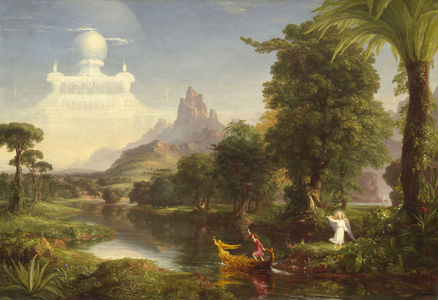
(Thomas Cole’s The Voyage of Life: Youth (1842)
Wordsworth, the poet, expressed the desecrations of graves, bodies, and murder in his poem, “The Table’s Turned,” saying, “Sweet is the love which nature brings/Our meddling intellect/Misshapes the beauteous forms of things/We murder to dissect” (Allen).
Shelley’s Frankenstein illustrates the consequences of the sinful passions of attempting to be God, as Victor Frankenstein toiled to mimic in creating the creature. Lacking love, humility, and repentance, his passions brought he, his family, and his creature misery, torment, and ultimately death.
~*~*~*~
Works Cited
Allen, Stephanie. “Mary Shelley’s ‘Frankenstein’ is a Cautionary Tale on Monstrosity of Which
Humans are Capable.” Oxford Royal Academy. 22 January 2014. https://www.oxford-royale.co.uk/articles/shelley-frankenstein.html. Accessed 21 March 2018.
Hetherington, Naomi. “Creator and Created in Mary Shelley’s Frankenstein.” Keats-Shelley
Review, vol. 11, 1997, pp. 1-39. http://knarf.english.upenn.edu/Articles/hether.html.
Accessed 21 March 2018.
Reed, John. “Will and Fate in Frankenstein.” Bulletin of Research in the Humanities, vol. 8, 1980, pp. 319-38. http://knarf.english.upenn.edu/Articles/reed.html. Accessed 3 April 2018.
Ryan, Robert M. “Mary Shelley’s Christian Monster.” The Wordsworth Circle, vol. 19:3, 1988,
-
150-55. http://knarf.english.upenn.edu/Articles/ryan.html. Accessed 19 March 2018.
 Modest Musings