
Anxiety Bores Impatience

silhouette of woman for anxiety blog post

When I was twenty-two, I was diagnosed with general anxiety with periodic panic attacks.

Anxiety and panic, for me, are two different things.  Panic attacks hit me in my head first, causing dizziness, followed by quickened heart rate, some perspiring, fear, and the like.  With anxiety, it starts in the chest and causes helplessness, an impending sense of doom, as well as quickened heart rate.

Everyone who suffers from anxiety or panic attacks may share in some of the symptoms, but experiences them a bit differently and also has different triggers that set them off.

Mine is TIME.

I remember in my early twenties explaining this visual of my trigger of time as a rodent running on a wheel, getting nowhere while time and the world churned ahead without me.  I desperately wanted to catch up but was helpless to in the moments of panic attacks.
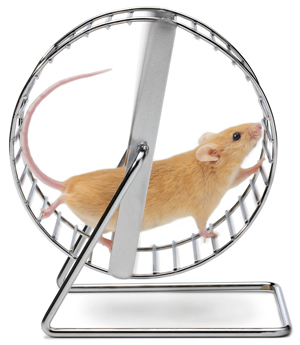
mouse on wheel

When I had my first panic attack at age twenty, it felt like my head was going to spin right off my body, my heart raced, and I feared loss of mind and control.  And as panic sufferers know, we become worried about it happening again, which perpetuates the panic feelings.

Eventually, after having a handful of full-blown panic attacks, I learned to be aware of when one was coming on, and talking to myself (in my head, not out loud) about it in a reasonable manner.
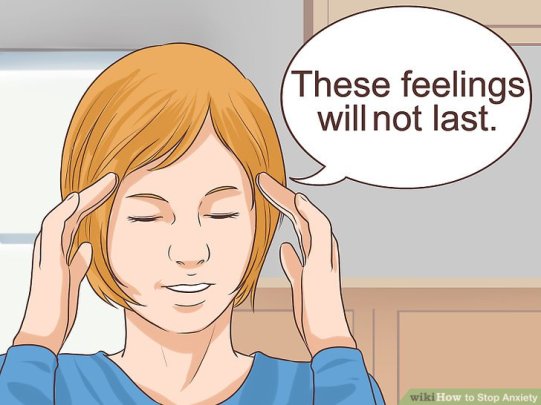
talking out of anxiety and panic

At that time in my early twenties, for four years, I was on an anti-anxiety medication for my anxiety and a tranquilizer for panic attacks.  Both medications did the job of curbing my anxiety and panic attacks.  After getting off the medication, my system seemed improved.

Since this time (over twenty years ago), I’ve faired pretty well, but since the onslaught of peri-menopause, my anxiety and panic attacks have been kicked up a notch, causing some disruption in my life.

At the end of June, I did some stupid things because of my anxiety, like mistakenly canceling my debit card.

I looked over my husband’s and my checking account and discovered a debit card purchase for a DVD from an unknown company.  Worried and panic-stricken thinking  somebody had gotten my card number, I went online and disputed the purchase.  Immediately after I did that, my card was canceled.

It was at that moment I remembered the amount of the purchase and realized I did purchase this DVD.  It was just that the company name didn’t match the place I ordered from.

silencing inner critic

Peri-menopausal fog brain mixed with anxiety is a recipe for chaos.

I called the bank the next day, and a new card was sent out for two-day delivery.

If I’d just waited and thought calmly for about five more minutes, I’m positive I would have remembered the amount and the place from which I purchased the DVD.

This was the day Whole Foods opened in my area, and I wanted to be there for the opening (I know, that alone is nuts).  Obviously I didn’t have my debit card, but I did have my checkbook.  That was a mistake because they didn’t take checks, so I had to run home and fetch my credit card that I’ve been desperately trying to pay down.

I could have just waited until the next day when my new debit card arrived and gone to Whole Foods then and not gone through all of this.  But NO, I was anxious to go RIGHT NOW!  If I didn’t go then, think of all the things I’d miss seeing on Opening Day!

scolding myself

Every time my anxiety hits, I become impatient and pushy.  After the incident, I’d hate my actions and how I irritated my family members.  Imagine this anxious impatience…it feels like a tornado of confusion, frustration, fear, and anger sweeping through you.  At least it does for me.
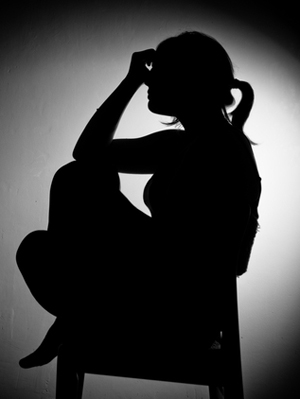
depressed-silhouette-woman

After experiencing this impatience three days in a row, I broke down in tears of frustration and anger, really strongly disliking myself for my stupid actions and idiocy.

Where did my brain go?

The next few days and weeks I sat analyzing my actions and behavior. I finally saw this pattern of impatience and that it was actually tied to my anxiety.

It only took me 28 years to figure this out.

gif of duh or rolling eyes

In any case, this was a breakthrough for me, a relief.  I’d finally figured out what I was doing and why I was doing it.

But how was I going to stop doing it?

Anxiety pounces on me unexpectedly a lot of the time.  The behavior and havoc almost always play out before I am aware of it.

Friends who suffer from anxiety and/or panic attacks, how do you experience them?  How do you deal with them?

Being a person who tries to follow Christ, making an effort to be Christ-like daily, even though I fail most of the time, my anxiety causes me to forget to ask Him for help when I’m going through this.  Too many times, I try to control these attacks all on my own.
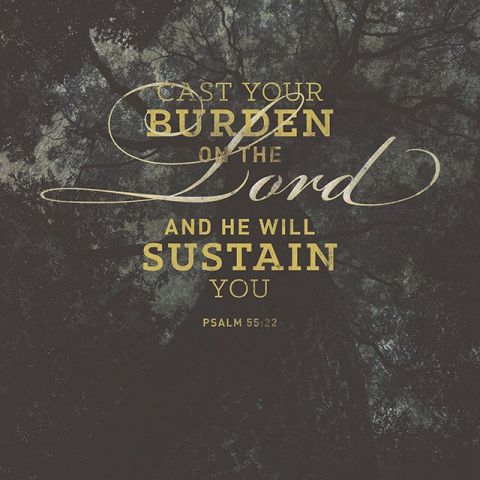
give your burden at the Lord's feet

This is the crux of my problem.

But I suppose I had to discover what I was doing before I could reach this point.

So, now that I know this, I am making the effort and becoming more aware to ask God to help me through these instances of impatience and anxiety.

I’m not really a fan of praying for patience, because…well…then your patience is tested, and I fail 99% of the time.

BUT…

In reality, it’s through those tests of my patience, that I am provided the chances to be patient and make it become more of a habit, and therefore, become more of who I want to be, which is a better, calmer, loving person with a closer relationship to Christ.

In the past few weeks, I’ve been able to apply patience to at least three occasions, by talking to myself, as a type of mental coach, and through God’s help.

Here’s to a new path toward a less anxiety-ridden life.

mountain path towards light

~*~*~*~


The Final Countdown: 13 Weeks To Go!

light tunnel 2

Friends, I recovered from senioritis last month and am now seeing the bright light at the end of the tunnel.  The finish line is in the distance but visible!

13 WEEKS LEFT OF UNIVERSITY!  

I’m currently half way through my Wellness IDS course.  Then onto my last course:  Advanced Creative Writing.  I can barely wait for that class. It’s back to my core and major. 🙂

October 28th is the last day of my final course.  Following that will be graduation.

And then it’s several hours of freedom a day to concentrate fully on my fiction writing!

I leave you with this fun song via youtube from the Broadway musical of which I’ve seen twice in my life called Starlight Express.


~*~*~*~

Writing: Harmful & Therapeutic to Your Health

writing in notebook a story

As a writer, I tend to sit a lot, which isn’t exactly healthy.  However, I do walk every now and then, and I found out that writing and walking are a natural marriage of mind and body.

But to be honest, I don’t walk enough…two or three times a week for twenty minutes per day the majority of the time.  Ideally, five days a week for twenty to thirty minutes is my unattained goal thus far.

Incidentally, along with discovering the marriage of writing and walking, I discovered some fascinating information on this topic.  Many famous writers walked a lot.  Authors such as Charles Dickens, Virginia Woolf, and William Wordsworth.  Of course, if you think about it, walking was much more commonplace for getting around back in Dickens’ et. al’s eras.  They benefited before studies were done on what walking does for writers.

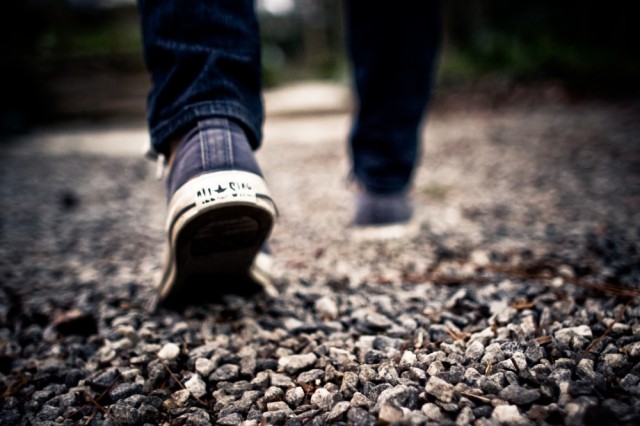
walking sneakers

Other than getting some good exercise, other positive things happen when we trek around our neighborhood or local park.  In a study done by England’s Cambridge University of more than 334,000 Europeans, it discovered a brisk walk twenty minutes a day might be sufficient to decrease a person’s risk of premature death.  In addition, walking aids in stress reduction and alleviates symptoms of depression (Bianchi).

Walking also clears the mind and actually leads to creative thinking.  A Stanford University study asked participants to do mental tasks, such as producing analogies to convey complex ideas, that are common in creativity tests.  The results showed that 81% to 100% of the participants formed creative ideas walking compared to sitting (Andrews).

Now, about writing.  I found that writing is a way to help heal from traumas and also releases emotional stress and eases anxiety.

A study by Spera, Buhrfeind, and Pennebaker shows expressive writing, which means scrawling down your feelings on paper, improves mood, well-being, and decreases stress levels.

Expressive writing can be used to write in a daily gratitude journal, a journal for recording emotionally stressful events, or through the created and written situations of characters’ lives in your novel.  For example, a study was done on engineers that had been laid off recently and were separated into three groups:

1) A control group with no writing,

2) A group assigned to write about time management, and

3) A group to expressively write about the raw feelings of losing their jobs.

Both writing groups did this twenty minutes a day for five days, in which they also elucidated the emotional difficulties of job hunting, “relationship problems, financial stressors, the immediate experience of being fired, losing their coworkers, and feeling rejected” (Grant).

The results were stunning.  Three months later, the control group with the exception of five percent, were still seeking employment.  Twenty-six percent of the expressive writing groups obtained new jobs.  These groups also reported consuming less alcohol.  Eight months later, the control group still struggled to acquire a job with less than nineteen percent finding full-time work, whereas, fifty-two percent of the expressive writing groups had new jobs (Grant).

writing

In writing her novel, author Jessica Lourey states, “Little by little, I was carving out new space for thoughts that were not about death or depression.”  She adds regarding Dr. Pennebaker’s study, “Two elements above all else increase therapeutic value of writing: creating a coherent narrative and shifting perspective…Writers call them plot and point of view” (Lourey).  Therefore, expressive writing heals.

So, writing and walking are good things, right?  Well…  Walking certainly is good for a person as noted above.  Writing is good for easing and healing emotional issues.  But sitting most of the day writing, staring at a computer screen, and not taking breaks can actually cause major health problems.

Like many office workers, serious, dedicated writers likely sit six or more hours a day.  Physically, sitting for many hours a day elevates the risk of heart disease, cancer, diabetes, and premature death.  This includes people who exercise regularly.  Dr. David Alter from the Toronto Rehabilitation Institute states, “Even if you do a half an hour or an hour of exercise every day, it doesn’t give us the reassurance that sitting for the other twenty-three hours is okay.  In fact, it’s not” (CBS News).

In a study by CBS News, prolonged sitting increased the risk of cardiovascular disease by 14%.  The risk of cancer increased by 13%, and the risk of diabetes skyrocketed to 91%.  With sedentariness, the heart is not getting its exercise, and blood sugar isn’t moving well through our cells (CBS News).

Mentally, sitting in an environment with no social interaction or outside fresh air and sunlight causes depression for many writers.  A couple of famous writers who had or currently have depression are F. Scott Fitzgerald and J.K. Rowling.

A study out of Australia of close to 9,000 women in their fifties discovered those who sat seven hours a day and did not exercise were three times more likely to have depressive symptoms, than for those who sat less than four hours daily and exercised regularly.

feeling-the-effects-of-chronci-stress

Incidentally, depression drains a person’s energy, which causes less of a desire to be active (Andrews). Sitting for several hours a day also affects a person’s wellbeing because of lack of social interaction. Connecting with family and friends reduces isolation and loneliness (Mann).

Writers also face emotional challenges such as dealing with perpetual rejections from publishers, editors, and the like.  This also at times includes their peers. A clinical psychiatrist, Dr. Alan Manevitz, states, “A large part of a writer’s success depends on how other people think of him” (Mann).

The majority of writers work by themselves and are isolated from companionship and sunlight, and coupled with unhealthy sleeping patterns if they write into the night, are a concoction for depression (Mann).

That news alone can depress a person who enjoys writing.  But there are ways to counter these dire outcomes.  We can start by standing up for one to three minutes each half hour or so of sitting throughout the day (CBS News).

Apparently, many corporations have purchased standing desks.  Some employees have reported feeling more balanced energy-wise by working at standing desks than when they’d been sitting at desks.  Getting used to standing at their desks did take time and adjustment, but it seems to be proving helpful to their wellness (CBS News).

standing desk

I started taking one to three-minute standing breaks yesterday, and I already felt a difference, and it was a positive one.  My energy level was better, and my mind was more focused and clear.

New story ideas and character dialogue switch on while I’m walking, and walking out in the sunlight and listening to the birds and looking at nature around me boosts my mood and energy.  Spending quality time with family and friends is something I’m trying to do more.  A good balance of social connection and alone time is needed for my introverted self.

With periodic breaks and a regular walking routine, we writers can improve not only our health, but our creativity.

~*~*~*~

Works Cited
Andrews, Linda Wasmer. “To Become a Better Writer, Be a Frequent Walker.”  Psychology Today.  28 March 2016.  https://www.psychologytoday.com/us/blog/minding-the-body/201603/become-better-writer-be-frequent-walker.  Accessed 19 July 2018.
Andrews, Linda Wasmer.  “What Sitting Does to Your Psyche.”  Psychology Today.  20 March 2014.  https://www.psychologytoday.com/us/blog/minding-the-body/201403/what-sitting-does-your-psyche.  Accessed 19 July 2018.
Bianchi, Nicole.  “Want to Become a Better Writer?  Go For a Walk.”  Nicholebianchi.com. 15 June 2016. https://nicolebianchi.com/better-writer-daily-walk/.  Accessed 12 July 2018.
Grant, Adam.  “The Power of the Pen:  How to Boost Happiness, Health, and Productivity.” Linkedin.com.  28 May 2013. https://www.linkedin.com/pulse/20130528121344-69244073-the-power-of-the-pen-can-writing-make-us-happier-healthier-and-more-productive/. Accessed 12 July 2018.
Lourey, Jessica.  “The Therapeutic Benefits of Writing a Novel:  Research suggests that writing fiction can be a powerful healing tool.”  Psychology Today.  9 June 2017.  https://www.psychologytoday.com/us/blog/discover-your-truth/201706/the-therapeutic-benefits-writing-novel.  Accessed 12 July 2018.
Mann, Denise.  “Why Writers Are Prone To Depression.”  Everyday Health. https://www.everydayhealth.com/depression/why-writers-are-prone-to-depression-6709.aspx. Accessed 19 July 2018.
“Too much sitting raises risk of death, even if you exercise.”  CBS News.  20 January 2015. https://www.cbsnews.com/news/too-much-sitting-raises-risk-of-death-even-if-you-exercise/. Accessed 19 July 2018.