A few days ago, I weighed myself. If I were to count when my weight was the heaviest, that would’ve been a couple of years ago, I have lost 20 lbs! All having to do with eating healthy fats, high protein (good organic, grass-fed and finished red meat, chicken, salmon, etc.), and low carbs.
I allow myself up to 4 slices of bread a day. I learned what that equals when my doctor had me on my hypoglycemic diet in my early twenties. I allow myself an extra slice of bread a day though. It works for me. Back then, this diet was a strict one allowing only 3 slices of bread a day for three years.
A slice of bread is equal to a 1/2 cup of rice, 1/2 cup of noodles/pasta, 1/2 cup of potatoes, same measurements for peas, carrots, and certain beans like pinto beans.
I could eat all the nuts I wanted. At that time, I didn’t like nuts, so it wasn’t really a big deal to me. lol But now, I eat a bit of them with my organic, whole milk Greek plain yogurt with added organic fresh blueberries. I eat 2-3 fruits a day on average, just like I used to do on that strict diet, except it allowed 3 fruits a day. And the only sugar I have other than the fruit is a 1/2 tsp of raw local honey when I sometimes have tea or coffee.
I cut out 100% fruit juice back in 2019 because I was having some stomach issues, and my doctor suggested I eliminate the juice from my diet. Didn’t think I could or had the will power to do this because I was a juiceaholic throughout my childhood and beginning twenties. Was a sugarholic too.
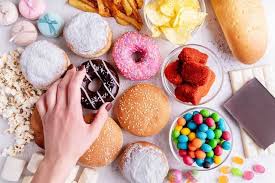
But I only eat desserts on special occasions, the last one being I allowed myself a small slice of cheese cake and three bites of key lime pie while on vacation back in July. Haven’t had any desserts since then and am happy I don’t crave it! Thinking the fruit is filling the void!
For veggies (which is my hardest thing to consume for me all my life lol) I like to have Greek salads and other salads. Broccoli, sour kraut, and some cabbage dishes.
I’ve heard that a woman’s taste buds change during menopause, and for me, it has. I now love fresh medium sized cut mushrooms in my sauces I’ve been cooking.
Anyway, I’ve noticed a difference when walking. My body feels lighter, and it’s easier to stand up straight (part of the latter’s reason is my chiropractic adjustment last week lol).
I’m now at a weight I haven’t seen since I was in my early to mid twenties, before becoming pregnant with Niko, my firstborn! This may be TMI, but I’m happy to have gone down two sizes in the bust area. Never thought I’d be back to my regular size when I was in my twenties. Never thought this would ever happen! So thrilled! My back feels a bit of relief too. 🙂
Wow. What an accomplishment. And I feel quite good. I also do a bit of walking on my treadmill at least three times a week. I’d like to do four days a week, and sometimes I do. But at least I stretch every day.
It looks like I may actually have to buy some clothes that fit me better now. In a time of menopause when a woman on average gains ten pounds that are hard to get rid of, I’ve accomplished this and then some! Amazing times for me. 🙏🙌🥹
Cutting down on sugar a year ago this month was a good choice for me. Especially at my age. I didn’t want to continue eating so much every day. It isn’t good for people’s health (been learning a lot about it. Although, I kind of knew that years ago).
In the last eight or so months, I’ve lost 10-12 lbs., just because I’ve scaled down sugar. I allow myself a cheesecake slice or something along those lines on special occasions, and that’s worked well. The weight came off very easily, and this is pretty awesome since I’m in menopause, where the average weight you gain is 10 pounds! I’m now in the weight range I’m supposed to be in for my height.
In the last three years up to recently, I’ve had to really watch eating the food at my work. I’d have it every now and then, but at this point, I’d like to go back to not eating any fast food, except when it can’t be helped, which can happen on road trips. Before 2021, I’d only eaten Burger King once since before 2011. I have eaten at Subway several times in the past decade up to now. I don’t know it that is considered fast food.
When I went to non pre-processed food and organic whole foods back in 2011, that choice was also crucial for my blood sugar and overall health. Before doing that, I had to eat every three hours because I wasn’t getting the nutrients I needed in the food I was consuming (including too much sugar and starches, along with the other things I just mentioned here). Within a couple of years, I was finally able to fast before Communion the proper way (no food after midnight on Saturday evenings until Communion Sunday late morning). I also didn’t have hypoglycemic attacks for years and could go longer without eating throughout the day.
Thankful I don’t snack during the day and don’t eat after dinner at night. That’s always been a thing for me. But it’s a good thing, anyway!
I’ve also been keeping up on walking on my office-sized treadmill for four months so far. I walk at least 4 times a week, and that works well for me.
In addition, I should really go back to eating a high protein, low carb diet I was on in my early to mid-twenties due to my borderline hypoglycemia. It really balanced my blood sugar so well.
I do know for a fact that there is only one type of meat that makes me feel completely balanced, whole, and clear-headed. It’s beef in the form of either a burger or steak. It’s especially healthy if you eat grass-fed, organic beef with 85% fat. If you go higher in less fat, like 90%, it will raise your insulin levels, so keep to the 85%.
Eating whole foods is important because they give your body the nutrients it needs, and you aren’t hungry for several hours at a time. Organic whole milk is good to drink for its omega fats and has “more disease-fighting antioxidants than non-organic milk”, or non-whole milk, for that matter. Organic pasture-raised eggs are really good for you as well. I really like the eggs with the orange yolks. They taste better to me than the ones with yellow yokes. Just my preference.
I watched an amazing documentary last night and the rest this afternoon. Although, I’ve always kind of known this because of my experiences with these foods over the past 30+ years, some info I didn’t know, and so it was so helpful. I will post it below so you can watch if you’re interested.
Through my research of food and my own experiences over 30+ years, I found the biggest component in one’s health is what he/she eats. Food is the pinnacle of health. So, it’s important what we put into our bodies. Second would be exercise, although you don’t have to kill yourself doing exercises. Simple walking, biking, stretching, gardening, tai chi, and yoga works well. I do know some basic weight lifting (like 1-2 lb. hand weights) can help. Eating healthy fats and proteins helps your energy levels, creates muscle, and keeps your brain functioning well with no brain fog or grogginess.
I felt like sharing all of this info and hope it helps those who read this who were curious or interested in knowing about these things. Also, I hope you find this info interesting if nothing else. 🙂
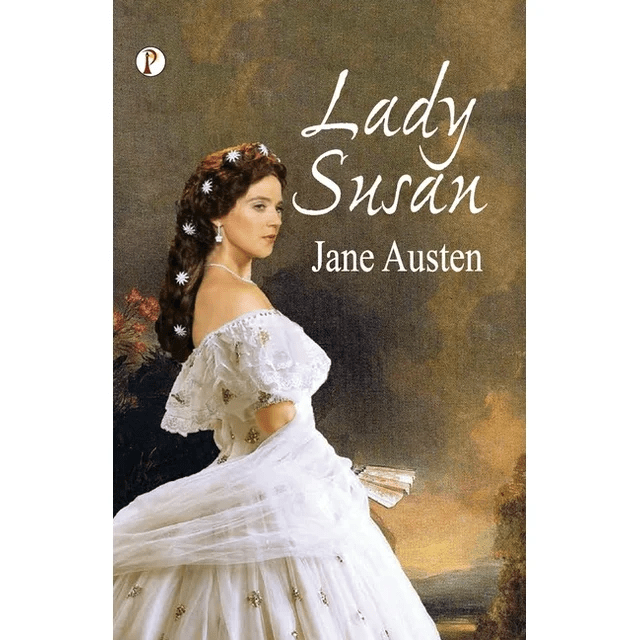
During the Romantic Era, the upper class of English society was a patriarchal one in which women had to rely on male family members or their husbands for them to have security, food, and shelter. In Lady Susan, Austen presents Lady Susan as a widow seeking a weak man to marry, so she can carry out her destructive actions. Her deceptive and flirtatious personality wreaks havoc on her family and friends, which alienates her from others.
Shelley’s main character, Lionel Verney, in her work, The LastMan, is an orphan and a widower. His family died years before, and the companions for whom he sailed with in the storm at sea, drowned, their boat destroyed in the crashing waves.
Both Lionel and Lady Susan experience alienation and loss in their relationships, but the latter purposefully distances herself from others through her manipulative actions, whereas Lionel’s connection to his family and friends is torn from him through a deadly disease and the powers of Nature.
Lady Susan’s disregard for people’s feelings and their intimate and familial relationships shows her inability to have healthy relationships in either family or romantic love because she does not display a capability to love, but only to manipulate and deceive. This is evident from the beginning of the story in which Lady Susan, while staying at her friends, the Manwaring’s house, manages to interfere with the courting of Maria Manwaring and Sir James Martin, as well as cause a rift between Mr. and Mrs. Manwaring, because of Mr. Manwaring’s interest in Lady Susan, and Lady Susan’s finding him “uncommonly pleasing” (Austen 481). This interference she causes with Mr. Martin and Maria Manwaring, she claims is to match up Mr. Martin with her daughter, Frederica. Her lack of compassion and maternal love for Frederica is evidenced in her calling her, “the greatest simpleton on earth,” (Austen 481) and “born to be the torment of my life” (Austen 481).
Lady Susan informs her friend, Alicia, with regards to the Manwarings, “The females of the family are united against me” (Austen 481), which is due to her flirtations with Mr. Manwaring and Mr. Martin. She has no consideration or compassion for her friend, Mrs. Manwaring, or for her daughter, Maria Manwaring. Breaking up a friendship does not concern or upset Lady Susan, because she is ruled by her appetite for deception and power over the men she flirts with and the family members for which she feigns love and affection.
Catherine Vernon, Lady Susan’s sister-in-law, mentions to her mother that Lady Susan didn’t want her to marry Charles, the brother of her deceased husband, and believes Charles to be too lenient toward the lady. Catherine says, “Her behaviour to him, independent of her general character, has been so inexcusably artful and ungenerous since our marriage was first in agitation, that no one less amiable and mild than himself could have overlooked it at all” (Austen 484).
Additionally, Catherine warns her brother, Sir Reginald DeCourcy, of the powers of Lady Susan through her beauty and clever language, and says, “I’m sorry it is so, for what is this but deceit?” (Austen 484) Lady Susan reiterates her interference in Charles and Catherine’s initial engagement, saying to her friend, Alicia, “To be sure, when we consider that I did take some pains to prevent my brother-in-law’s marrying her, this want of cordiality is not very surprising” (Austen 483). This pattern of driving a wedge between both married and courting relationships is prevalent throughout the story.
Having been warned of Lady Susan’s destructive and deceptive behavior by his sister, Catherine, Sir Reginald initially heeds her warning, but it is forgotten once he meets her in person; he becomes captivated by her. Conversely, Lady Susan enjoys garnering his attention and upsetting her sister-in-law, but she decides she is not interest in marrying Sir Reginald, which was suggested by her friend, Alicia, telling her, “I cannot easily resolve on anything so serious as Marriage; especially as I am not at present in want of money, & might perhaps, till the old Gentleman’s death, be very little benefited by the match” (Austen 487). She recognizes Sir Reginald’s abilities to question her behavior toward her daughter and does not feel he will be compliant enough for her.
Lady Susan is interested in her desires first and foremost, with little consideration for the needs or wants of others. Literary critic, Michiko Soya, reiterates this point by saying, “She gives first priority to the pleasure of deceit, and as a result, she eventually becomes the object of love,” (Soya) as seen in Reginald’s falling in love with her.
Lady Susan’s scheming and flirting give her power over her victims, but only for a while – until she is found out. Sir Reginald eventually discovers the true nature of Lady Susan through the Manwarings, and he sends her a letter stating, “The spell is removed” (Austen 506). Lady Susan does not pursue him, but only answers his two letters, closing their relationship, with a feeling of indifference toward his pain in the fact that he loved her.
She continues to try and push on her daughter the match with Sir James, but her daughter is vehemently against it, and eventually, Lady Susan marries him herself, because she has exhausted all avenues of marriage possibilities by causing one man to cut off their relationship and the other to do the same because her schemes were exposed. True, loving, and mutually respectful relationships are seemingly foreign to her, as she does not pursue this at any time. Instead of embracing her family, friends, and male suitors, she distances herself from them through her desire for power, flirtation, and deception.
In Shelley’s work, The Last Man, main character, Lionel Verney, having been an orphan, already experiencing loss and alienation early in his life, grows up in childhood poverty for which he blames the king, who was supposed to have been a friend of his father’s, was indifferent to him. He grew up with bitterness and resentment for the rich, the monarchy, and nearly everyone, but he changes when he finds love. Yet, when he and his companions are caught up in a storm at sea, not only is he a widower, having lost his wife years before and survived his children, he is left vulnerable and at the mercy of Nature in his struggle to survive the rocky tempest. Determined to beat Nature, he said, “I breasted the surges, and flung them from me as I would the opposing front and sharpened claws of a lion about to enfang my bosom. When I had been beaten down by one wave, I rode on another, while I felt bitter pride curl my lip” (Shelley 886).
When the Plague stains humanity with its poison, and Lionel’s sailing companions perish at sea in the storm, he is left alone with no connection to humanity in the flesh for the third and last time in his life. Lionel feels the rain joins him in his mourning, for which he states, “even the eternal skies weep” (Shelley 886). His grief is heavy as he reflects on his companions who have perished, saying, “I shall never see them more. The ocean has robbed me of them – stolen their hearts of love from their breasts, and given over to corruption what was dearer to me than light, or life, or hope” (Shelley 889). He thinks about his wife and children, saying, “I had not forgotten the sweet partner of my youth, mother of my children, my adored Idris” (Shelley 889). He saw her in his youngest son, Evenlyn, and when he died, he “lost what most dearly recalled her to me” (Shelley 889). He then kept her memory through seeing her in her brother, Adrian, who died, along with Clara, in the storm. With profound sorrow, he says, “They were all to me – the sums of my benighted soul, repose in my weariness, slumber in my sleepless woe. Ill, most ill, with disjointed words, bare and weak, have I expressed the feeling with which I clung to them” (Shelley 889).
Lionel treasures his family and friends, and love penetrates his heart for them, as critic, Betty Bennett says, “…through love, which is true power; and he metamorphoses into an educated, sensitive, human-sized heroic figure…” (Bennett).
He wanders the empty cities of Italy and enters many houses where he tries to find some relation to humanity. Desperate for companionship with the living, he tries to befriend a goat family, but after the male goat charges him, he instinctively wants to hurt the animal for this, but doesn’t have the heart to do so. As they scurry off through the woods to seek protection from him, he cries, “I, my heart bleeding and torn, rushed down the hill, and by the violence of bodily exertion sought to escape from my miserable self” (Shelley 893). He envied the animals with their dens and burrows and nests of families.
Believing the Plague carried out its obliteration of humanity in England and France first and Italy last, he says, “Reason methought was on my side; and the chances were by no means contemptible that there should exist in some part of Italy a survivor like myself – of a wasted, depopulated land” (Shelley 891). While searching for people, he comes upon white paint and decides that he will write with that paint: “Verney, the last of the race of Englishmen, had taken up his abode in Rome.” This minute act brought about some comfort for him, and he added in his painted message, “Friend, come! I wait for thee!” (Shelley 891) Hope is ever present inside him.
In entering a saloon, he did not recognize himself reflected in the mirror on the wall. His meek existence left him in tattered clothes, and much growth of hair on his face and on his head. But with the spark of hope in him that there may be some surviving people somewhere, he cleaned himself up a bit. He found writing utensils and papers in the study of an author of the house he came upon, and decided, “I also will write a book” (Shelley 897) and said, “I will write and leave in this most ancient city, the ‘world’s sole monument,’ a record of these things. I will leave a monument of the existence of Verney, the Last Man” (Shelley 897).
After a year, Lionel still endured, saying, “…loneliness is my familiar, sorrow my inseparable companion” (Shelley 897). He cries, “Without love, without sympathy, without communion with any, how could I meet the morning sun, and with it trace its oft repeated journey to the evening shade?” (Shelley 895) But he does find a companion in the form of a shepherd dog that “left his fold to follow me, and from that day has never neglected to watch by and attend on me, showing boisterous gratitude whenever I caressed or talked to him” (Shelley 897). He decides to depart on one of the boats tied to the pier, and to take books, supplies, and his dog with him to sail wherever it takes him in which he says, “restless despair and fierce desire of change lead me on” (Shelley 898), so that he feels he has a purpose in the remaining years of his life, always with a perseverance, strength, and hope for what lies ahead. Literary critic, Timothy Ruppert, says as much when he argues The Last Man means, “…a prophecy of hope justified by the regenerative power of the human imagination” (Ruppert).
Through Austen’s portrayal of Lady Susan and Shelley’s depiction of Lionel Verney, both characters have relations with family and friends, but both find themselves cut off from them and their communities. Lady Susan produces ostracization from others through her selfish and conniving behavior, while Lionel lost his connection to his family and friends as well as all humanity through the circumstances of death, in which he had no control. Austen and Shelley teach us through their characters’ experiences with desolation, loneliness, and destructive behaviors, that human unity and kinship in our lives is vital to our health and wellbeing.
~*~*~*~
Works Cited
Austen, Jane. Lady Susan. The Broadview Anthology of British Literature: The Age of

 Modest Musings