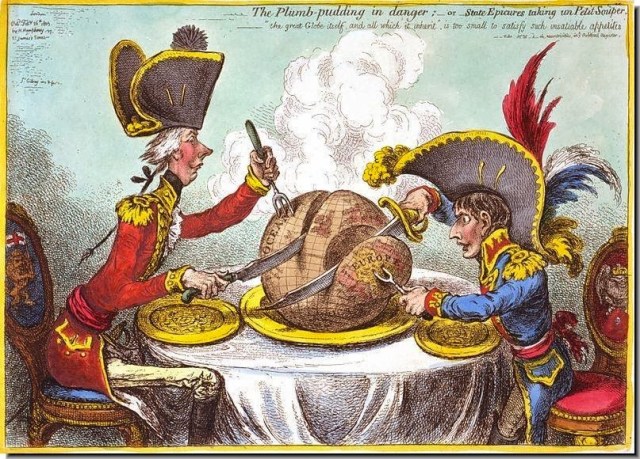
Postcolonial theory emerged after WWII, in which it studied the colonizer and the colonized, meaning those people from imperialistic nations, such as England, France, Denmark, and America, and the people from the countries the former ones colonized.
The postcolonial theorist, Edward Said, used poststructuralist tools by deconstructing the West and East through binary opposition. The West was given the center or privilege, while the East was given the marginalized or “other.”
The postcolonial critic, Homi Bhabha, focused on the interactions of the colonizer with the colonized and how each group was affected by the others’ cultures.
Lastly, Gayarti Chakravorty Spivak, an Indian-born Western academic studied the difference in the cultures of the colonizer and the colonized and paid close attention to both class and the effects of colonialism on the colonized women.
The critics analyzed literature for these aspects and also had to figure out how to categorize postcolonial literature from writers who were geographically not part of Europe or other colonial powers (Bertens). This was done through using the term, “literatures in English” (Bertens).
The writers’ works under the oppression of the colonizers were still viewed and critiqued through the center, which were the English academics and critics. Later, in the 1970s through today, this has changed and opened up to more autonomy for those postcolonial writers that were victims of colonization (Bertens).
Charlotte Perkins Gilman’s “The Yellow Wallpaper” shows the Western postcolonial view through an American wealthy, caucasian family.

Gilman, an American writer and feminist, wrote this in the late nineteenth century when colonialism was quite active.
In the story, we can see that John, the main character’s husband, represents the colonizer, or from Said’s point of view, the West, whereas the main character represents the East. John is a doctor and wealthy. His character aligns with the traits of the Western colonizer or “masculine pole” (Bertens) Said describes as “enlightened, rational, entrepreneurial, and disciplined” (Bertens). The main character shows John to exhibit the traits of rational and enlightened when she says, “John is practical to the extreme. He has no patience with faith, an intense horror of superstition, and he scoffs openly at any talk of things not to be felt and seen and put down in figures” (Gilman). This also reflects the West’s or colonizer’s view of the East’s or colonized’s practices, beliefs, and cultures.
The main character reflects the postcolonial view of the colonized that helps or aids in the colonizer’s power when she says in regard to John, “He is very careful and loving, and hardly lets me stir without special direction.” This also shows the trait of passiveness that Said mentions in his list of the “feminine pole” (Bertens). These traits Said mentions that are displayed by the main character in this short story are “irrational, passive, undisciplined, and sensual” (Bertens). The main character displays irrationality when she says, “I cry at nothing, and cry most of the time” (Gilman). Her passivity is apparent when she says, “I tried to have a real earnest talk with him the other day and tell him I wish he would let me go and make a visit to Cousin Henry and Julia. But he said I wasn’t able to go, nor to stand it after I got there; I did not make out a very good case for myself, for I was crying before I had finished” (Gilman).
Using the methods of Bhabha, the interaction between the main character and her husband reveal that the main character’s perceived madness from being cooped up in the room affect John at the end of the story. After the main character has torn up nearly all the rest of the yellow wallpaper in the room to try and release her alter ego from the prison she imagines in the paper, John comes to the room and finds it locked, for which she tells him where the key is. In obtaining the key, John opens the door and asks in astonishment, “For God’s sake, what are you doing?” (Gilman), and the main character says, “I’ve got out at last, in spite of you and Jane. And I’ve pulled off most of the paper, so you can’t put me back!” (Gilman). John proceeds to faint in reaction to this. But this also depicts resistance by the main character/colonized against the colonizer.
The symbols of West and East and the colonizer and the colonized through the main character and her husband in the short story, “The Yellow Wallpaper” provide a good example of a postcolonial theory’s analysis through its lens.
~*~*~*~
Works Cited
Bertens, Hans. Literary Theory: The Basics. 3rd ed. London and New York: Routledge, 2014.
Gilman, Charlotte Perkins. “The Yellow Wallpaper.” Gutenberg.org. 5 November 2012.



 Modest Musings